
DAVAO CITY – Authorities confiscated more than ₱15.38 million worth of alleged smuggled cigarettes and arrested a suspected trader during an overnight law enforcement operation in Davao City, marking another significant blow against the illegal tobacco trade under the government’s intensified campaign against agricultural economic sabotage.
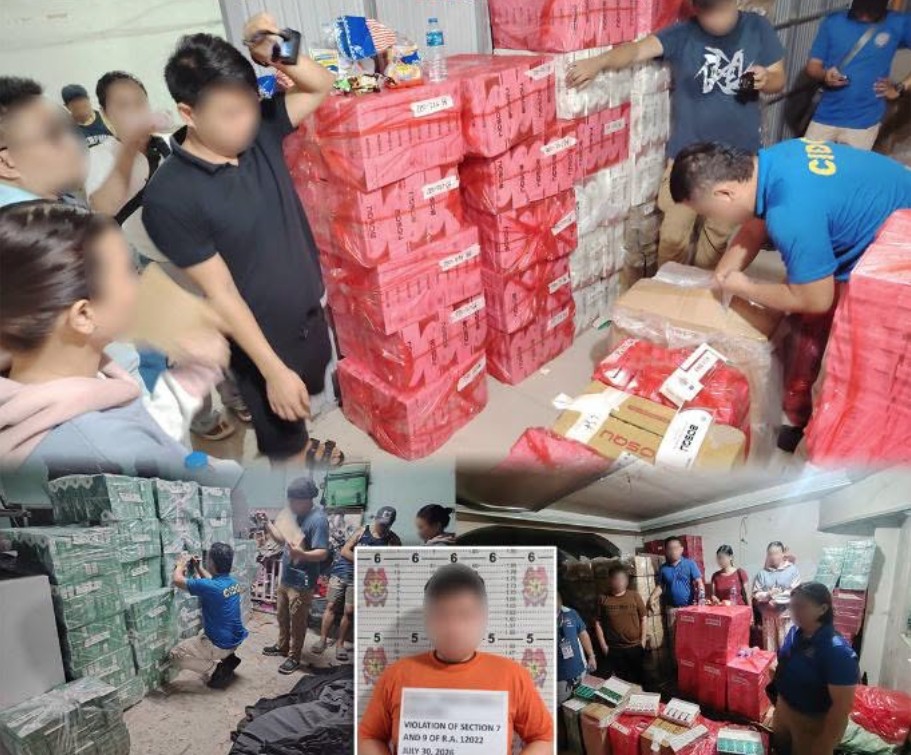
The operation was conducted by the Criminal Investigation and Detection Group (CIDG) Davao City Field Unit, in collaboration with the Bureau of Internal Revenue (BIR) Region XI and in coordination with local territorial police units. It took place from 7:00 p.m. on July 30 until 6:00 a.m. on July 31, 2026, at Nova Tierra Subdivision in Lanang, Davao City.
Authorities arrested a 35-year-old male suspect, identified only by the alias “Prin,” after he was allegedly caught selling, trading, and possessing a large volume of illicit tobacco products.
During the operation, law enforcers confiscated 236 master cases and 34 reams of alleged smuggled cigarettes with an estimated market value of ₱15,384,200. The valuation was based on the lowest prevailing retail price of ₱130 per pack, as monitored by the Department of Agriculture Region XI as of July 30, 2026.
According to the report submitted to CIDG Director PMGEN Robert A.A. Morico II, the seized cigarettes were believed to have originated from Jolo, Sulu, and were allegedly being distributed illegally in Davao City.
Investigators discovered that the tobacco products lacked the mandatory Graphic Health Warnings, Bureau of Internal Revenue (BIR) Excise Tax Stamps, and National Tobacco Administration (NTA) Import Commodity Clearance (ICC), making them illegal under existing laws governing tobacco importation, taxation, and public health regulations.
Authorities classified the products as illicit or smuggled cigarettes, the sale and distribution of which deprive the government of substantial tax revenues while creating unfair competition against legitimate tobacco businesses.
The operation was carried out in connection with the enforcement of Republic Act No. 12022, otherwise known as the Anti-Agricultural Economic Sabotage Act, a law aimed at strengthening government efforts to combat large-scale smuggling, hoarding, profiteering, and other forms of economic sabotage affecting agricultural and related products.
PMGEN Morico emphasized that the law serves not only to protect government revenues but also to promote fair trade and safeguard consumers by preventing the proliferation of illicit tobacco products in the market.
He stressed that the State imposes severe penalties on individuals and groups engaged in smuggling and similar illegal activities, describing these acts as threats to the country’s economic stability and the livelihood of legitimate producers.
According to the CIDG chief, the government’s aggressive enforcement campaign seeks to protect farmers, prevent tax evasion, ensure the payment of lawful duties, and preserve the integrity of the country’s economy against organized economic saboteurs.
The CIDG leadership also commended PLTCOL Ariel T. Huesca, Acting Regional Chief of CIDG Regional Field Unit XI, together with the CIDG Davao City Field Unit headed by PMAJ Winnie T. Lampuyas, for the successful operation that led to the seizure of the alleged smuggled tobacco products and the arrest of the suspect.
Officials described the operation as another demonstration of the CIDG’s unwavering commitment to dismantling illegal supply chains involved in agricultural smuggling and illicit trade.
The arrested suspect is expected to face charges for violating Republic Act No. 12022, along with other applicable laws governing the illegal importation, possession, distribution, and sale of untaxed tobacco products.
The CIDG reiterated its commitment to sustaining intensified law enforcement operations nationwide, assuring the public that it will continue working closely with partner agencies to curb cigarette smuggling and other forms of agricultural economic sabotage that undermine government revenues, distort legitimate commerce, and threaten the country’s economic security.