
PAYAO, Zamboanga Sibugay — A total of 140 critically endangered Hawksbill sea turtle hatchlings (Eretmochelys imbricata) were safely released into the waters surrounding Pandilusan Island in the municipality of Payao on July 19, 2026, in a major conservation initiative that underscores the growing commitment of government agencies and local communities to protect one of the world’s most threatened marine species.
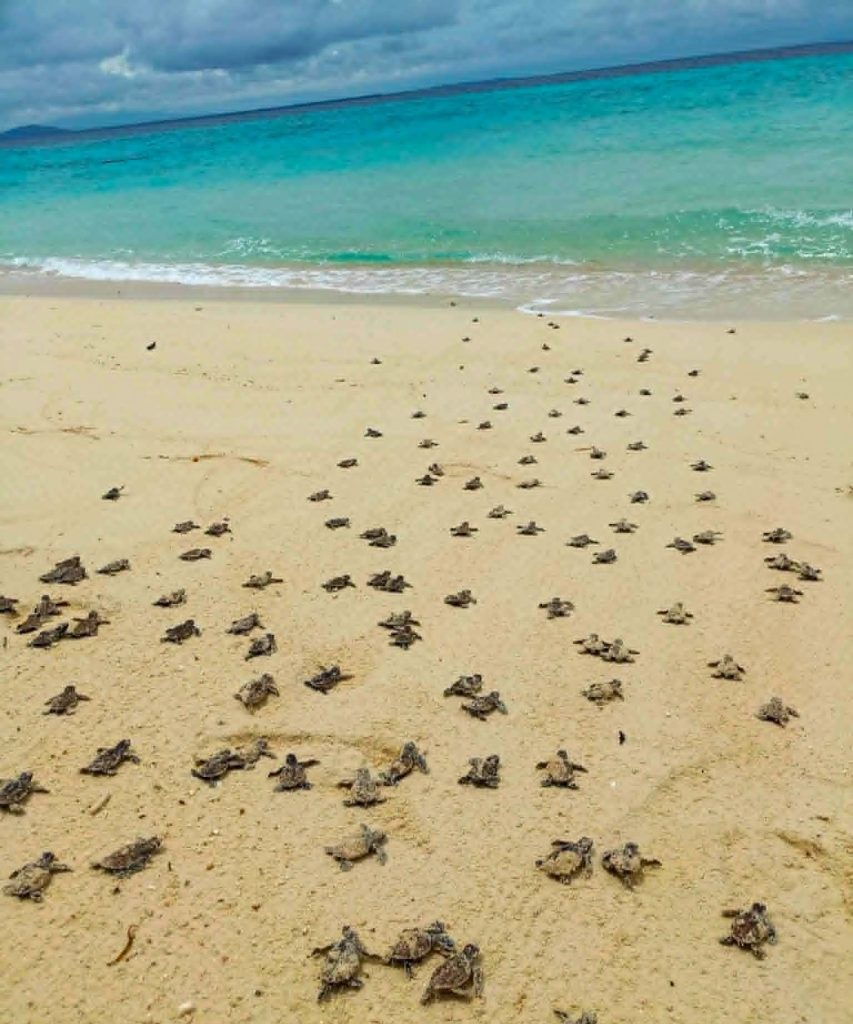
The successful release, spearheaded by the Community Environment and Natural Resources Office (CENRO)-Imelda, marked another important milestone in the preservation of marine biodiversity in Zamboanga Sibugay, where collaborative efforts continue to safeguard vulnerable nesting sites and ensure the survival of endangered wildlife.
The conservation mission began long before the hatchlings reached the sea. After a mother Hawksbill turtle nested along the shoreline of Pandilusan Island, conservation workers closely monitored the eggs. However, when rising tides threatened to inundate the original nesting site, authorities immediately intervened by carefully relocating the clutch to a safer area.
The strategic translocation protected the developing embryos from flooding and significantly increased the likelihood of successful hatching. Following weeks of careful monitoring, all 140 hatchlings emerged safely before being released into their natural marine habitat.
Leading the biodiversity conservation effort was Forester John Kaisan S. Alkuino, Head of the Biodiversity Conservation Unit of CENRO-Imelda, who supervised the monitoring, handling, and eventual release of the hatchlings.
The activity was conducted in close coordination with the Local Government Unit (LGU) of Payao, represented by Mr. Daryll Tubat, and Pandilusan Island Caretaker Mr. Armando Amorin, whose support was instrumental in ensuring the safe deployment of the young sea turtles.
The conservation initiative also drew strong support from multiple government agencies and local stakeholders, including CENRO-Imelda headed by CENRO Atty. Kim Villaruel, the Philippine Army’s 106th Infantry Battalion, the Philippine Coast Guard Sub-Station (CGSS) Payao, and the dedicated caretakers of Pandilusan Island.
According to Forester Alkuino, the successful operation demonstrates the importance of sustained cooperation among environmental agencies, local governments, security forces, and coastal communities in protecting endangered marine species and preserving their nesting habitats.
He emphasized that community stewardship and inter-agency collaboration remain essential in ensuring that Hawksbill sea turtles continue to reproduce safely despite increasing environmental threats.
The Hawksbill sea turtle is listed globally as Critically Endangered, facing an elevated risk of extinction due to habitat destruction, illegal poaching, climate-related impacts, marine pollution, and accidental capture in fishing operations. Once heavily hunted for their beautifully patterned shells, Hawksbills have experienced dramatic population declines across the world’s tropical oceans.
Marine biologists consider Hawksbill turtles a keystone species because of the critical ecological role they play in maintaining healthy coral reef ecosystems. By feeding primarily on marine sponges, they help prevent sponge overgrowth that can suffocate corals, thereby preserving reef biodiversity and supporting countless marine organisms that depend on coral habitats.
Conservation experts note that every successful nesting season and hatchling release contributes to rebuilding wild populations, although only a small fraction of hatchlings naturally survive to adulthood. This reality makes the protection of every nest increasingly vital for the species’ long-term survival.
The release on Pandilusan Island serves as a powerful reminder that protecting endangered wildlife requires more than government action—it depends on the active participation of local communities, environmental advocates, and partner institutions working toward a common goal.
As the tiny hatchlings disappeared into the sea, they carried with them renewed hope for the future of one of the ocean’s most iconic and imperiled species, reflecting the unwavering commitment of CENRO-Imelda and its partners to conserve the country’s rich marine heritage for generations to come.