
Island Garden City of Samal, Davao del Norte — In a decisive move to protect one of Mindanao’s premier tourist destinations, the local government of Island Garden City of Samal has strengthened its environmental safeguards by strictly regulating the use of single-use plastics and styrofoam, marking a significant milestone in its push for sustainable tourism and ecological preservation.
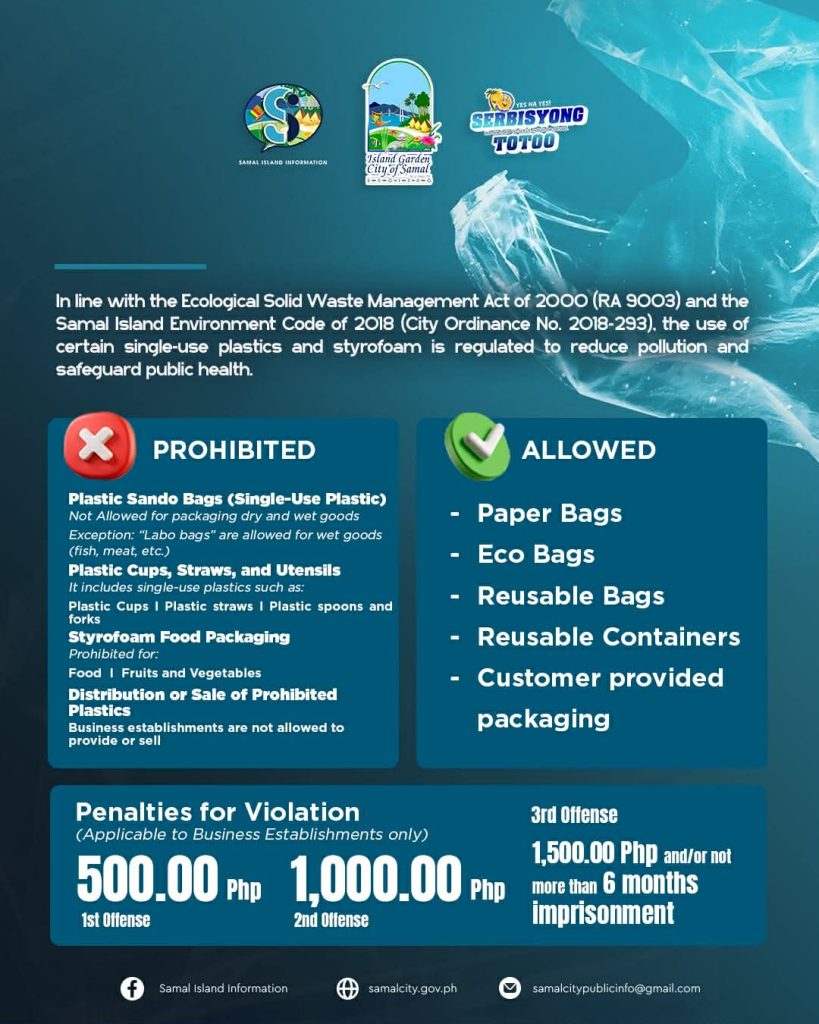
Anchored on the national Ecological Solid Waste Management Act of 2000 and reinforced by the Samal Island Environmental Code of 2018, the regulation underscores the city’s growing urgency to curb pollution, reduce marine waste, and safeguard public health—issues that have long threatened coastal communities and tourism-driven economies.
A Fragile Paradise Under Pressure
Known for its powdery white sand beaches, vibrant marine biodiversity, and thriving resort industry, Samal Island has seen a steady influx of tourists over the years. But with this growth comes a mounting environmental cost.
Plastic waste—particularly single-use items—has increasingly clogged waterways, littered shorelines, and endangered marine life. Local officials say the new regulation is both a response to these challenges and a proactive step to preserve the island’s ecological integrity.
“This is not just about compliance—it’s about survival,” an environmental officer noted. “Samal’s beauty is its lifeblood. Protecting it means protecting livelihoods.”
What’s Now Prohibited
Under the strengthened enforcement, several commonly used plastic products are now banned across the island:
- Plastic sando bags are no longer allowed for packaging both dry and wet goods, except for “labo bags” strictly used for wet items like fish and meat.
- Plastic cups, straws, and utensils, including spoons and forks, are completely prohibited as part of the crackdown on single-use plastics.
- Styrofoam food packaging, particularly for fruits and vegetables, is likewise banned due to its non-biodegradable nature and harmful environmental impact.
- Businesses are strictly prohibited from distributing or selling these banned materials.
Shift Toward Sustainable Alternatives
To support the transition, the city encourages the use of environmentally friendly alternatives such as:
- Paper bags
- Eco bags
- Reusable shopping bags
- Reusable food containers
- Customer-provided packaging
Local entrepreneurs and resort owners are gradually adapting, with many already shifting to biodegradable or reusable materials as part of their sustainability branding.
Penalties and Accountability
The regulation places responsibility squarely on business establishments, with escalating penalties for non-compliance:
- First offense: ₱500 fine
- Second offense: ₱1,000 fine
- Third offense: ₱1,500 fine and/or imprisonment of up to six months
Authorities emphasized that enforcement will be consistent, with inspections and monitoring expected to intensify in the coming months.
A Model for Sustainable Tourism
Environmental advocates have lauded Samal’s initiative, calling it a “critical turning point” in balancing tourism growth with ecological responsibility. The move aligns with a broader global shift toward sustainable travel, where destinations are increasingly judged not just by beauty, but by how well they protect it.
For residents, the policy signals both responsibility and opportunity.
“This is our island. If we take care of it, it will continue to take care of us,” said one local vendor, who recently switched to paper packaging.
As Samal charts a greener path forward, its firm stance against plastic pollution may well serve as a blueprint for other tourist destinations across the Philippines—proving that protecting paradise is not just possible, but necessary.