
DAVAO REGION — High above the clouds, where jagged rocks meet the sky and silence carries a sense of reverence, a historic moment unfolded 68 years ago—one that continues to shape how Filipinos see the country’s tallest peak.
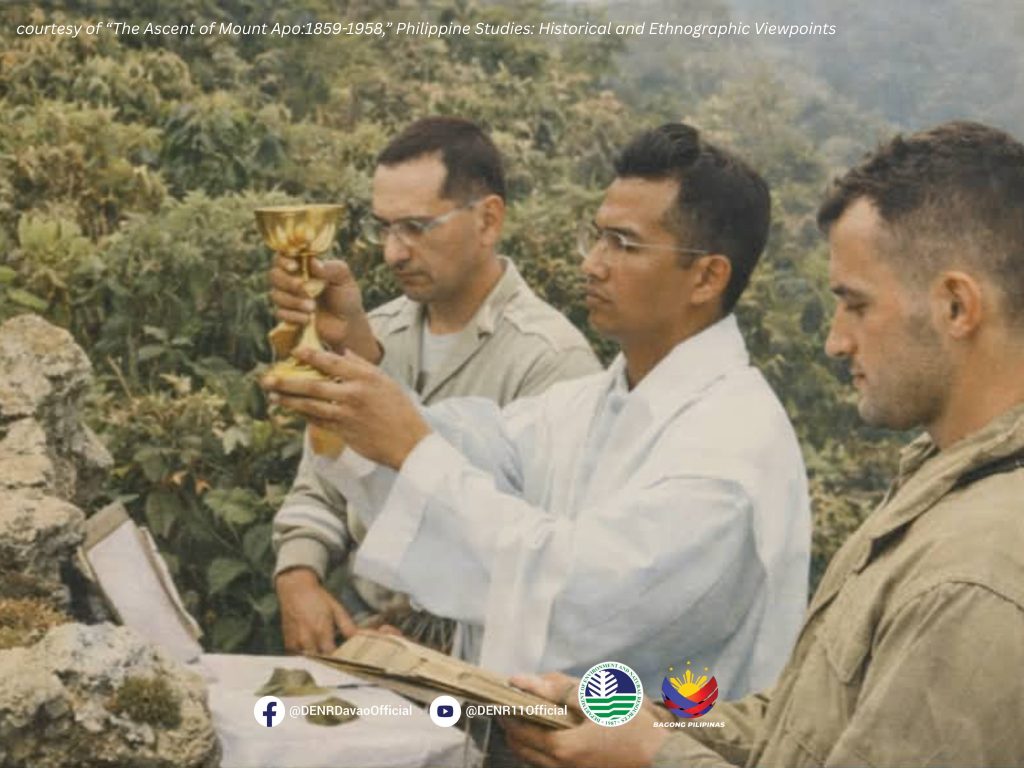
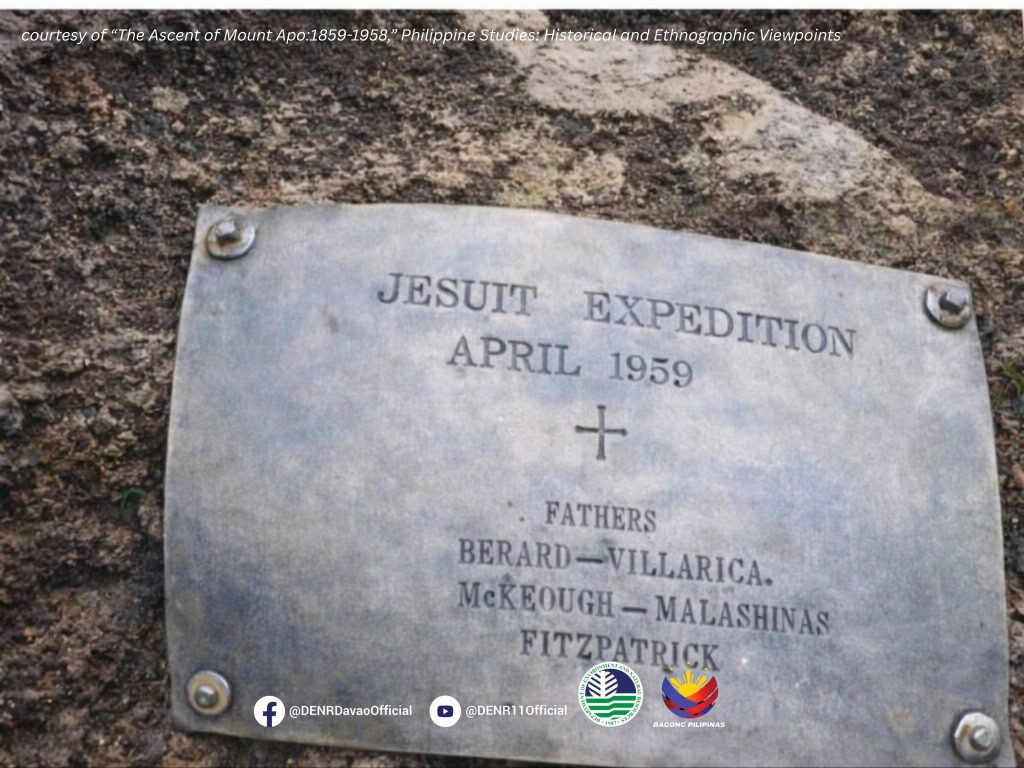
On April 11, 1958, during the Friday of Easter Week, four Jesuit priests completed a grueling three-day ascent to the summit of Mount Apo, standing at 2,954 meters above sea level. What awaited them at the top was not merely a breathtaking view, but an opportunity to consecrate the mountain in an act of faith that would echo through generations.
Led by Fr. Miguel A. Bernard, the expedition included Fr. Rodolfo Malasmas, who officiated the Mass, along with Fr. Rodolfo Villarica and Fr. Thomas Fitzpatrick. At the edge of a filled volcanic crater, the group erected a cross atop a pile of rocks—a simple yet powerful symbol against the vastness of the mountain landscape.
At exactly 11:20 a.m., the first Mass was celebrated. A second immediately followed.
The act was more than a religious ritual. It was, according to accounts, a gesture meant to reclaim and bless a place long associated with ancient beliefs, including stories that the mountain had once been marked by blood sacrifices. In that moment, the priests sought to transform the summit into a site of spiritual reflection and peace.
Today, nearly seven decades later, Mount Apo Natural Park stands not only as a haven for biodiversity and adventure seekers, but also as a symbol of the country’s layered heritage—where indigenous traditions, ecological importance, and spiritual narratives intersect.
The park, home to rare wildlife and unique ecosystems, continues to be protected by conservation authorities who emphasize responsible tourism and cultural respect. For many climbers, reaching the summit is no longer just a physical achievement; it has become a pilgrimage of sorts, guided by an awareness of the mountain’s deeper meaning.
As the anniversary is marked this April 11, mountaineers, faith communities, and local stakeholders are reminded that Mount Apo is more than the Philippines’ highest peak. It is a living monument—where history, faith, and nature converge, and where every step upward carries both a story and a responsibility.