
A Year of Division and Reflection
One year after the arrest of former president Rodrigo Duterte and his transfer to The Hague to face charges before the International Criminal Court (ICC), the Philippines remains sharply divided. On March 11, 2026, supporters gathered at San Pedro Cathedral for a solemn “Bring Him Home” Mass marking the first anniversary of his arrest. The gathering, attended by Vice President Sara Duterte, was both a prayer vigil and a political statement, reflecting the enduring loyalty of many Filipinos who believe the former leader was wrongfully taken from his own country to face foreign justice.
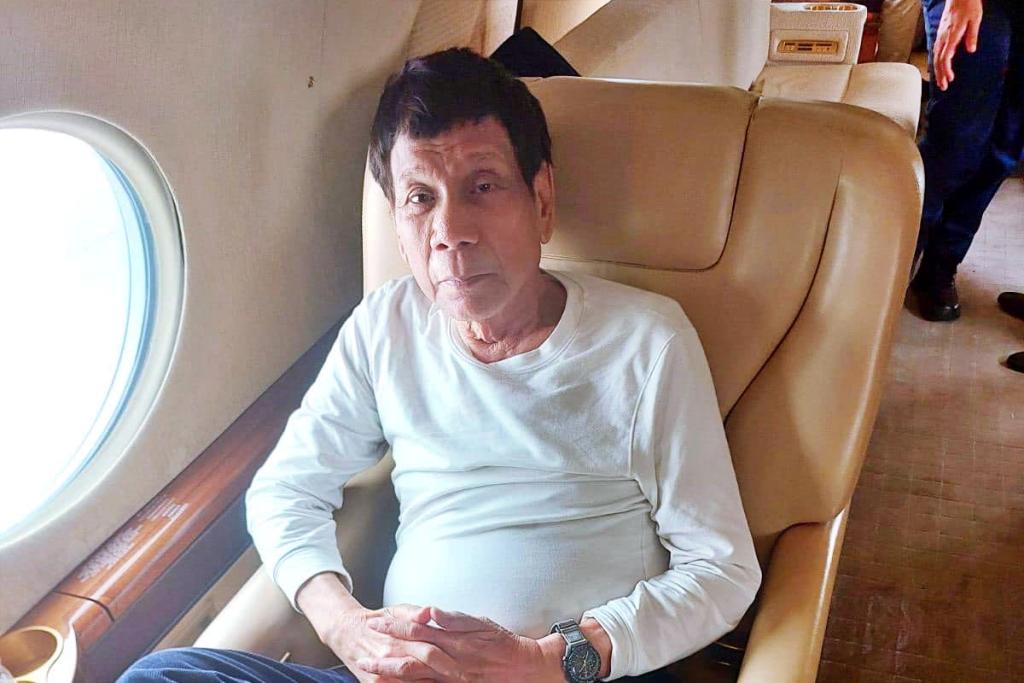
For Duterte’s supporters, particularly in Mindanao where his political roots run deepest, the anniversary was a painful reminder of what they see as a national humiliation. To them, the arrest was not merely a legal event—it symbolized the surrender of Philippine sovereignty to international pressure. But across the country, especially among families of victims of the war on drugs, the same anniversary represents something very different: the first real step toward accountability after years of unanswered deaths.
The Arrest That Changed Philippine History
The arrest of Duterte on March 11, 2025, was unprecedented in modern Philippine history. Acting on an ICC warrant and working with Interpol, authorities from the Philippine National Police took the former president into custody shortly after his arrival at Ninoy Aquino International Airport from Hong Kong. Within hours, he was transferred to Villamor Air Base before being flown to the Netherlands to await trial.
The operation stunned the nation not only because of the figure involved but because of its historic implications. Duterte became the first Asian leader to face trial before the ICC and the first Philippine president to be brought before an international tribunal. The charges against him—crimes against humanity linked to alleged extrajudicial killings during the war on drugs—represent one of the most serious accusations ever leveled against a Filipino leader.
The Debate Over Sovereignty
Supporters of Duterte, including many political allies and members of his family, have consistently argued that the arrest violated the country’s sovereignty. Their position hinges on the Philippines’ withdrawal from the ICC in 2019, asserting that the international court no longer has jurisdiction over the country.
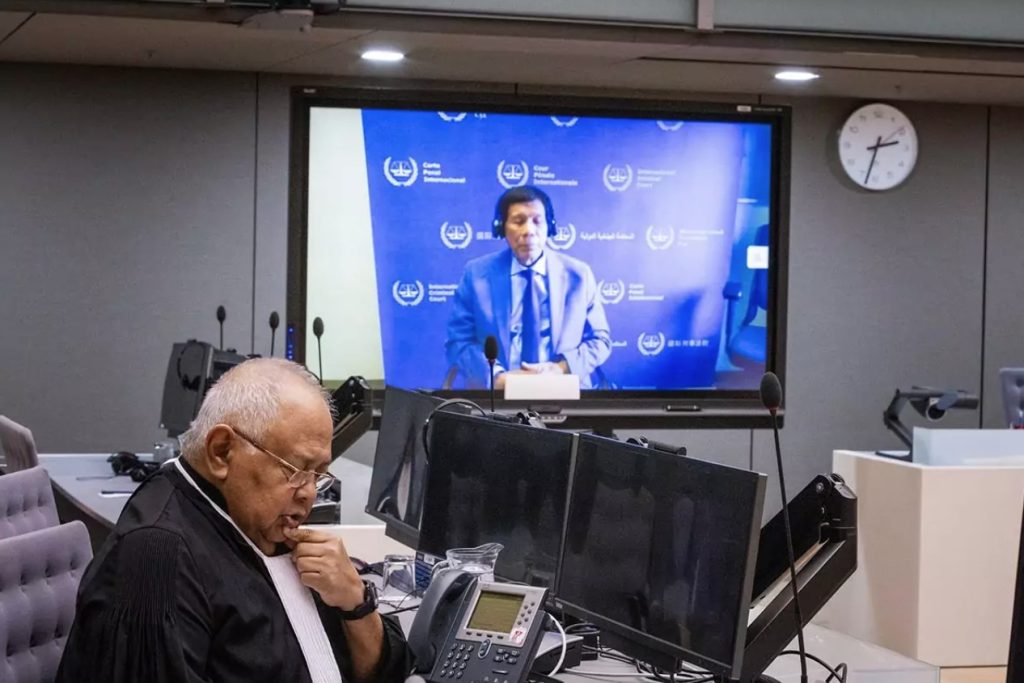
However, the legal framework surrounding the case complicates that argument. The alleged crimes under investigation occurred between 2011 and 2019, when the Philippines was still a state party to the Rome Statute that established the ICC. In a 2021 ruling, the Philippine Supreme Court clarified that the country still has obligations regarding acts committed during that period. As a result, the ICC investigation continued, eventually leading to the issuance of the arrest warrant.
Despite these legal realities, the emotional and political dimension of the sovereignty argument remains powerful. For many Filipinos, the sight of a former president taken abroad for trial touches a deep national nerve, raising questions about independence, dignity, and the limits of international intervention.
The Cry for Justice from Victims’ Families
While Duterte’s supporters frame the issue as a struggle for sovereignty, victims’ families and human rights advocates view the case through a very different lens. During Duterte’s presidency, the anti-drug campaign left thousands dead. Government data acknowledged more than 20,000 drug-related deaths during the period, including thousands linked to police operations and many others attributed to unidentified gunmen or vigilantes.
For years, families of victims claimed that justice was elusive. Investigations rarely moved forward, witnesses were often afraid to testify, and cases collapsed before reaching courtrooms. In that context, the ICC’s intervention became, for many, the only remaining avenue to seek accountability.
To these families, the trial in The Hague is not about politics or revenge. It is about finally confronting a painful chapter in Philippine history and giving victims the chance to be heard in a legal forum.
Duterte’s Enduring Political Legacy
The anniversary Mass in Davao demonstrated that Duterte’s political influence remains formidable. Even out of power and facing an international trial, he continues to command a loyal base of supporters who view him as the leader who restored order and discipline to a country they believed was overwhelmed by crime and drugs.
This loyalty highlights a central paradox in Duterte’s legacy. To millions of Filipinos, he is remembered as a strong and decisive leader who protected ordinary citizens from the dangers of narcotics and criminality. To others, he represents a period when the rule of law was weakened and state violence was normalized in the name of public safety.
These conflicting interpretations coexist within the same society, shaping political discourse and fueling debates that remain as intense today as they were during his presidency.
The Risk of Politicizing Justice
As the legal process continues in The Hague, the greatest danger may lie in turning the case into a purely political battlefield. If Duterte’s supporters dismiss the trial entirely as foreign interference, they risk ignoring the suffering of thousands of families who lost loved ones during the drug war. Conversely, if critics treat his arrest as a political triumph rather than a legal process, they risk undermining the principle that justice must remain impartial and grounded in evidence.
Justice should never be reduced to a spectacle of winners and losers. It must remain a careful process guided by law, evidence, and fairness—principles that are essential for any democratic society.
A Nation at a Crossroads
One year after Duterte’s arrest, the Philippines faces a profound national question that goes far beyond the fate of a single political figure. The country must grapple with the complex realities of its recent past: the fear and anger that fueled the war on drugs, the grief of families who lost relatives without trial, and the enduring debate about the limits of power in a democracy.
Whether Duterte ultimately returns home or remains abroad to face judgment, the deeper challenge remains the same. The Philippines must find a way to reconcile demands for justice with respect for sovereignty and national unity.
The Mass in Davao prayed for Duterte’s return. Across the country, others continue to call for justice for the victims of the drug war. Between these two powerful narratives lies the unfinished task of a nation still searching for truth, accountability, and healing.