
BAYANG, Lanao del Sur — A decade-long clan feud that once threatened the fragile peace in parts of Lanao del Sur moved toward closure after community leaders, government officials, and security forces gathered for a major reconciliation effort under the “Kaisaisa Ko Kalilintad Program – Rido Settlement.”
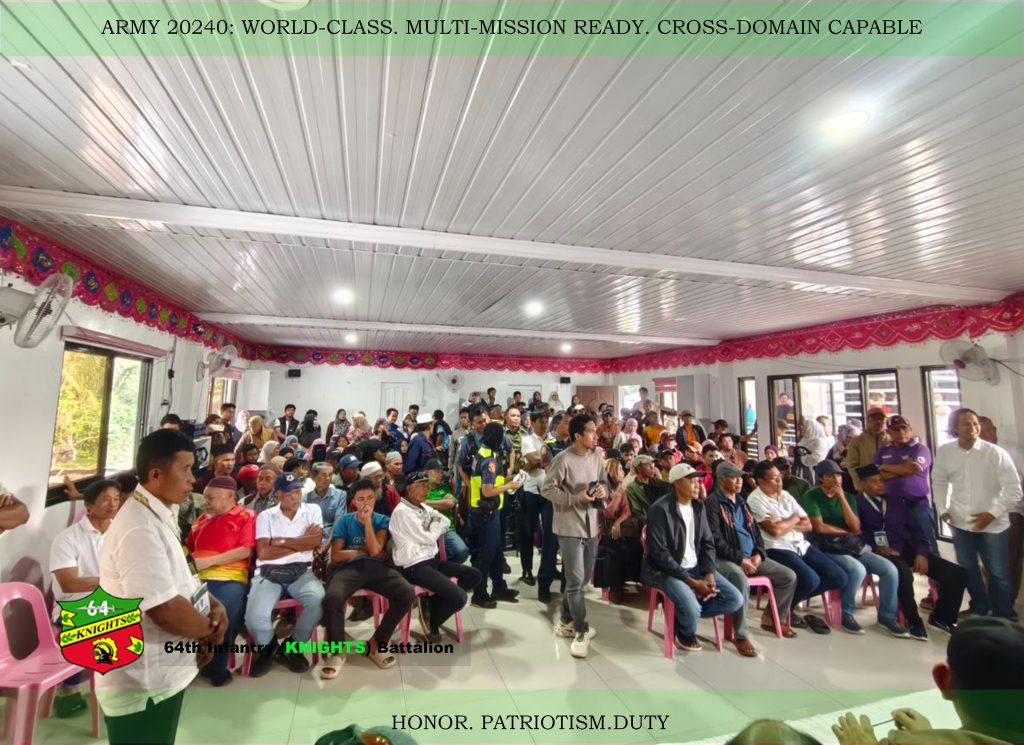
The peace initiative took place on March 1, 2026, at the Annex Building of the Pagayawan Municipal Hall in Bayang, drawing together local officials, religious leaders, police authorities, and soldiers from the Philippine Army.
The event was attended by Lt. Col. Jerry B. Gaviola, commanding officer of the 64th Infantry Battalion, along with Alpha Company leaders who joined the local government’s effort to end a long-running rido—a traditional clan conflict that had strained relations and stability in the area for nearly ten years.
Decade-Long Feud Finally Settled
The mediation centered on the dispute between the Dibarosan Alsarip family, led by Ansary M. Casan Indeg, and the Pacalna Maruhom/Musa family, led by Hanin M. Pacalna. Local officials said the settlement represents a crucial step toward restoring harmony in communities long affected by inter-family tensions.
The peace dialogue was spearheaded by Pagayawan Mayor Khalid P. Diamael and Vice Mayor Khalida Polao-Sanguila, who emphasized that resolving rido is essential to building lasting peace in the municipality and across nearby areas in Lanao del Sur.
Local leaders described the settlement as the result of sustained dialogue and cooperation among the local government, religious mediators, security forces, and the families themselves—an approach often considered key to resolving deeply rooted clan conflicts in Mindanao.
Army Backs Local Peace Initiatives
During the program, Gaviola reaffirmed the military’s support for peacebuilding initiatives led by local governments. He stressed that the successful settlement demonstrates the shared commitment of the community to reconciliation, mutual respect, and long-term stability.
He also underscored the importance of continued collaboration among the LGU, security forces, and residents to ensure that tensions do not resurface.
“The settlement reflects the collective aspiration of the community for unity and lasting peace,” Gaviola said, noting that sustained cooperation remains crucial to preventing future conflicts.
Broad Support From Officials and Religious Leaders
The event was also attended by members of the municipal council led by SB Secretary Hon. Aminoden S. Marante, as well as police officials including Ganassi and Pagayawan municipal police chiefs. Religious leaders from the Ulama Council, headed by Chairman Abdulwahab S. Abdulwahid, played a vital role in mediation and arbitration during the reconciliation process.
Their participation highlighted the multi-sector approach increasingly used in addressing rido cases—combining traditional leadership, governance, and security mechanisms.
Strengthening Civil–Military Partnership
The presence of the 64th Infantry Battalion underscored the military’s role not only in security operations but also in peacebuilding and strengthening civil–military relations in conflict-affected communities.
Local officials said the settlement under the Kaisaisa Ko Kalilintad Program signals renewed hope that communities once divided by conflict can rebuild trust and move forward together.
For residents of Pagayawan and neighboring areas, the agreement marks more than the end of a feud—it represents a step toward a more stable and united future.