
The signing of the ₱2.3-billion Public-Private Partnership (PPP) agreement between the City Government of General Santos and Robinsons Land Corporation for the redevelopment of the Central Public Market into “Palengke Heneral” marks a historic moment for General Santos City. As the first local government-led PPP market project in Mindanao, it represents a bold attempt to modernize aging public infrastructure through private-sector efficiency. For decades, the central market has stood as the city’s economic heartbeat, yet time has rendered its facilities unsafe, congested, and outdated. The promise of a modern, three-storey, integrated complex offers hope for faster rehabilitation, better management systems, and long-term sustainability—advantages that local governments often struggle to achieve on their own.
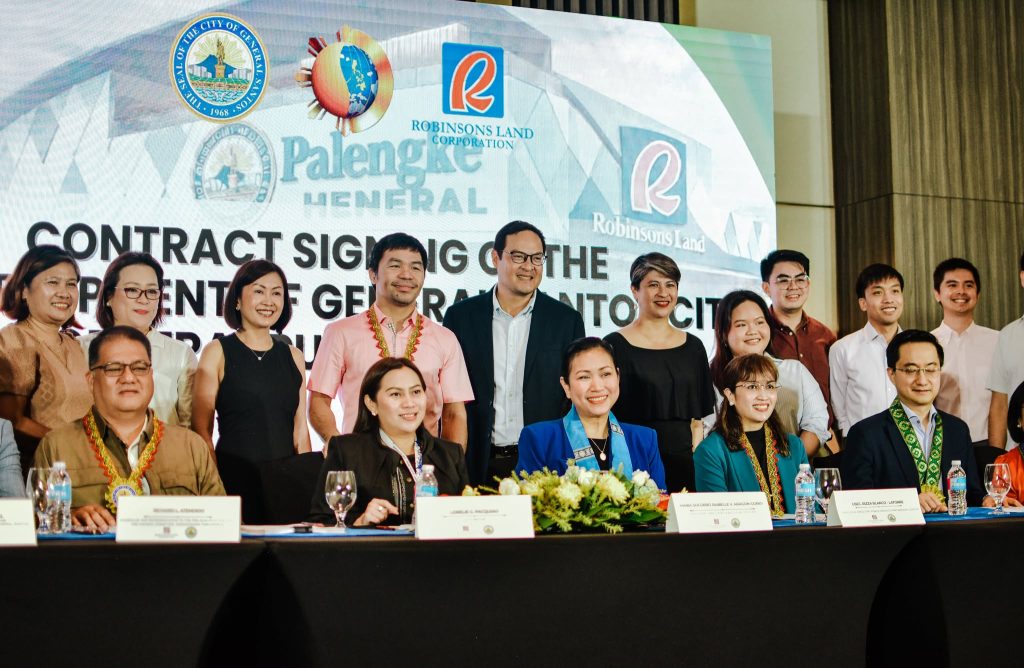
One undeniable strength of this arrangement lies in speed and professionalism. With RLC financing, designing, constructing, and operating the complex for 28 years, the project is insulated from bureaucratic delays, budget shortfalls, and political interruptions. Private-sector management can ensure proper maintenance, transparent operations, and responsive services. The city is also relieved of its annual subsidy burden while earning from land lease fees. In theory, this model allows the local government to focus on governance while leaving technical operations to experts. The presence of city leaders, including Mayor Lorelie Geronimo Pacquiao, and corporate executives such as Maria Socorro Isabelle V. Aragon-Gobio, underscores the seriousness of this partnership and its potential to reshape urban infrastructure in Mindanao.
Yet progress rarely comes without a price, and in this case, that price may be borne by ordinary vendors and consumers. Privatized management inevitably brings higher operational and rental costs. These expenses will likely be passed on to stallholders, who in turn will pass them on to buyers. The traditional public market has long been a refuge for families seeking affordable food and daily necessities—an alternative to mall supermarkets. If rents and fees rise sharply, Palengke Heneral risks losing its character as a “people’s market” and slowly transforming into another commercial space accessible only to those who can afford it. What is gained in comfort and aesthetics may be lost in affordability.
More troubling is the possible marginalization of small farmers and informal vendors who rely on direct access to the public market. For many of them, selling a few sacks of vegetables, fish, or fruits is not a business strategy but a matter of survival. Under a privatized setup, will they still be allowed to sell without being formal tenants? Can they shoulder higher rental fees, compliance requirements, and operating rules? Or will they be pushed out in favor of larger, more profitable stalls? If small producers are excluded, the market’s supply chain will be weakened, and consumers will lose access to fresh, low-cost local produce. The very people who sustain the food system may end up displaced by the system meant to serve them.
This decision also invites comparison with other cities in Mindanao that chose a different path. Davao City invested in building its own modern public market, including the country’s first air-conditioned facility, without turning to full privatization. Koronadal City and Iligan City similarly pursued government-led development. These examples show that public markets can be modernized through public investment, preserving affordability and accessibility. If others can do it, why not General Santos? Was privatization the only viable option, or simply the most convenient one for the city government?
From an administrative standpoint, the PPP model is attractive. It reduces financial risk, accelerates construction, and transfers operational responsibilities to a private partner. For local officials, it is a practical solution. But governance is not only about convenience; it is about social impact. The central question remains: is this project more beneficial to the government’s balance sheet and investors’ portfolios, or to the everyday lives of GenSan residents? Infrastructure modernization should not come at the cost of social equity.
In the long run, if Palengke Heneral becomes too expensive for vendors and buyers alike, residents may be forced to look elsewhere for cheaper goods—informal markets, roadside sellers, or even neighboring towns. Ironically, this could weaken the very institution the project seeks to strengthen. A public market that no longer serves the public ceases to be truly public, regardless of how modern its facilities may be.
The redevelopment of the General Santos City Central Public Market is, without doubt, a milestone. It reflects ambition, innovation, and a willingness to explore new governance models. However, milestones must be measured not only by investment figures and architectural designs, but by their impact on ordinary people. As construction begins, the city government and its private partner must ensure that safeguards are in place: reasonable rental rates, protection for small farmers, space for informal sellers, and mechanisms for genuine stakeholder participation. Only then can Palengke Heneral become not just a symbol of progress, but a living proof that development can be efficient, inclusive, and truly pro-people.