
Successful test landing at Don Carlos runway marks historic milestone, rekindling aviation in a province grounded for decades and unlocking fresh economic horizons in Northern Mindanao.
DON CARLOS, Bukidnon — A small aircraft’s smooth touchdown on the runway of the long-awaited Bukidnon Airport in Barangay Maraymaray has marked a historic first for the province, signaling that its new aviation gateway is edging closer to commercial operations and a long-overdue return to the country’s air transport map.

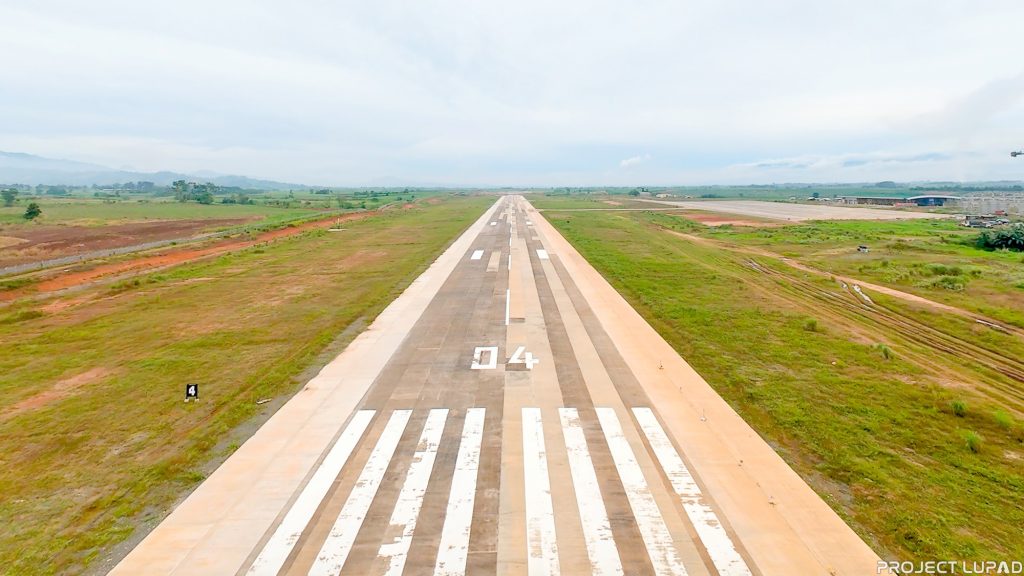
The successful test landing—the first aircraft ever to touch down on the new runway—confirmed the airstrip’s readiness for flight operations and underscored the momentum behind one of Northern Mindanao’s most anticipated infrastructure projects. Officials said the probing flight demonstrated that the runway is safe, stable, and capable of handling aircraft as designed, a key requirement before commercial service can begin.
For Bukidnon, a landlocked province that has relied on hours-long overland travel to reach airports in Laguindingan or Davao, the moment carried both technical and symbolic weight. It marked the province’s first operational runway since the closure of the old Malaybalay Airstrip in the late 1990s.
A long road back to the skies
The Bukidnon Airport, located in southern Bukidnon’s Don Carlos town, is the first modern airport ever built in the province. Spanning 149 hectares, the domestic airport features a 1,260-meter by 30-meter concrete runway, with an additional 390-meter extension under construction, along with taxiways, an apron, and a passenger terminal designed to meet international standards.
The project traces its roots to years of planning and feasibility studies by the Civil Aviation Authority of the Philippines (CAAP), which in 2013 identified Don Carlos as the most viable site due to its relatively flat terrain and strategic access to surrounding municipalities. After years of funding allocations, land acquisition, and design work, construction officially began in August 2021 as part of the national government’s flagship infrastructure push.
Despite delays brought by terrain challenges, resettlement requirements, and phased funding, the airport has steadily taken shape. The successful test landing now serves as tangible proof that Bukidnon’s aviation comeback is no longer theoretical—it is rolling, paved, and ready.
Government backs fast-track completion
The probing flight was led by Department of Transportation (DOTr) Secretary Giovanni Lopez, who inspected the runway, terminal building, cargo facility, control tower, and runway extension following the landing. The test followed a directive from President Ferdinand Marcos Jr. to accelerate the airport’s completion so communities and businesses can benefit at the soonest possible time.
“The President instructed us to fast-track the construction because this airport will greatly improve connectivity and deliver real economic benefits to Mindanao,” Lopez said, noting that Bukidnon Airport is being developed to the same modern standards as newly upgraded regional airports across the country.
Lopez set a firm deadline of 30 November 2026 for the completion of all airport facilities, with jet operations projected to begin in the first quarter of 2027. Initial operations are expected to accommodate turboprop aircraft such as the ATR-72 and Bombardier Q400, before expanding to larger jets in the next phase.
He also assured local officials, including Don Carlos Mayor Alona Ontanillas-Pizarro, that the DOTr and CAAP would continue working closely with the local government to resolve remaining concerns, including right-of-way issues and site access.
Economic runway for growth
Beyond aviation milestones, the airport is widely seen as a development catalyst for Bukidnon’s agriculture-driven economy. Once operational, it is expected to serve around 1.5 million residents in Bukidnon and nearby areas, significantly cutting travel time and logistics costs.
Officials say the airport will strengthen tourism flows to the province’s highlands, adventure destinations, and cultural sites, while also opening faster routes for agricultural products—corn, pineapple, sugarcane, coffee, and high-value crops—to reach domestic and export markets.
The passenger terminal, with a planned capacity of around 500 passengers, and a dedicated cargo building are expected to support small businesses, agribusiness exporters, and supply chains that have long been constrained by distance from major airports.
From test landing to takeoff
As of early 2026, construction updates show steady progress: runway markings are in place, the terminal building is nearing completion, the control tower structure is rising, and access roads are being developed. With the first successful landing now completed, aviation officials say the project has crossed a critical threshold from construction to operational readiness.
For Bukidnon, the sound of an aircraft landing on its own soil—after nearly three decades of silence—signals more than just an engineering achievement. It marks the return of air connectivity, renewed investor confidence, and the promise that the province’s economic ascent will soon have a direct runway to the rest of the country.
As one official put it, Bukidnon is no longer just building an airport—it is reclaiming its place in the skies. ✈️