
JOLO, Sulu — After more than a hundred years of scientific silence, the forests, mountains, and crater lakes of Jolo Island are finally speaking again.
In a landmark environmental expedition, the Philippines Biodiversity Conservation Foundation, Inc. (PBCFI), together with national and regional government agencies and local partners, has conducted the first comprehensive flora and fauna survey on Jolo Island since the late 1800s, revealing a landscape that is battered by history yet brimming with life, resilience, and conservation promise.
The multi-agency expedition, led by PhilBio and supported by BARMM’s Ministry of Environment, Natural Resources, and Energy (MENRE), DENR field offices, academic institutions, the Philippine Army, local government units, and community groups, focused on Bud Dahu (also known as Bud Dajo)—an extinct volcanic cinder cone rising 620 meters above sea level and the only declared National Park in Sulu Province, established in 1938.
A Sacred Mountain, Long Unstudied
Bud Dahu is more than a geological landmark. It is a sacred site for the Tausug people, deeply woven into local culture and memory. It was also the site of two major and painful chapters in Philippine history—the First and Second Battles of Bud Dajo in 1906 and 1911 during the Philippine-American War.
Despite its national park status, almost nothing was scientifically known about Bud Dahu’s biodiversity—until now.
“This expedition marks the first documented flora and fauna assessment of Bud Dahu since the late 19th century,” PhilBio said, describing the mountain as “unexplored, wild, and biodiverse.”
Local elders, including a 100-year-old woman from the Bud Dahu area, recounted how catastrophic typhoons in the late 1800s and again in the 1930s stripped Jolo of much of its vegetation. Remarkably, the team’s field observations of remnant forests and regrowth patterns closely matched these oral histories, highlighting the value of indigenous and community knowledge in environmental science.
Critically Endangered Birds and Unique Wildlife
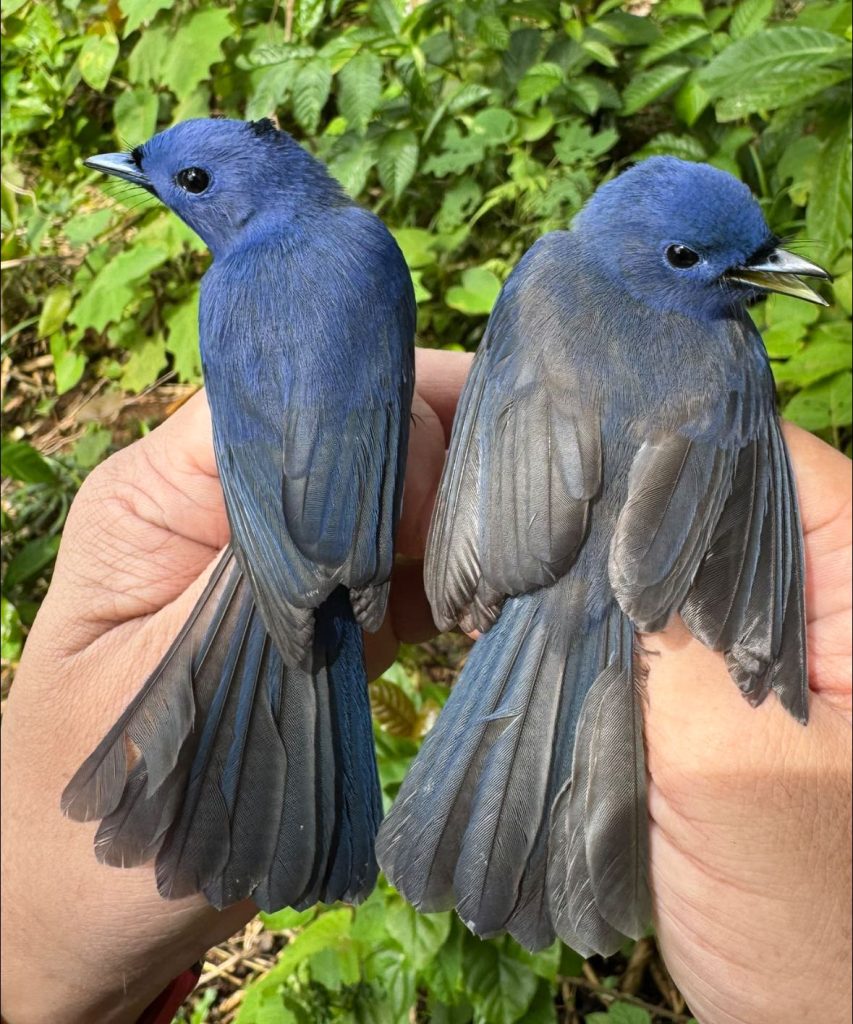
One of the expedition’s most striking findings came from the avifauna survey in Bud Dahu National Park, where the team recorded critically endangered and endemic bird species found only in the Sulu–Tawi-Tawi region. These sightings offer the first glimpse into Jolo’s bird life and underscore the island’s importance as a refuge for species found nowhere else on Earth.
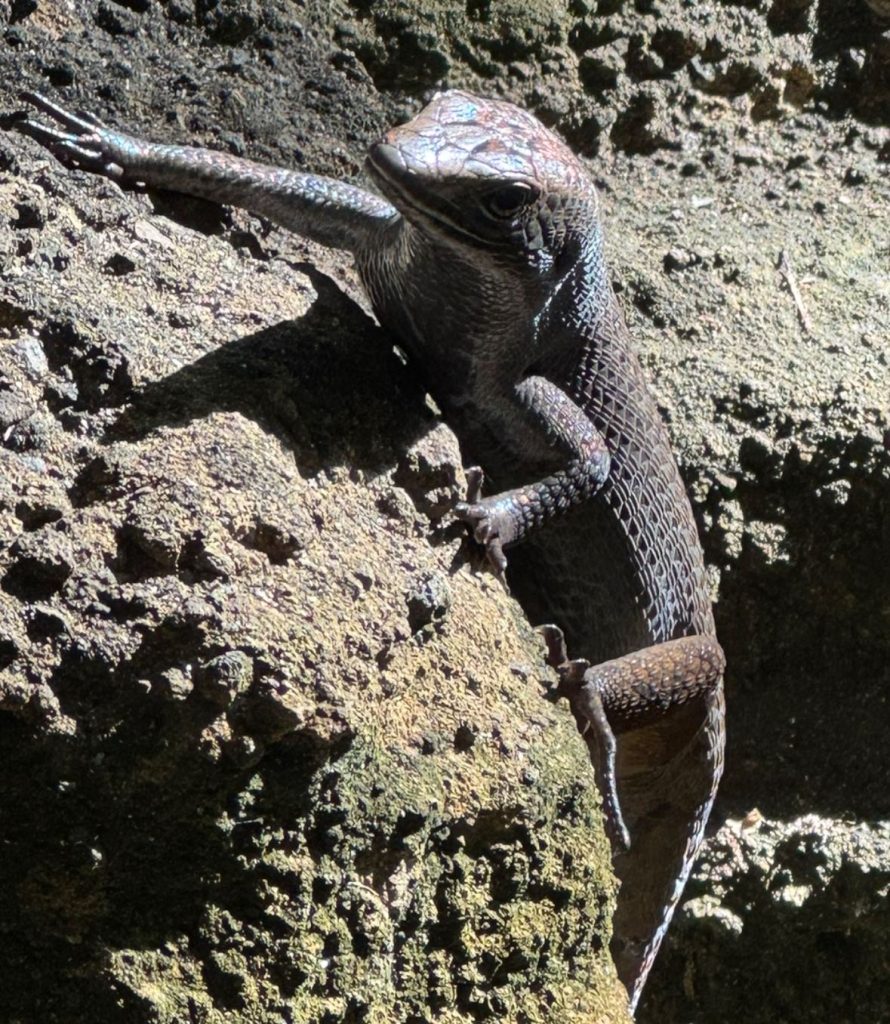
Herpetological surveys revealed equally compelling results. Amphibians and reptiles recorded in Bud Dajo and Bud Tumantangis showed distinct differences from species found in Mindanao, Basilan, Tawi-Tawi, and even Borneo, suggesting unique evolutionary pathways shaped by isolation and geography. Frogs, snakes, skinks, geckos, and lizards were found thriving across the mountain ranges, some bearing closer resemblance to Bornean species than to those of nearby Philippine islands.
Forests on the Edge
Botanical surveys painted a picture of both fragility and hope. Much of Jolo’s remaining native forest is now confined to the steep volcanic core of Bud Dahu, where near-vertical slopes—some approaching 90 degrees—have deterred large-scale cultivation.
Navigating these treacherous ridges, the flora team collected flowering and fruiting plant specimens by day and characterized them by night. While forest cover is limited, the team reported encouraging initial data, with regrowth observed from broken branches and uprooted trees—natural signs of resilience after decades of disturbance.
Crater Lakes and Threatened Watersheds
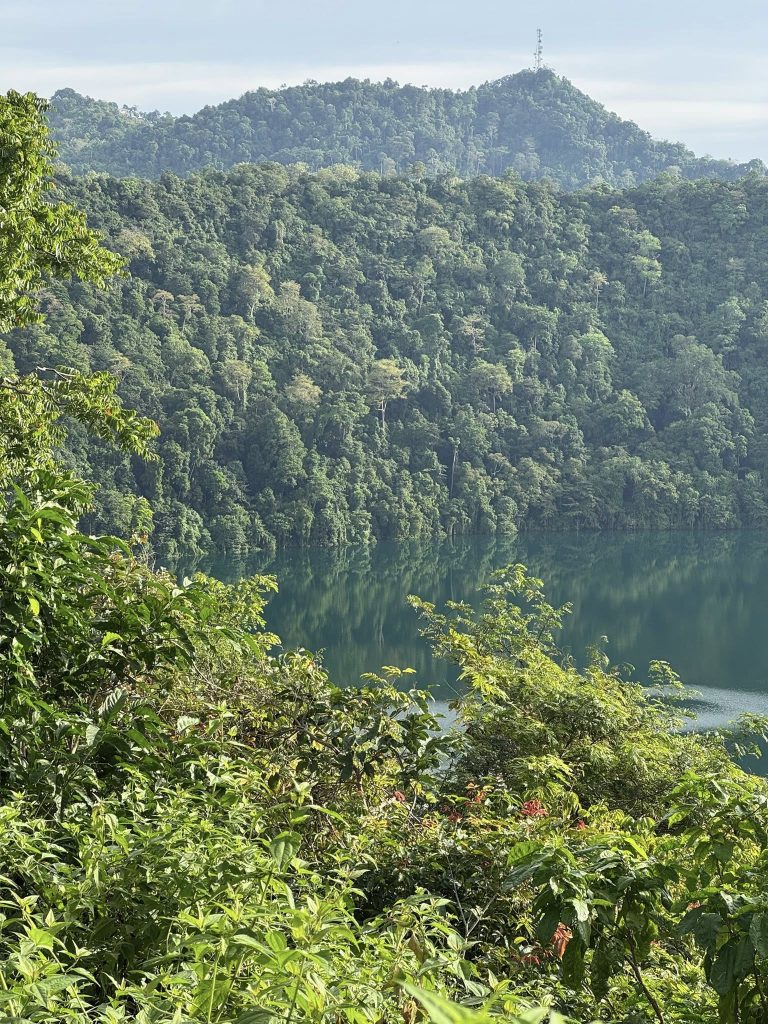
Beyond the mountains, the expedition also surveyed Lake Panamao, a nearly perfect circular crater lake and a vital watershed shared by the municipalities of Panamao and Panglima Estino. The lake is part of a remarkable system of crater lakes on Jolo Island, including heart-shaped lakes that remain largely pristine.
Inside the crater, stunted forest trees dominate, while the outer areas have been cleared, with some sections planted with teak. The discovery of snare traps along nearly all forest trails raised concerns about hunting pressure, even as the team documented waterbirds, forest birds, and plant and reptile species with distinctly Bornean characteristics.
Conservation Momentum Builds
The findings come at a critical time. In a meeting with Sulu Provincial Vice Governor Abdusakur “Sakur” Mahail Tan, PhilBio presented the biodiversity importance of Sulu’s terrestrial and marine ecosystems. The discussion aligned with ongoing efforts by the Provincial Board to craft an ordinance declaring local conservation or protected areas within each municipality.
Vice Governor Tan expressed strong interest in reviving proposals to formally conserve Bud Dahu, citing not only its unique biodiversity but also its cultural, historical, and watershed significance.
Science, Security, and Community Working Together
The expedition was co-developed and co-implemented with PENRO Sulu, DENR Region 9, MENRE offices in Sulu and Tawi-Tawi, Davao del Norte State College, local LGUs, Tausug Outdoors, barangay councils, and units of the Philippine Army, including the 11th Infantry “Alakdan” Division.
Beyond data gathering, the fieldwork served as a hands-on training opportunity for local DENR and MENRE personnel, strengthening capacities in wildlife identification, handling, monitoring, and field sampling—an investment in long-term conservation stewardship.
A Beginning, Not an End
For scientists and conservationists, the Jolo expedition is not a conclusion but a starting point.
After more than a century, Jolo Island has re-emerged on the biodiversity map of the Philippines—revealing ecosystems shaped by disaster, conflict, and recovery, yet still harboring life found nowhere else. The challenge now is clear: to protect what remains, restore what was lost, and ensure that Jolo’s natural heritage endures alongside its rich cultural history.
As PhilBio aptly described it, Jolo is still unexplored, still wild—and undeniably biodiverse.