
The National Greening Program (NGP) in Sarangani is no longer just about planting trees—it is fast becoming a platform for rural families to build sustainable livelihoods. The Department of Environment and Natural Resources (DENR) XII, through its Provincial Environment and Natural Resources Office (PENRO) Sarangani, has launched a series of intensive, on-the-ground learning activities aimed at strengthening the economic viability of its community partners.
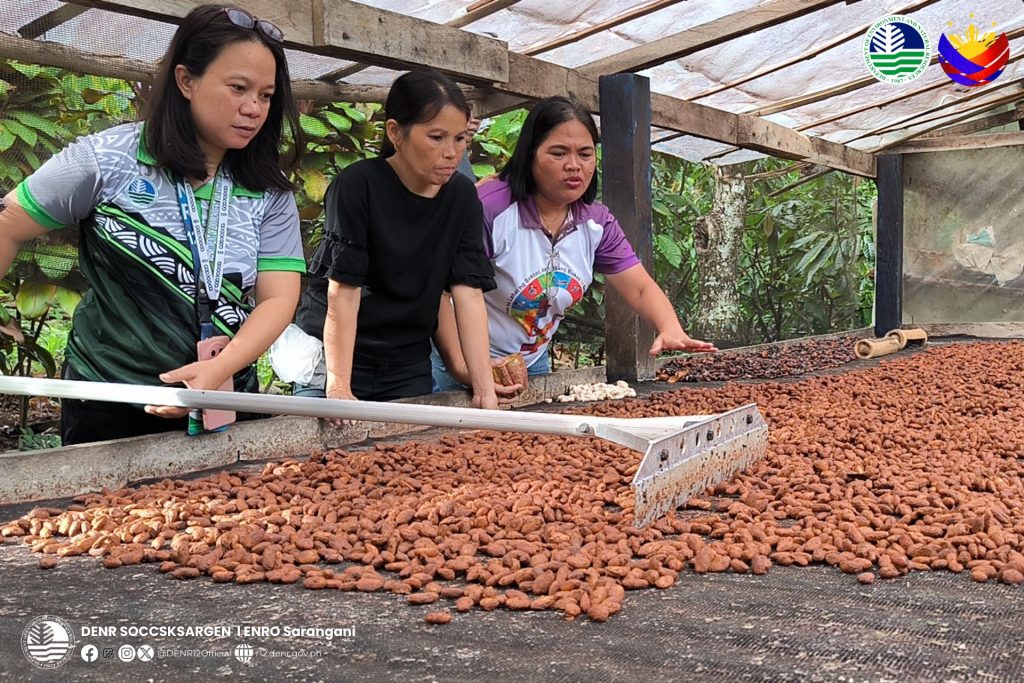
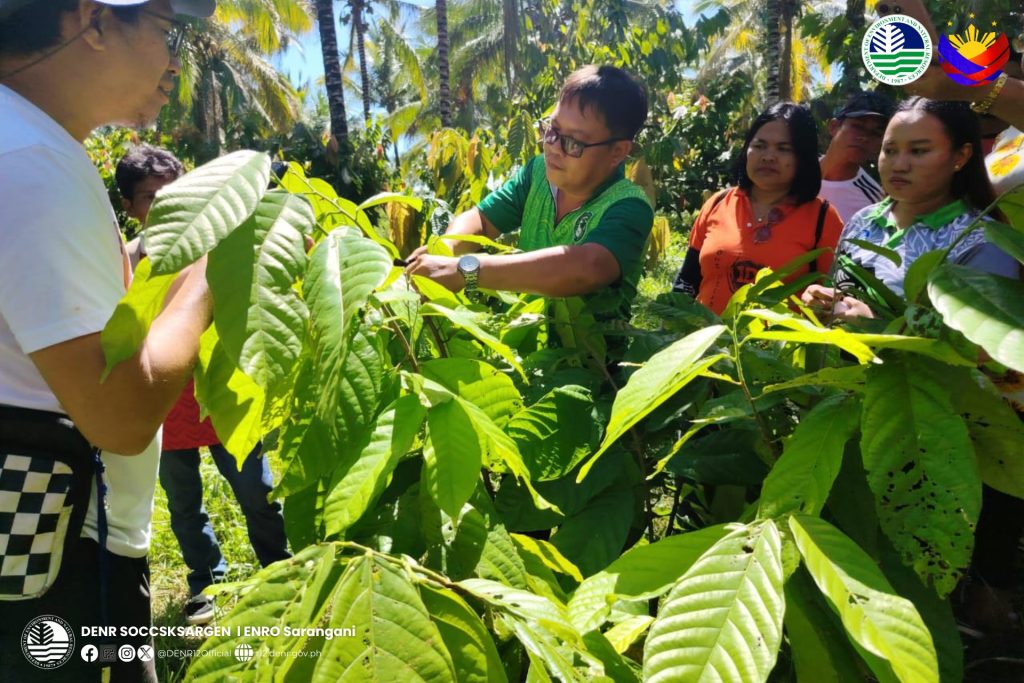
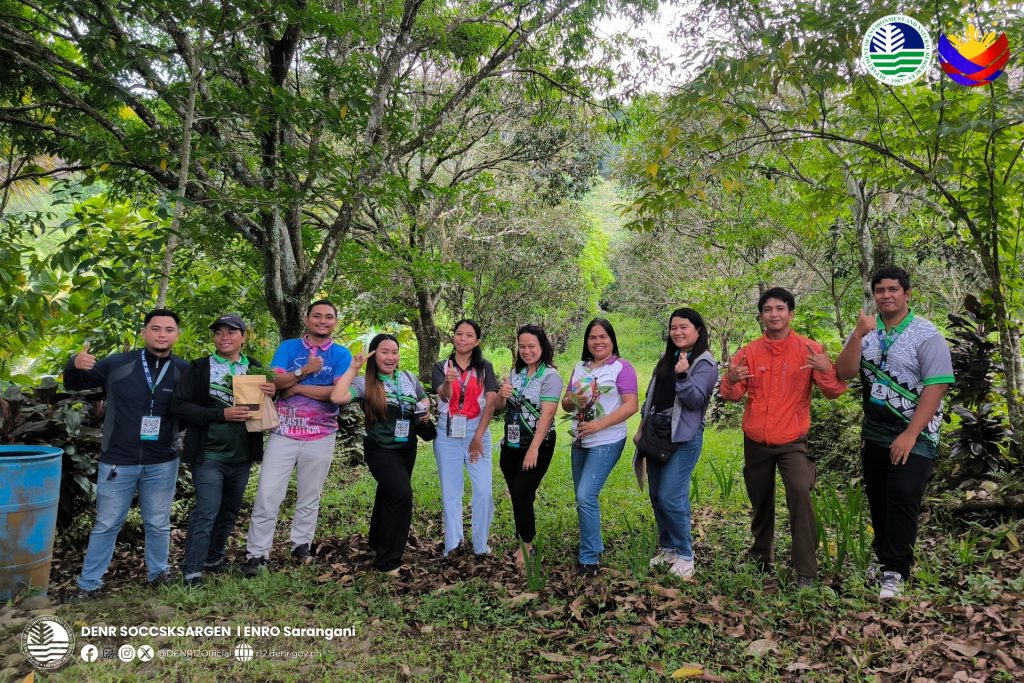
Throughout November, PENRO’s Enterprise Support Team (EST) rolled out a comprehensive capacity-building program designed to help farmers, people’s organizations, and NGP participants understand the full value chain of high-value crops—particularly cacao and fruit trees. The month-long initiative included Market Chain Study Visits to major industry players such as Don Ricardo Chocolate Factory and Kennemer Foods International, Inc., where participants learned about quality standards, buyer requirements, and market opportunities. These sessions also opened the doors for potential market linkages—an essential step in ensuring that community producers can directly access buyers.
The learning series also featured Value Chain Benchmarking at Gran Verde Farm in Calinan, Davao City, where participants observed practical and science-based organic farming and processing methods. A hands-on Chocolate Making Workshop at Don Ricardo’s Chocolate Factory in General Santos City further allowed farmers to explore value-adding opportunities, including crafting specialty chocolates, cacao tea, and other cacao-based products. The program culminated in a Practical Farm-Based Learning activity in Brgy. Nagpan, Malungon, held in partnership with DTI Sarangani, which focused on cacao and fruit tree production as well as processing techniques for tea and nibs.
According to PENRO Sarangani, the enhanced National Greening Program (ENGP) is grounded on the belief that environmental protection and community prosperity must move hand in hand. Beyond reforestation, the program envisions households earning from commodities such as fruit trees, cacao, coffee, rubber, timber, bamboo, and indigenous species.
With continuous training, stronger market access, and practical value-adding skills, DENR XII hopes to empower communities to turn environmental stewardship into long-term economic security—proving that caring for the land can also nurture livelihoods.