
By any measure, what the Provincial Board Members of South Cotabato saw during their aerial inspection of the coal mining operations in Barangay Ned, Lake Sebu was not merely a landscape—it was a warning. A scar. A wound so wide and so deep that even from thousands of feet above ground, its violence could not be hidden.
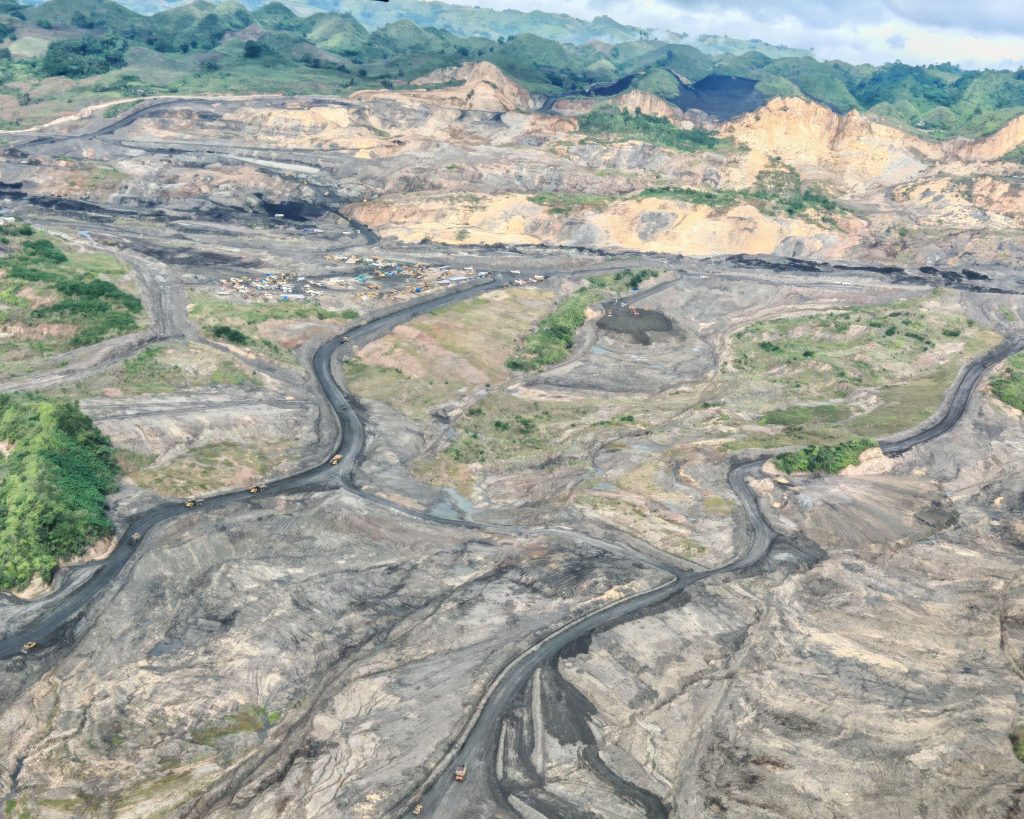
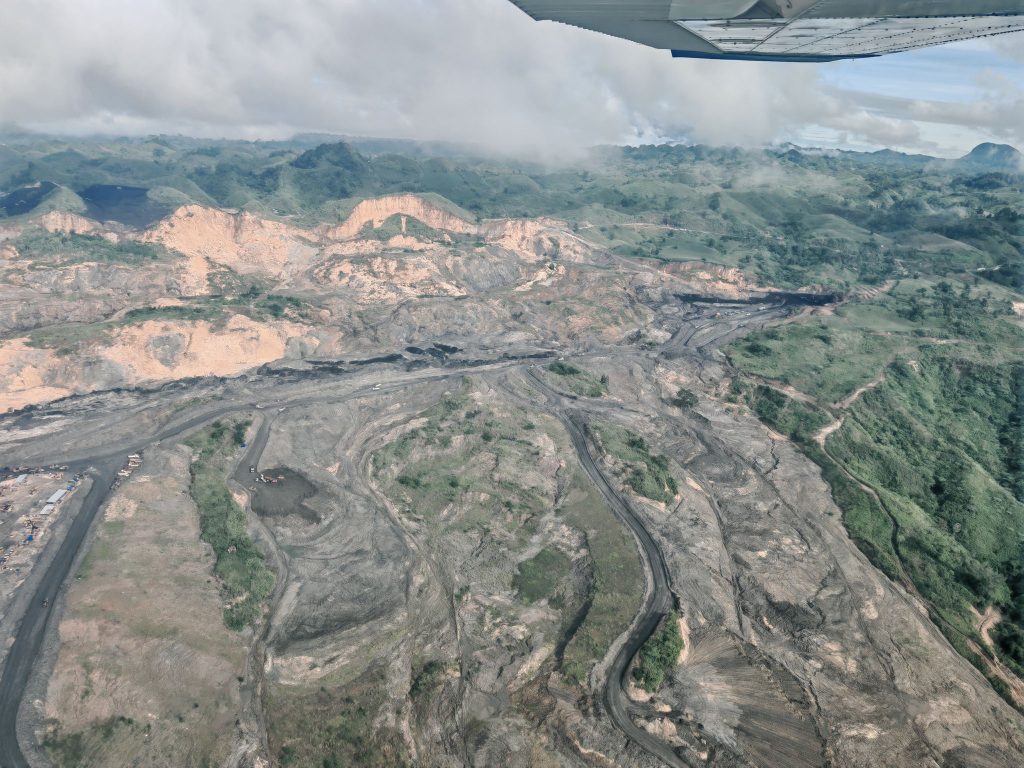
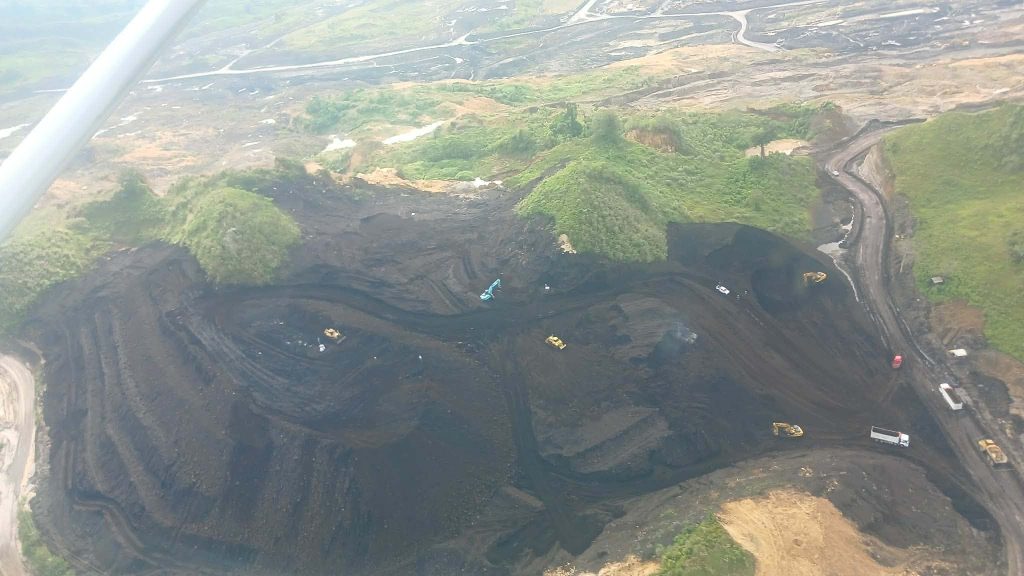
Vice Governor Arthur Pingoy, Board Member Sarse Atam Jr., Board Member Sambog, and Board Member Causing took to the skies to see for themselves what countless residents have long felt on the ground: the land is being scraped, gutted, and hollowed out for coal that is shipped out of the country, while the real costs stay right here—borne by the forests, the watersheds, the farmers, the Indigenous peoples, and the children who have no choice but to call this place home.
The inspection was conducted as part of the Sangguniang Panlalawigan’s preparations for a formal inquiry in January 2026. But if the goal was simply to “view” the extent of mining, the truth is far more severe: what they saw was devastation. The kind that grows quietly, steadily, and fatally.
Because coal mining does not explode overnight.
It collapses slowly—until one day, the mountain gives way.
God forbid.
A Landscape Torn Apart
From above, the coal mining site in Brgy. Ned resembles a patchwork of open pits, discolored soil, and stripped forests. This is not exaggeration; it is the physical reality of open-pit coal extraction.
And yet, Daguma Agro-Minerals, Inc. (DAMI) wants more.
From an already massive 3 million metric tons (MMT) of coal per year, DAMI is demanding to expand to 5 MMT—that’s 5 billion kilograms of coal extracted annually from a province that prides itself on being a model for environmental stewardship.
If 3 MMT has already eroded slopes, silted rivers, destroyed roads, and threatened ancestral domains, what catastrophe awaits at 5 MMT?
This is not development—it is depletion.
The Silent Impacts They Don’t Want You to See
Coal mining’s damage is not always loud. It does not always erupt in headlines. Most days, it is silent. But the silence is deadly.
It is in the air children breathe—dust filled with sulfur and heavy metals.
It is in the rivers where women wash clothes—now murky and contaminated.
It is in the farms losing soil fertility season after season.
It is in the Indigenous communities coerced to surrender their ancestral lands for empty promises.
DAMI once promised relocation sites, an ambulance, and a school bus in exchange for an “interposing no objection” endorsement. Years later, those promises remain broken, but the roads—once passable—are now shattered by 35-ton coal trucks that roar through the barangay daily.
What kind of future is being built here?
And more urgently—who is it really for?
A Disaster Waiting to Happen in a Hazard-Prone Land
Barangay Ned sits on geologically fragile terrain. This area is known for landslides, sinkholes, and flash floods. Any environmental scientist will tell you that open-pit mining in such terrain is not merely irresponsible—it is dangerous.
Coal extraction requires removing forests that hold the soil.
It requires digging deeper into unstable slopes.
It disrupts watersheds that cushion flooding.
One landslide could wipe out entire sitios. One heavy downpour could trigger a flash flood down the valley. And as extraction increases, the risks multiply.
This is not fear-mongering. This is physics.
This is geology.
This is common sense.
We Cannot Claim Ignorance—Not Anymore
The aerial inspection has removed all plausible deniability. The destruction can no longer be softened by technical reports or sanitized environmental compliance certificates. The damage is real, visible, growing—and morally unacceptable.
Other countries are transitioning away from coal because it is the dirtiest fossil fuel.
The Philippines, meanwhile, seems content to sacrifice Indigenous lands and agricultural communities for coal that does not even stay within our borders.
What kind of national energy policy condemns some of our poorest communities to bear the risks of the world’s most outdated and dangerous form of energy?
The Bigger Picture: A Company Without Trust, A Community Without Protection
DAMI’s record of broken commitments is not a footnote—it is the story.
A mining company that cannot keep its promises does not have social license to operate.
A mining company with unclear ownership does not have moral authority to expand.
A mining company that leaves destruction in its wake does not deserve the trust of Ned residents, much less the endorsement of local government.
And after the 2017 killings of tribal members in this very area—an incident rooted in resource conflict—any expansion of coal mining without addressing past injustices becomes not just a technical failure, but a moral betrayal.
The Ball Is Now in Our Hands
The aerial inspection has done its job: it has revealed the truth. A truth that can no longer be ignored, denied, or brushed aside.
Now the question is no longer, “What is happening in Ned?”
We have seen it.
The real question is:
What will South Cotabato do about it?
Will the barangay council, the municipal government, and the provincial board allow DAMI’s expansion to push through, knowing full well the consequences—environmental, social, cultural, and moral?
Or will they stand with the communities who have defended these lands for generations?
We Must Choose Protection Over Extraction
Lake Sebu is the heart of Indigenous culture. It is a biodiversity sanctuary. It is a watershed that sustains thousands. It is not a sacrifice zone for coal.
The inspection is not merely a step in governance—it is a wake-up call.
South Cotabato must decide whether to protect its people or protect a company.
Whether to prioritize long-term safety or short-term revenue.
Whether to stand with history or stand with extraction.
Coal mining in Ned is more than an environmental issue—it is a test of political courage.
And for the sake of the land, the people, the memory of those who died defending it, and the generations yet to come—the answer must be clear.
Choose life over coal.
Choose Lake Sebu.