
In a concerted effort to raise awareness and promote the protection of seagrass ecosystems, the Department of Environment and Natural Resources (DENR) Region 12, through its Provincial and Community Environment and Natural Resources Offices in Sultan Kudarat and Sarangani, spearheaded various activities to commemorate World Seagrass Day on March 1.


With the theme “Harnessing Seagrass’ Carbon Sequestration Potential Against Climate Crisis,” the celebration underscored the critical role of seagrass, locally known as ‘lusay,’ in mitigating climate change. As highly efficient carbon sinks, seagrasses serve as a vital nature-based solution, playing a significant role in reducing carbon footprints and enhancing climate resilience.
Community Engagement and Environmental Actions
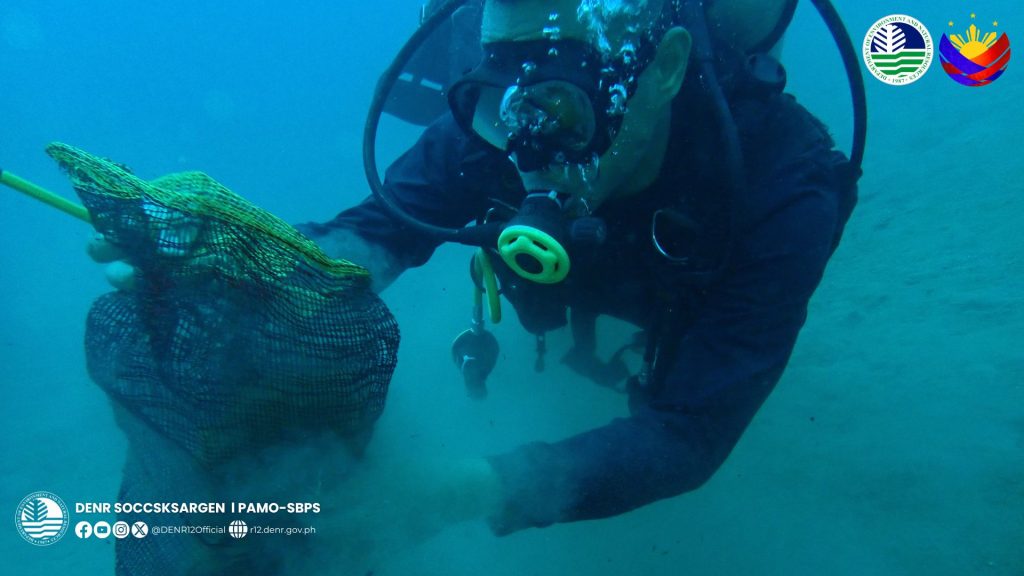
DENR 12 field offices ramped up Communication, Education, and Public Awareness (CEPA) initiatives and organized coastal clean-up drives in various localities. These activities were carried out in partnership with key stakeholders, including the Regional Maritime Unit, Philippine Coast Guard, Century Pacific Agri Ventures Inc., Fisherfolks Association of Brgy. Nalus, JBT Caing Integrated School Teachers, Marine Biology Students’ Society-College of Fisheries from Mindanao State University-General Santos, City Environment and Natural Resources Office-General Santos, Zone Six Small Fishermen Association, Nalilidan Elementary School, Roque Adarna Integrated School, and local government units of various barangays.
The Role of Seagrass in Marine Ecosystems
Seagrasses are essential to marine biodiversity, providing food and shelter to thousands of species, including fish, seahorses, turtles, and the endangered dugong. These underwater meadows also contribute significantly to maintaining the health of coral reefs by stabilizing sediments and filtering pollutants from coastal waters.
Beyond their ecological benefits, seagrasses play a crucial role in carbon sequestration. Their ability to capture and store large amounts of carbon helps buffer the effects of climate change, particularly for fragile marine ecosystems. Given their significance, conservation efforts are necessary to sustain their contributions to marine life and global climate stability.
Global Commitment to Seagrass Conservation
World Seagrass Day was officially recognized by the United Nations General Assembly in 2022 as part of a broader commitment to environmental sustainability. The annual observance serves as a platform to scale up awareness and promote actionable steps for protecting seagrass ecosystems worldwide.
Through its continued advocacy and engagement with communities, DENR 12 remains steadfast in its mission to protect and restore seagrass habitats in the region. By fostering collaboration between government agencies, academic institutions, fisherfolk, and environmental organizations, the initiative highlights the power of collective action in safeguarding marine biodiversity and combating climate change.