
Cotabato, Philippines — In a remarkable event highlighting the richness of the country’s biodiversity, four Philippine Falconets (Microhierax erythrogenys) were recently documented perching on a Bayukbuk tree within the Mount Apo Natural Park (MANP) in Cotabato. The discovery occurred during a monitoring activity conducted by the Protected Area Management Office (PAMO) of MANP.
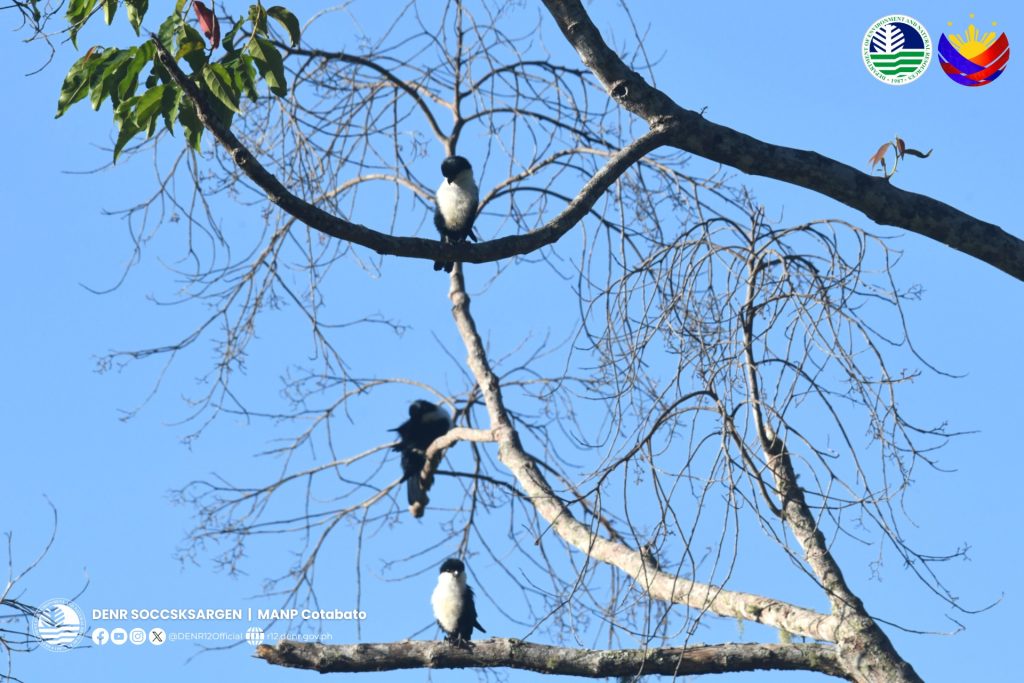
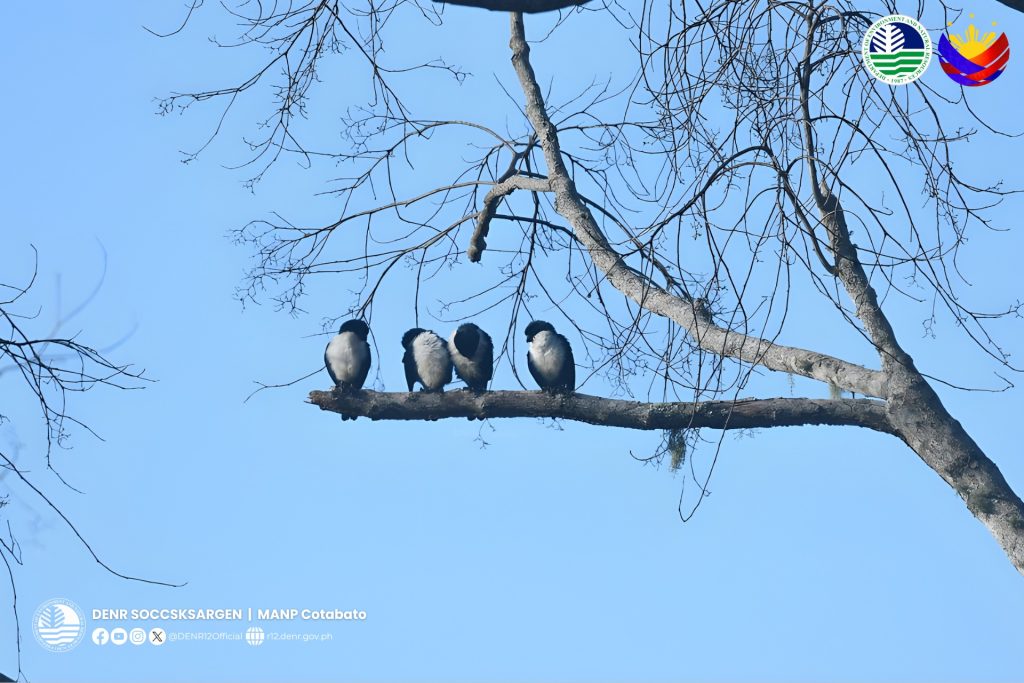
The Philippine Falconet, one of the smallest members of the falcon family, is a bird species endemic to the Philippines. Its distinct black-and-white plumage and diminutive size make it a standout among the country’s avian wildlife. The bird’s upperparts are uniformly black, while its underparts are white, with a buff-toned belly. Its wings feature subtle white barring on the flight feathers, complemented by black underwing coverts.
These agile predators are often seen in pairs or family groups, known for their vocal activity and preference for perching on prominent branches or dead tree canopies as they scout for prey. Despite being classified as Least Concern by the International Union for Conservation of Nature (IUCN), the Philippine Falconet’s population has been showing signs of decline due to habitat loss, underscoring the need for concerted conservation efforts.
The documentation of this species within MANP is a vital contribution to the park’s biodiversity database. “This sighting reinforces the ecological importance of protected areas like Mount Apo and highlights the need for continued monitoring and preservation efforts,” a PAMO representative said.
MANP, a critical habitat for a plethora of flora and fauna, is a biodiversity hotspot requiring active protection. The PAMO has been steadfast in its efforts to ensure the survival of endemic species through regular monitoring and community engagement.
The office also emphasized the role of local communities in wildlife conservation, urging residents to report any rescued or captured wildlife for proper care and rehabilitation. “Community participation is crucial in protecting these species and their habitats. It’s a collective responsibility to safeguard our natural heritage,” the PAMO representative added.
With continued conservation efforts, the sighting of the Philippine Falconet serves as a beacon of hope for the preservation of the country’s rich biodiversity. As one of the treasures of the Philippines’ avian population, its presence in MANP is a testament to the park’s ecological significance and the urgent need to protect such natural sanctuaries.