
MATI CITY, Davao Oriental — A broad coalition of Indigenous Peoples (IPs), private landowners, farmers, fisherfolk, religious organizations, community leaders, and environmental advocates staged a peaceful protest on Tuesday, July 21, in Sitio Casanihan, Barangay Macambol, renewing calls to protect Davao Oriental’s internationally recognized natural treasures as Hallmark Mining Corporation seeks to extend its mining operations for another 25 years.
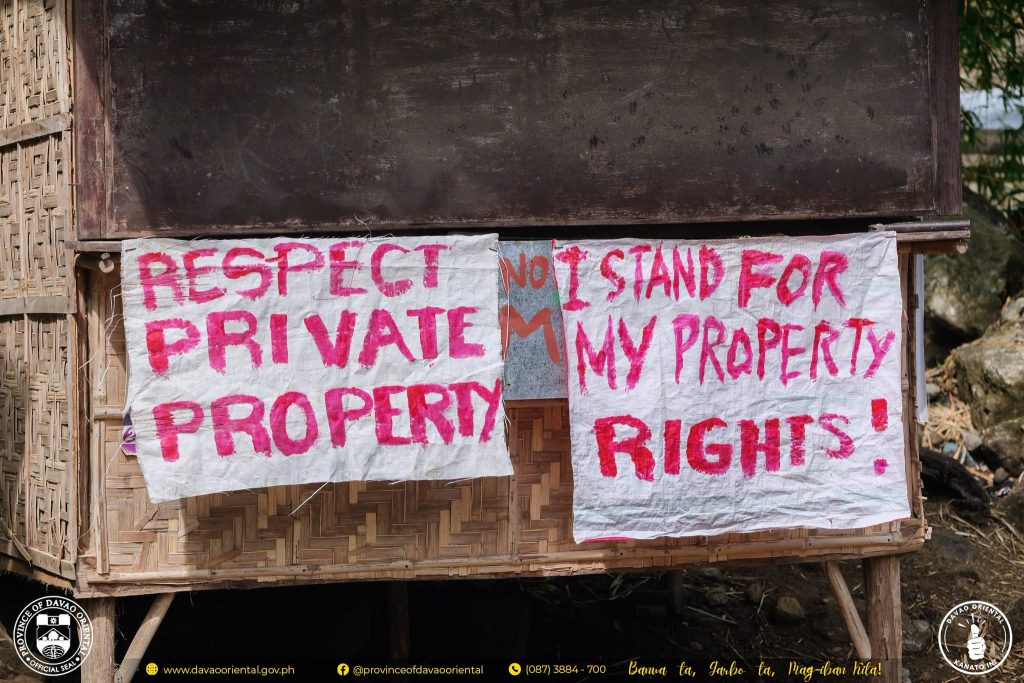
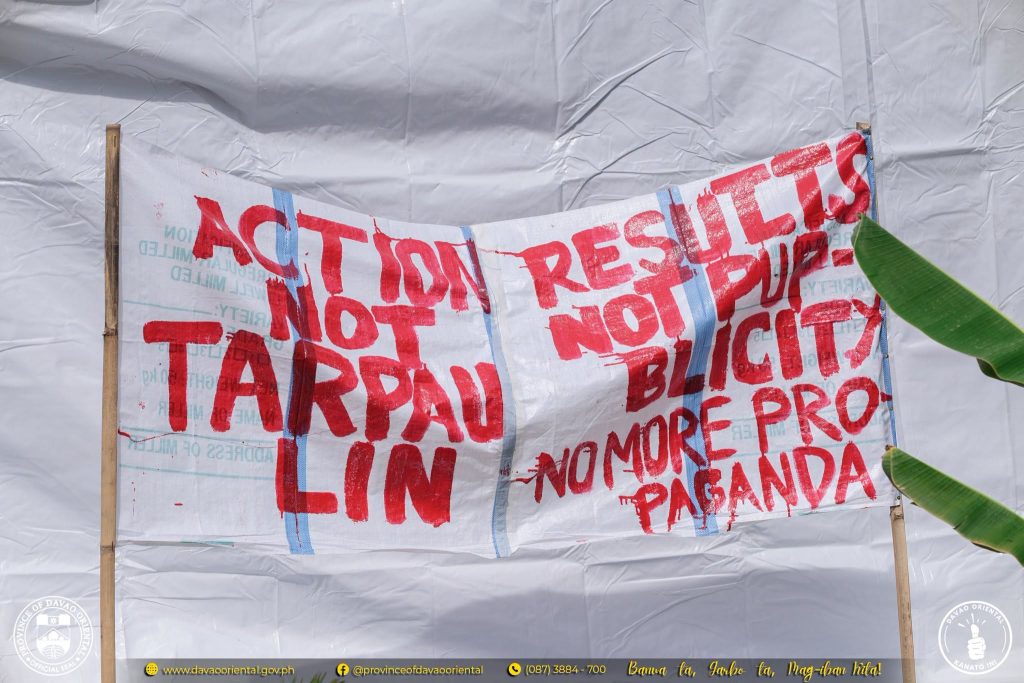
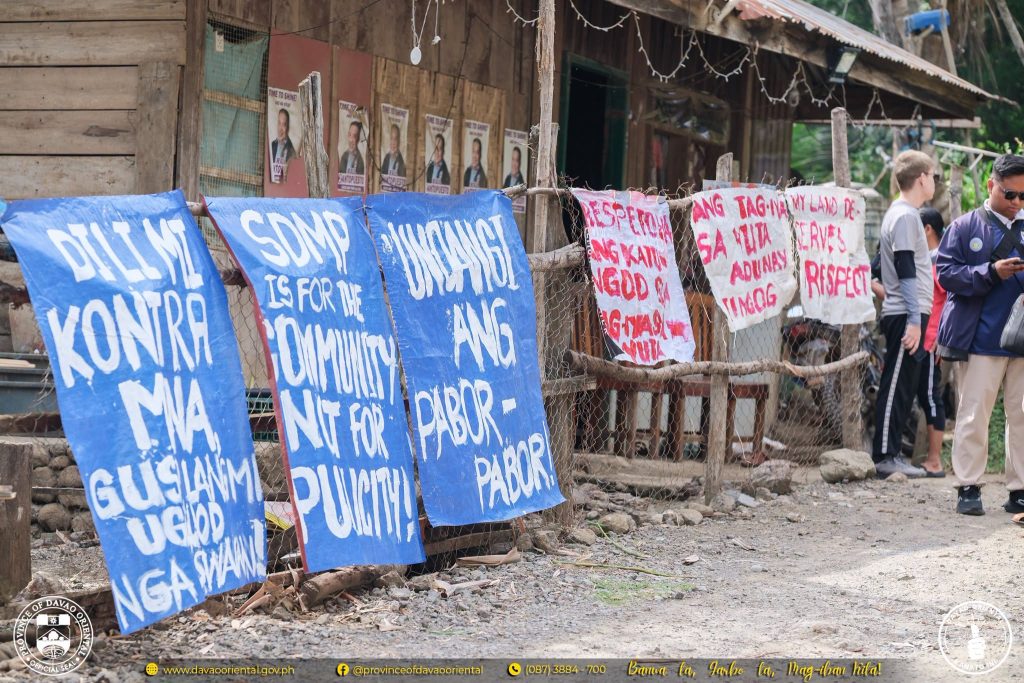
The demonstration, held within the ancestral domain covered by the proposed mining renewal, marks the latest chapter in the province’s long-running struggle between environmental conservation and mineral development. Organizers said the protest was prompted by reports that Hallmark Mining Corporation has applied to renew its Mineral Production Sharing Agreement (MPSA), triggering the mandatory Free, Prior and Informed Consent (FPIC) process among the affected Indigenous Cultural Communities.
For the protesters, the issue extends far beyond the renewal of a mining permit—it is about the future of their ancestral lands, their communities, and some of the country’s most ecologically significant landscapes.
With banners and placards carrying the message “No to Mining,” participants gathered peacefully to affirm what they described as the Indigenous communities’ fundamental right to decide whether they will grant or withhold consent to the proposed extension of mining activities.
As of Tuesday morning, around 50 protesters had assembled in Sitio Casanihan, although organizers expected more residents and supporters from neighboring communities to join as the day progressed.
Defending ancestral domain
Community leaders stressed that the ongoing FPIC process must genuinely reflect the collective decision of the affected Indigenous Peoples, emphasizing that the process is protected under the Indigenous Peoples’ Rights Act (IPRA), which guarantees indigenous communities the right to determine projects that may affect their ancestral domains.
Participants said their opposition is rooted in concerns over the long-term environmental consequences of mining and its potential impact on the communities that rely on the forests, rivers, and coastal ecosystems for their livelihoods.
The protest brought together an unusually diverse alliance—Indigenous leaders, farmers, fisherfolk, private landowners, religious groups, purok officials, members of the media, and other concerned citizens—reflecting the broad public concern surrounding the proposed mining renewal.
Protecting globally recognized ecosystems
Central to the protesters’ appeal is the location of the mining area itself.
Barangay Macambol lies near the Mount Hamiguitan Range Wildlife Sanctuary, one of the Philippines’ most important biodiversity hotspots and a UNESCO World Heritage Site recognized for its unique pygmy forests, rare pitcher plants, and as a habitat of the critically endangered Philippine eagle.
Equally significant is its proximity to Pujada Bay, internationally recognized as one of the Most Beautiful Bays in the World, renowned for its coral reefs, seagrass beds, marine biodiversity, and scenic coastal waters that support fisheries and eco-tourism.
Protesters warned that continued mining operations could increase the risks of soil erosion, sedimentation, habitat degradation, and water pollution—threats they believe could eventually affect both the mountain ecosystem and the marine environment connected to Pujada Bay.
“Our natural resources are not only our inheritance but also our responsibility to future generations,” several demonstrators expressed through their campaign materials and public messages.
A continuing environmental campaign
Tuesday’s protest builds upon mounting opposition that has been growing across Davao Oriental over the past year.
In October 2025, Governor Nelson L. Dayanghirang led provincial officials, municipal leaders, barangay representatives, and community stakeholders in a Dialogue on Mining Concerns at the Subangan Tourism Complex, where local leaders raised alarm over the reported environmental impacts of mining operations in Barangay Macambol.
During the dialogue, the governor warned that more than 200 hectares had already been affected by mining activities, raising concerns over their implications for biodiversity conservation, watershed protection, tourism, and sustainable development.
Delivering one of the forum’s most memorable messages, Dayanghirang declared:
“Mahurot ang kwarta, apan dili nato mapulihan ang atong kalibotan.”
(“We can lose money, but we can never replace our environment.”)
The governor emphasized that while economic gains from mining may be temporary, the destruction of forests, watersheds, and ecosystems could be irreversible.
Provincial officials also underscored the importance of protecting the province’s long-term tourism strategy, including the proposed MACALULA Road Network Loop Project, envisioned to enhance connectivity among the barangays of Macambol, Cabuaya, Luban, and Lanca while promoting sustainable tourism rather than extractive industries.
Following the dialogue, the Provincial Government announced plans to pursue a resolution through the Sangguniang Panlalawigan calling for the suspension of mining activities in the area, reflecting increasing concern among local leaders over balancing economic development with environmental protection.
Hallmark maintains responsible mining position
Hallmark Mining Corporation has previously defended its operations, asserting that it adheres to the principles of responsible mining and complies with government environmental regulations.
The company has cited its Environmental Protection and Enhancement Program (EPEP), which includes sediment control facilities, siltation ponds, biodiversity conservation measures, and regular monitoring through a Multi-Partite Monitoring Team.
Hallmark has also highlighted the economic benefits generated by its operations, noting that the mine provides employment to more than 1,800 workers while supporting thousands more through related industries, suppliers, and service providers.
The company has likewise pointed to its corporate social responsibility initiatives, tax contributions, and community development programs involving education, healthcare, and infrastructure improvements.
Balancing development and conservation
The renewed protest highlights the difficult balancing act facing Davao Oriental—a province rich in mineral resources yet equally renowned for its globally recognized ecological assets.
For many residents, the issue is no longer simply about mining versus investment.
Rather, it is a question of what kind of future the province intends to pursue: one centered on extractive industries with finite economic returns, or one anchored on preserving ecosystems that sustain biodiversity, fisheries, agriculture, tourism, and the cultural identity of Indigenous communities.
As the FPIC process continues, community members insist that the voices of Indigenous Peoples must remain at the center of the decision-making process, with the outcome reflecting their collective will rather than external economic interests.
Meanwhile, authorities continue to monitor the gathering in Sitio Casanihan, reporting that the protest has remained peaceful, orderly, and respectful of the rights of all stakeholders involved.
With the future of Hallmark Mining Corporation’s proposed 25-year renewal now intertwined with the FPIC process, the unfolding developments in Barangay Macambol are expected to become one of the defining environmental issues facing Davao Oriental—where the debate over economic opportunity, Indigenous rights, and environmental stewardship continues to shape the province’s path forward.