
Two Young Lives, Two Broken Dreams
The deaths of Rene Clert Baterbonia and Chukwuemeka Divine Adili are not merely another tragedy in Philippine sports. They are a devastating reminder that behind every student-athlete is a family, a struggle, and a dream. Rene, a 19-year-old rookie from Talacogon, Agusan del Sur, carried the hopes of parents who earned a living selling fish in the market. Divine, a 21-year-old Nigerian student-athlete, crossed continents to pursue a future through education and basketball. Both young men saw Ateneo as a pathway toward a better life. Both trusted the institution that recruited them. Today, both are dead.
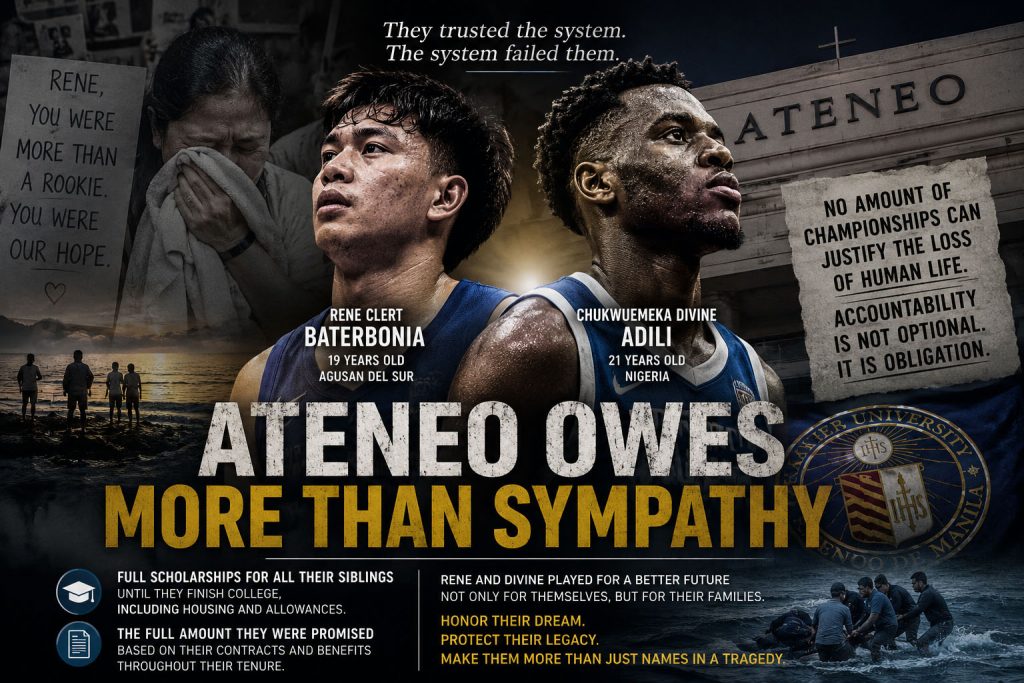
No statement of sympathy, no carefully crafted press release, and no appeal for privacy can erase the pain now endured by the families they left behind. The university cannot bring Rene and Divine back, but it can choose whether to respond with genuine accountability or with institutional self-preservation.
The Least Ateneo Can Do
At this point, the least Ateneo can do is provide full educational scholarships to all the siblings of Rene and Divine until they complete their college education. This should include not only tuition but also housing, allowances, books, and other necessary expenses. Those who knew these young men consistently describe them as individuals motivated by a desire to help their families. They did not dream only for themselves. They dreamed of lifting their parents out of hardship and giving their brothers and sisters opportunities they never had.
The university should also provide the families with the full amount that Rene and Divine were expected to receive throughout their entire tenure under their athletic scholarships and agreements. These benefits were part of the future they were working toward. Their deaths should not extinguish the commitments made to them. Such compensation is not charity. It is not generosity. It is the minimum moral obligation owed to families whose sons died while participating in a university-sanctioned activity.
No Foul Play Does Not Mean No Responsibility
Much of the public discussion has centered on the initial finding that there was no foul play in the drowning incident. However, the National Bureau of Investigation itself has clarified that the absence of foul play does not automatically eliminate the possibility of criminal liability. Under Philippine law, deaths resulting from negligence, reckless imprudence, or failure to exercise due care may still constitute a crime even when there was no intent to harm.
The NBI has identified critical questions that remain unanswered. Were the dangers of the location properly assessed? Were sea conditions evaluated before activities were conducted? Were sufficient safeguards and emergency protocols in place? Was there adequate supervision? Did those responsible exercise the level of care required under the circumstances?
These questions strike at the heart of the issue. The real question is not why Rene and Divine were in Aurora. The real question is why those responsible placed them in an environment where such a tragedy could occur.
The Burden of Poverty and Obedience
There is an uncomfortable reality that many privileged observers fail to understand. When you are poor and talented in the Philippines, saying “no” is often not an option. Young athletes recruited from remote provinces rarely challenge authority figures. They do not question training schedules. They do not demand explanations. They do not refuse activities that appear risky. They fear being labeled difficult, ungrateful, or replaceable.
When a life-changing opportunity finally arrives, they cling to it with everything they have. They trust the coaches who recruited them. They trust the administrators who oversee them. They trust the institution that promises to shape their future.
Rene Baterbonia did what countless young Filipinos would have done. He showed up. He obeyed. He trusted. He believed that hard work and discipline would create a better future for himself and his family. Divine Adili did the same. The burden of responsibility therefore falls not on the athletes but on the adults and institutions entrusted with their safety.
Families Left in the Dark
Perhaps one of the most disturbing revelations following the tragedy is the manner in which communication was handled. Rene’s mother, Rovelyn Baterbonia, disclosed that she learned about her son’s death through Ateneo’s Facebook statement. Imagine the horror of discovering that your child has died not through a personal call from university officials, but through social media.
Adding to the pain is her claim that she was never fully informed about the nature of the activities planned during the training camp. According to reports, Rene had also mentioned a strict no-phone policy implemented during the camp. While such restrictions may be common in sports programs, they become highly problematic when imposed during off-campus activities involving significant risks.
The result was a communication vacuum that left families completely uninformed and powerless. If Ateneo truly prioritized the welfare of its student-athletes, direct communication with parents should have been among its first and most immediate responsibilities.
Accountability Beyond Public Relations
What has troubled many observers is the perception that Ateneo’s initial response focused more on managing public reaction than confronting difficult questions. The university emphasized support for grieving families and called for privacy, but many have noted the absence of a clear timeline for an independent investigation or a comprehensive review of safety protocols.
This matters because institutions earn public trust not through statements but through transparency. Accountability is not demonstrated by asking for understanding. Accountability is demonstrated by openly examining failures, identifying responsible parties, and implementing reforms to ensure such tragedies never happen again.
The growing involvement of the NBI, CIDG, Philippine Sports Commission, Congress, and other agencies reflects a reality that many people already recognize: public confidence in the university’s ability to investigate itself has been severely damaged.
A System That Must Change
The deaths of Rene Baterbonia and Divine Adili should not be treated as isolated incidents. They expose broader questions about athlete welfare, institutional responsibility, and the culture surrounding collegiate sports in the Philippines. Universities should never have unchecked authority over student-athletes without meaningful safeguards. Off-campus training programs should be subject to stricter oversight, mandatory safety assessments, emergency preparedness requirements, and transparent communication with families.
There must also be stronger protections for student-athletes themselves, including guaranteed communication with parents and guardians, clear disclosure of risks associated with training activities, and independent safety personnel present during potentially dangerous exercises.
Championships, trophies, and athletic prestige can never outweigh human life.
A Legacy That Cannot Be Hidden
Ateneo has built a reputation as one of the country’s premier educational institutions. Its basketball program has produced championships, national recognition, and generations of admired athletes. Yet no amount of success can shield an institution from accountability when tragedy strikes.
The deaths of Rene Baterbonia and Divine Adili have left a permanent scar not only on their families but also on the university that promised to guide and protect them. Every championship banner hanging inside Ateneo’s facilities will now stand alongside the memory of two young men who trusted the institution with their futures and never returned home.
The families do not need carefully worded statements. They do not need institutional distancing. They do not need public relations management.
They need answers.
They need accountability.
And they deserve justice.