
SARANGANI BAY, Philippines — A rare and encouraging sighting of a mother and calf dugong in the waters of Kiamba has highlighted the ecological importance of Sarangani Bay, even as the recent death of a pregnant dugong in General Santos City underscores the continuing threats facing the critically endangered marine mammal.
The Protected Area Management Office of the Sarangani Bay Protected Seascape (PAMO-SBPS) confirmed that its monitoring team documented the mother-and-calf pair on February 6, 2026. The dugongs were observed exhibiting natural behavior, including nursing, indicating a healthy bond and successful reproduction in the area.
According to PAMO-SBPS officials, the sighting reinforces Sarangani Bay’s role as a vital habitat and breeding ground for dugongs, which rely heavily on the bay’s extensive seagrass meadows for food and shelter.
“This rare encounter reflects the positive results of years of conservation efforts and community cooperation,” the agency said. “It shows that Sarangani Bay remains a safe and suitable environment for dugongs to reproduce and thrive.”
Pregnant Dugong Found Dead in General Santos
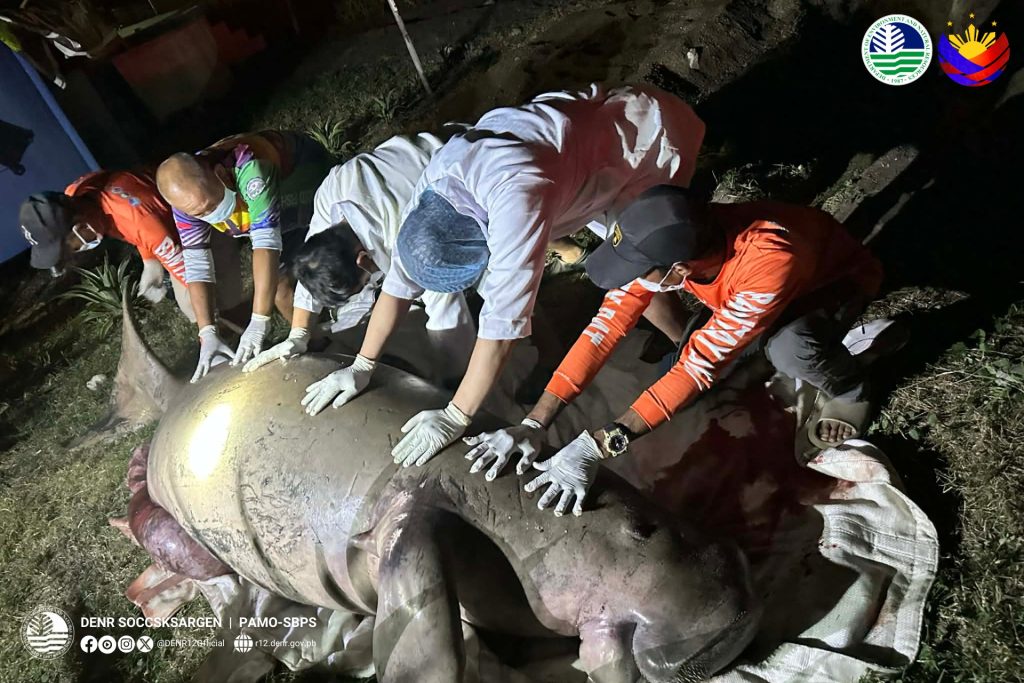
However, just a day after the hopeful sighting, another dugong was found stranded along the shoreline of Purok Wal, Barangay Tambler, General Santos City, at around noon on February 7.
Based on reports from Bantay Dagat volunteers, nearby residents, and the General Santos City Police Maritime Group, the animal was still alive when first discovered. Witnesses said the dugong appeared weak and was reportedly vomiting blood before it eventually died.
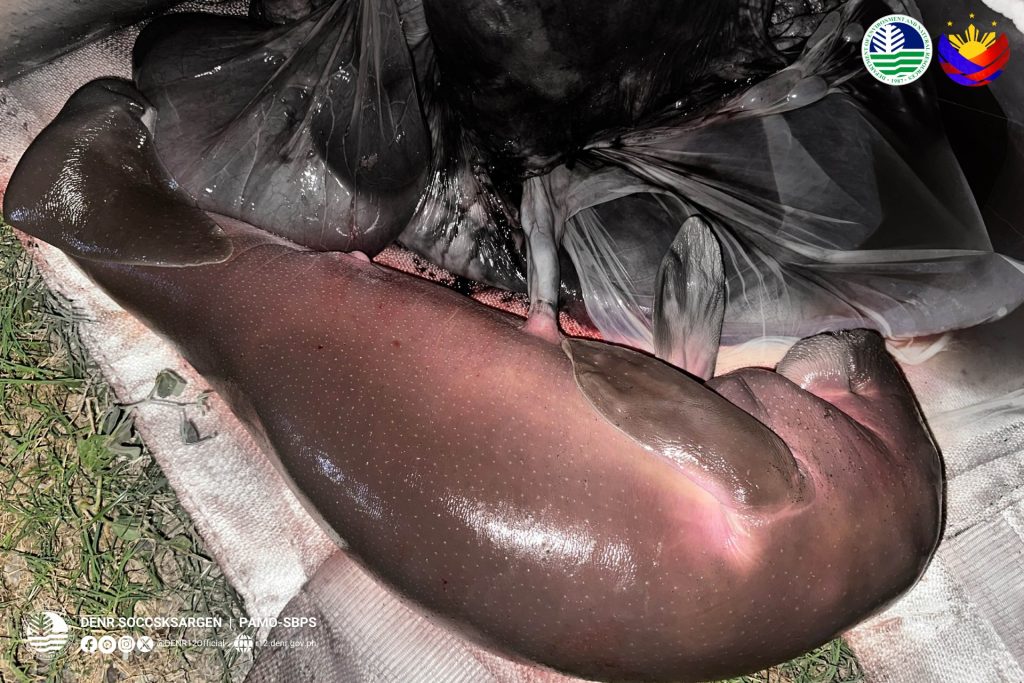
Initial field assessments did not indicate that the animal was pregnant. But a necropsy later conducted at the Marine Wildlife Rescue Center of the Protected Area Management Board (PAMB-WRC) in Ladol, Alabel, confirmed that the dugong was carrying a calf.
The resident veterinarian of the Sarangani Bay Protected Seascape said the dugong’s internal organs appeared normal, with no traces of foreign objects or ingested materials that could have directly caused its death. The animal was estimated to weigh between 400 and 500 kilograms and may have been nearing its delivery period.
Authorities are continuing to investigate the possible causes of death, including environmental stress, underwater disturbances, or undetected injuries.
A Mix of Hope and Warning
SBPS officials described the two closely timed events as a reflection of both progress and persistent challenges in marine conservation.
“These closely timed events reflect both the gains achieved through conservation efforts and the need for sustained vigilance,” the agency said in a statement.
The successful sighting of a nursing mother and calf offers hope for the recovery of the species, while the loss of a pregnant dugong serves as a stark reminder of how vulnerable these animals remain in coastal waters.
Dugongs, locally known as “sea cows,” are classified as critically endangered under Department of Environment and Natural Resources (DENR) Administrative Order 2019-09. They depend almost entirely on healthy seagrass ecosystems and are highly susceptible to threats such as boat strikes, fishing gear entanglement, habitat destruction, and marine pollution.
Call for Stronger Protection and Public Awareness
In light of the recent incidents, PAMO-SBPS renewed its call for stronger protection measures and greater public participation in marine conservation.
The public is advised to:
- Maintain a safe distance when encountering dugongs;
- Avoid chasing, touching, or feeding marine mammals;
- Reduce boat speed in shallow and seagrass-rich areas;
- Properly dispose of waste to prevent marine pollution.
Authorities also urged residents and fisherfolk to immediately report any dugong sightings, injuries, or strandings to PAMO-SBPS or concerned local government units.
Community Role in Conservation
Officials emphasized that the continued survival of dugongs in Sarangani Bay depends largely on cooperation among government agencies, local communities, environmental groups, and partner stakeholders.
“The presence of a mother and calf proves that our waters can still sustain life when properly protected,” SBPS officials said. “But every loss reminds us that conservation is a shared responsibility that must be strengthened, not relaxed.”
As Sarangani Bay remains one of the country’s most important habitats for dugongs, environmental authorities stressed that sustained vigilance, education, and enforcement are essential to ensure that future generations will continue to witness these gentle marine mammals in Philippine waters.