
KORONADAL CITY, South Cotabato — Police declared the Notre Dame of Marbel University (NDMU) free of explosives after a security sweep on Tuesday, October 27, 2026, following the discovery of a handwritten bomb threat inside a campus restroom that prompted the suspension of classes and precautionary security measures.
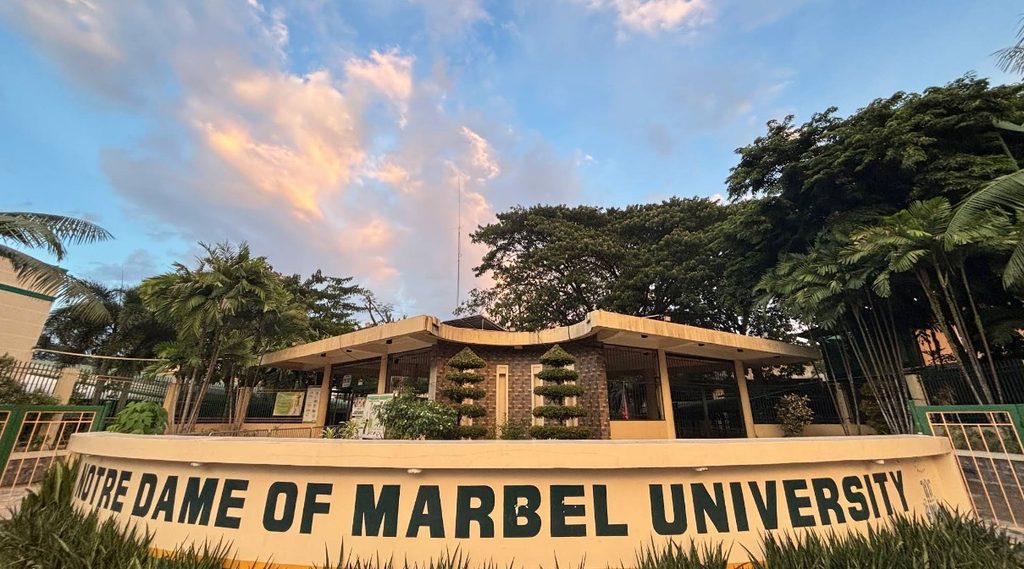
The Koronadal City Police Station confirmed that no improvised explosive device (IED) or hazardous materials were found inside the university compound as of 12:15 p.m. on Tuesday. The inspection was conducted by police personnel in coordination with the Provincial Explosive Ordnance Disposal (EOD) and K9 Unit.
Koronadal City police chief Police Lieutenant Colonel Harold Cornel said the inspection yielded negative results, indicating that no bomb or hazardous material was detected during the security operation. However, authorities continue to investigate the threat and gather evidence to identify the person responsible.
Handwritten threat triggers campus security response
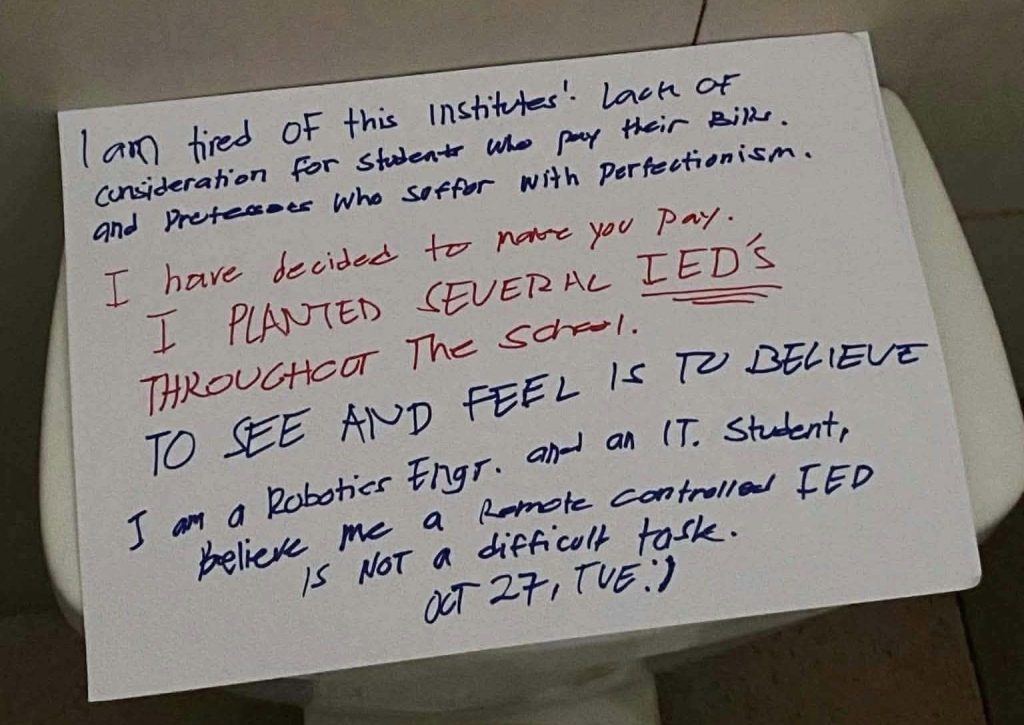
The incident began after two pieces of vellum paper containing threatening messages were reportedly discovered inside a university restroom. One of the notes claimed that several improvised explosive devices had been planted throughout the school and threatened retaliation against the institution.
The message expressed frustration over what its author described as a lack of consideration for students who pay their tuition and for students allegedly burdened by perfectionism and pretests. It then escalated into a direct threat against the university, claiming that multiple IEDs had been placed across the campus.
The note also claimed that its author was a robotics engineering and information technology student and asserted that a remotely controlled explosive device would not be difficult to construct. These statements remain unverified and should not be taken as evidence of the author’s identity, technical capabilities, or the actual presence of explosives.
The discovery prompted an immediate security response and the suspension of scheduled academic activities while authorities assessed the campus for potential danger.
University postpones afternoon final examinations
In a memorandum issued on October 27, NDMU Vice President for Academics Joan P. Palma announced the postponement of all final examinations scheduled from 1:30 p.m. onward that day.
The university said the measure was necessary to allow a campus-wide security and safety assessment. Affected examinations will be rescheduled for the following week, with specific dates and schedules to be announced through official university channels.
Students were instructed to leave the campus after completing their morning examinations and other activities to give authorized personnel sufficient time to conduct the security sweep.
The administration also urged students, faculty members, and other personnel to remain calm and obtain updates only from official university announcements.
The precautionary measures were intended to protect the NDMU community while police and specialized security personnel examined the reported threat.
Investigation continues despite negative findings
Although authorities found no explosives during the inspection, the case remains under investigation. Police are coordinating with university officials and collecting additional information and evidence to establish the origin of the threatening messages and identify the person or persons behind them.
The absence of explosives does not automatically establish that the threat was harmless or eliminate the need for a criminal investigation. Authorities must still determine whether the messages were deliberately intended to cause alarm, disrupt university operations, or conceal another motive.
Police also warned the public against making bomb threats, including those presented as jokes or pranks. Such acts can trigger evacuations, interrupt classes and examinations, cause anxiety among students and personnel, and require the deployment of specialized police and emergency resources.
The authorities cited Presidential Decree No. 1727, which penalizes the malicious dissemination of false information concerning bombs, explosives, or similar devices. Any potential criminal liability, however, will depend on the facts established by investigators and the applicable law.
Similar incidents reported at other universities
The incident in Koronadal comes amid reports of separate bomb threats affecting educational institutions elsewhere in the Philippines in October.
In Davao City, police reported that St. John Paul II College of Davao and the University of Southeastern Philippines’ Obrero Campus were cleared after security inspections reportedly found no explosives following separate threats on October 25 and 26.
In Metro Manila and nearby areas, the University of the East, Our Lady of Fatima University in Pampanga, and the University of Santo Tomas also reportedly implemented precautionary security measures after threatening notes were discovered between October 20 and 23.
The similarities in the reported incidents—including handwritten messages discovered in university restrooms—have raised concerns about campus safety. However, there is no established evidence presented in the available accounts that the incidents are connected or that they were carried out by the same individual or group.
Authorities must establish the circumstances of each case independently before drawing conclusions about any possible connection.
Public urged to remain vigilant and avoid spreading unverified information
The NDMU incident underscores the need for educational institutions to take every reported bomb threat seriously while ensuring that emergency responses are proportionate to the available information.
Students, parents, faculty members, and school personnel are advised to follow official safety instructions, report suspicious information to authorities, and refrain from circulating unverified claims that could intensify public alarm.
For now, the university has been cleared of explosives based on the security inspection conducted on October 27. The investigation, however, remains ongoing, and authorities have yet to publicly identify a suspect or establish who wrote and placed the threatening messages.
The central question is no longer simply whether a bomb was found, but who was responsible for the threat and whether the evidence will support criminal charges.