
SURIGAO CITY, Surigao del Norte — The return of FastCat M17 to the Liloan–Lipata ferry route is expected to restore a vital transport link between the Visayas and Mindanao, easing the movement of passengers, commercial goods and agricultural products across the two island regions.
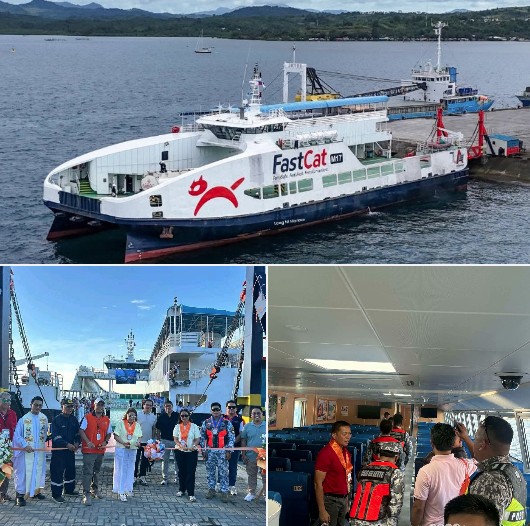
The vessel officially resumed operations on October 20, 2026, with an inaugural voyage departing from the Liloan Ferry Terminal at 4 p.m. The reopening was attended by representatives of FastCat Shipping Line, local government officials, the Terminal Management Office (TMO) in Liloan, the Philippine Coast Guard (PCG), and the vessel’s officers and crew.
The resumption restores a direct sea connection between Liloan in Southern Leyte and Lipata in Surigao City, Surigao del Norte, providing travelers and businesses with an alternative to longer or more complicated transport arrangements.
FastCat M17 is currently reported to be operating two round trips daily, with an estimated sailing time of three to three and a half hours. The schedule offers a more direct option for passengers and freight moving between the two regions, although travelers are advised to confirm departure times and cargo arrangements with the operator.
A transport link with wider economic implications
The return of the route is significant for communities and businesses that depend on the regular movement of people and goods between the Visayas and Mindanao. A reliable ferry connection can help reduce travel complications, support the distribution of agricultural produce, and improve access to markets, services and tourism destinations.
For Liloan and surrounding communities in Southern Leyte, the reopening is expected to bring renewed activity to businesses connected to ferry operations, including transport services, food establishments, shops and other small enterprises serving passengers and cargo handlers.
In Surigao, the direct connection can likewise help facilitate the movement of goods and travelers arriving from the Visayas. Agricultural producers, traders, transport operators and tourism-related businesses stand to benefit from a route that reduces the need for indirect journeys.
Local officials have expressed optimism that the return of the service will help revive commercial activity and tourism in the area. However, the extent of the economic benefits will depend on sustained operations, passenger demand, freight volumes and the reliability of supporting road and port infrastructure.
Infrastructure challenges behind the disruption
The route’s return follows a prolonged period of disruption that highlighted the dependence of inter-island shipping on both port facilities and road infrastructure.
Typhoon Odette, which struck parts of the Philippines in December 2021, severely affected infrastructure in several areas, including port facilities in Surigao. Subsequent operational difficulties, alongside restrictions on the weight of vehicles permitted to cross the Liloan Bridge, also complicated transport arrangements along the corridor.
The bridge restrictions were particularly consequential for a ferry service that relies on commercial trucks, buses and other rolling cargo. When heavy vehicles cannot use connecting roads or bridges, the value and practicality of a sea route can be diminished even when the ferry itself is available.
These challenges contributed to service interruptions and adjustments over the years. The prolonged disruption affected the availability of a direct transport option for travelers and businesses, while alternative routes required different travel arrangements.
Earlier in 2026, Archipelago Philippine Ferries Corporation reportedly explored a temporary alternative connection through Maasin City to Surigao to help maintain transport links. The restoration of the direct Liloan–Lipata service provides a more straightforward option for those whose journeys are best served by the two ports.
The history of the route underscores an important point: restoring ferry operations is only one part of maintaining dependable inter-island transport. Ports, bridges, access roads and connections to land-based transport services must also function effectively to ensure that passengers and cargo can complete their journeys.
Recovering from lost business
The suspension also carried financial consequences for the ferry operator. According to information provided by the company’s captain, the interruption resulted in losses amounting to millions of pesos.
For ferry operators, prolonged disruptions can affect revenue from passenger tickets and cargo services while leaving vessels and supporting operations with fewer opportunities to generate income. Businesses around the terminals can also lose customers when regular passenger and freight traffic declines.
The route’s reopening offers an opportunity to recover some of that activity. Yet a lasting recovery will require more than the return of a vessel. Consistent sailing schedules, safe operations, effective coordination with port authorities and accessible connecting transport will be important in rebuilding public confidence and encouraging businesses to rely on the route.
A renewed connection between the islands
The reopening of the Liloan–Lipata route represents a practical step toward improving connectivity between the Visayas and Mindanao. Beyond shortening the sea journey between the two ports, the service provides a transport corridor that supports everyday travel, commercial exchanges and access to regional destinations.
For passengers, the immediate benefit is another direct travel option. For traders and agricultural producers, it is the prospect of moving goods through a more convenient link. For communities along the corridor, it is an opportunity to regain business activity associated with inter-island mobility.
The long-term value of FastCat M17’s return will ultimately depend on whether the route can operate safely and consistently, supported by infrastructure capable of accommodating the vehicles, cargo and passengers that depend on it.
As the vessel resumes regular service, the challenge is no longer simply to reopen the route, but to sustain a dependable connection that helps keep the economies and communities of the Visayas and Mindanao within easier reach of one another.