
TAMPAKAN, South Cotabato — The municipal government of Tampakan has intensified its campaign against illegal small-scale mining, locally known as “banlas,” as part of a broader effort to protect communities and curb environmental degradation in the area.
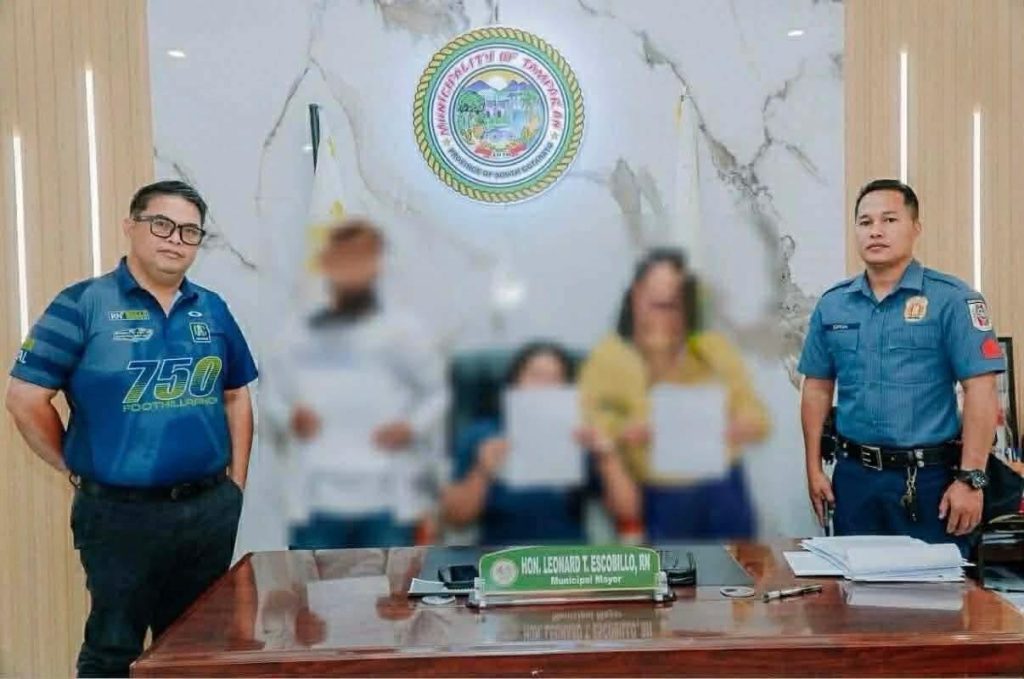
Mayor Leonard Escobillo led a dialogue with individuals allegedly involved in buying gold sourced from illegal mining activities. During the meeting, the individuals issued an apology and pledged to cooperate with authorities in ongoing efforts to dismantle the illicit trade.
The dialogue forms part of the local government’s strategy to identify and hold accountable the financiers behind illegal mining operations, which officials say continue to threaten both public safety and the environment.
Authorities underscored that “banlas” operations pose serious risks, including landslides and accidents in mountainous areas, while also contributing to the destruction of forests and watersheds. The local government reiterated its call for strict adherence to environmental laws and the collective responsibility to safeguard natural resources.
To strengthen enforcement, the municipality’s Task Force Banlas is set to undertake more aggressive and coordinated actions aimed at permanently stopping illegal mining in Tampakan’s upland communities.
In a parallel move, the 39th Infantry Battalion of the Philippine Army, led by Commanding Officer Lt. Col. Hector A. Estolas and Executive Officer 1st Lt. Lester S. Depot, conducted a courtesy call with the local government to reinforce inter-agency collaboration.
During the meeting, Mayor Escobillo emphasized the urgency of decisive action, revealing that the municipal government is preparing documents to secure deputation from the Department of Environment and Natural Resources (DENR) for Task Force Banlas. This move is expected to strengthen the task force’s authority in enforcing environmental laws and protecting affected communities.
For its part, the Philippine Army expressed full support for the initiative, committing to assist in monitoring affected areas and reporting suspicious activities. The military also pledged to help ensure the safety and security of residents in vulnerable communities.
A Mining Hotspot
Tampakan’s persistent struggle with illegal mining is largely tied to its vast mineral wealth, making it one of the country’s most significant mining hotspots.
The Tampakan deposit is considered among the largest undeveloped copper and gold reserves in the Philippines and globally. It is estimated to contain around 2.94 billion tonnes of ore with an average grade of 0.6% copper, along with approximately 18 million ounces of gold.
Discovered in 1990 by the Australian firm Western Mining Corporation, mining rights in the area were later transferred to Sagittarius Mines Inc. (SMI), which continues to hold a Financial and Technical Assistance Agreement with the Philippine government.
However, development of the Tampakan project has faced repeated setbacks due to regulatory and social challenges, including bans on open-pit mining imposed by South Cotabato in 2010 and at the national level in 2017. Although the national ban was lifted in 2021, local opposition and policy hurdles remain.
In 2020, the Tampakan municipal government revoked its agreement with SMI, citing concerns over inequitable benefits for local communities. Despite this, the project remains under consideration as part of the government’s broader push to revive the mining sector to support economic recovery.
If approved, the Tampakan project could become one of the largest copper mines in the country, with projected annual production of 375,000 tons of copper and 360,000 ounces of gold over a 17-year period.
Amid these developments, local officials maintain that enforcing the law and protecting communities from the dangers of illegal mining remain their top priorities.