
CAGAYAN DE ORO CITY — The presence of United States servicemen at Lumbia Air Base in Barangay Lumbia has been confirmed by the Philippine Army, with officials emphasizing that the deployment is solely for joint training activities under the annual Balikatan Exercises.
Major General Michele Anayron Jr., commander of the Army’s 4th Infantry Division (4ID), said the American troops recently arrived in Northern Mindanao as part of the advance party preparing for the upcoming joint military drills between the Philippines and the United States.
Anayron clarified that the activities are focused on Humanitarian Assistance and Disaster Response (HADR) operations and are not connected to any ongoing international conflict.
“This training has nothing to do with the West Philippine Sea or the war in Iran. This is purely training,” Anayron said, addressing concerns circulating online following reports of the arrival of US personnel in the city.
Arrival of US Personnel
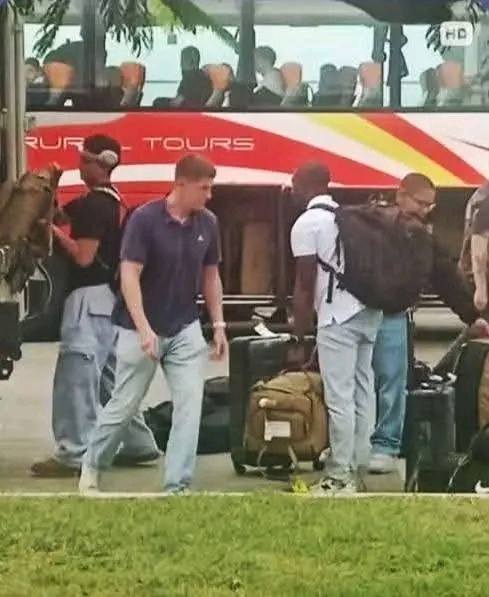
Local reports indicated that a bus carrying US servicemen, some in civilian attire, entered Lumbia Air Base on Tuesday, March 10. Photos and videos of their arrival quickly circulated on social media, prompting speculation among residents.
Some of the US personnel were also reportedly seen checking in at several hotels in downtown Cagayan de Oro, signaling the start of preparations for the scheduled joint activities.
Lumbia Air Base, the city’s former civilian airport, has since been converted into a Philippine Air Force installation and is among the nine military facilities designated under the Enhanced Defense Cooperation Agreement (EDCA) between the Philippines and the United States.
Under the agreement, the facility serves as a joint-use site where allied forces can conduct training and coordinate humanitarian and disaster response operations.
Training Focused on Disaster Response
According to Anayron, the majority of the training will take place within Lumbia Air Base, where Philippine and US troops will rehearse various scenarios aimed at improving disaster preparedness and emergency response capabilities.
He explained that the joint exercises would allow soldiers in Northern Mindanao to gain exposure to specialized training that is typically conducted in Luzon during the annual Balikatan exercises.
“The Armed Forces of the Philippines is gradually shifting its focus from internal defense to external defense operations. Because of this, it is important for soldiers in Mindanao to be exposed to these types of exercises,” Anayron said.
The commander also revealed that he personally recommended hosting some of the training activities in the region to strengthen the preparedness and capabilities of troops based in Mindanao.
Military Seeks to Ease Public Concerns
The Philippine Army issued the clarification after images of foreign soldiers reportedly seen in the city began spreading online, causing concern among some residents.
Military officials stressed that the presence of US troops is part of long-standing military cooperation between the Philippines and the United States and should not be interpreted as a sign of escalating tensions in the region.
Anayron also urged the public to avoid spreading unverified information that could cause unnecessary alarm.
“We encourage the public to verify information from official sources before sharing it, to prevent the spread of misinformation that may create fear among the community,” he said.
History of Joint Training in Northern Mindanao
The 4th Infantry Division has previously hosted joint training exercises with foreign military partners.
Last year, more than 70 servicemen from the Australian Defence Force conducted a month-long jungle warfare training with Philippine soldiers at Camp Kibaritan, a vast 46,000-hectare military reservation located in Bukidnon.
The training area spans the towns of Kalilangan, Talakag, and Pangantucan, and is one of the largest military training grounds in the region.
Officials said these joint exercises are intended to strengthen military interoperability, enhance disaster response capabilities, and deepen defense cooperation between allied forces.
The annual Balikatan Exercises, which translates to “shoulder-to-shoulder,” remain the largest military drills conducted jointly by the Philippines and the United States, bringing together thousands of troops for various training activities across the country.