
MALITA, Davao Occidental — The Philippine Anti-Corruption Commission (PACC) has uncovered major irregularities in a Department of Public Works and Highways (DPWH) flood control project in Malita that was officially reported as “100 percent completed,” raising serious concerns of misreporting, substandard construction, and possible fraud.
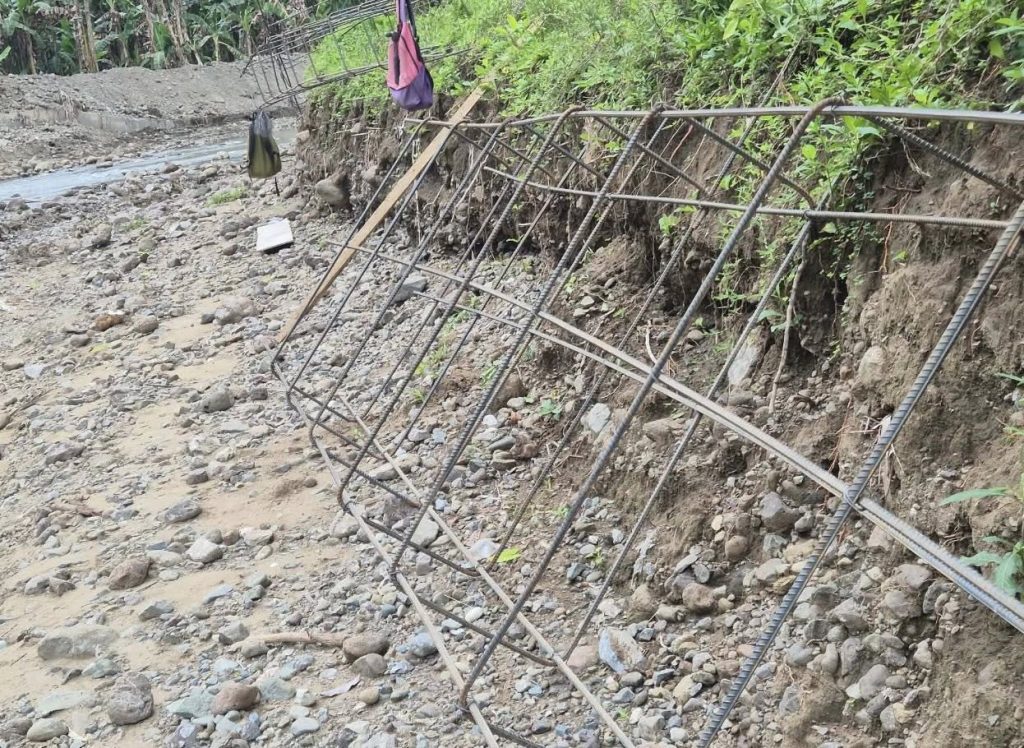
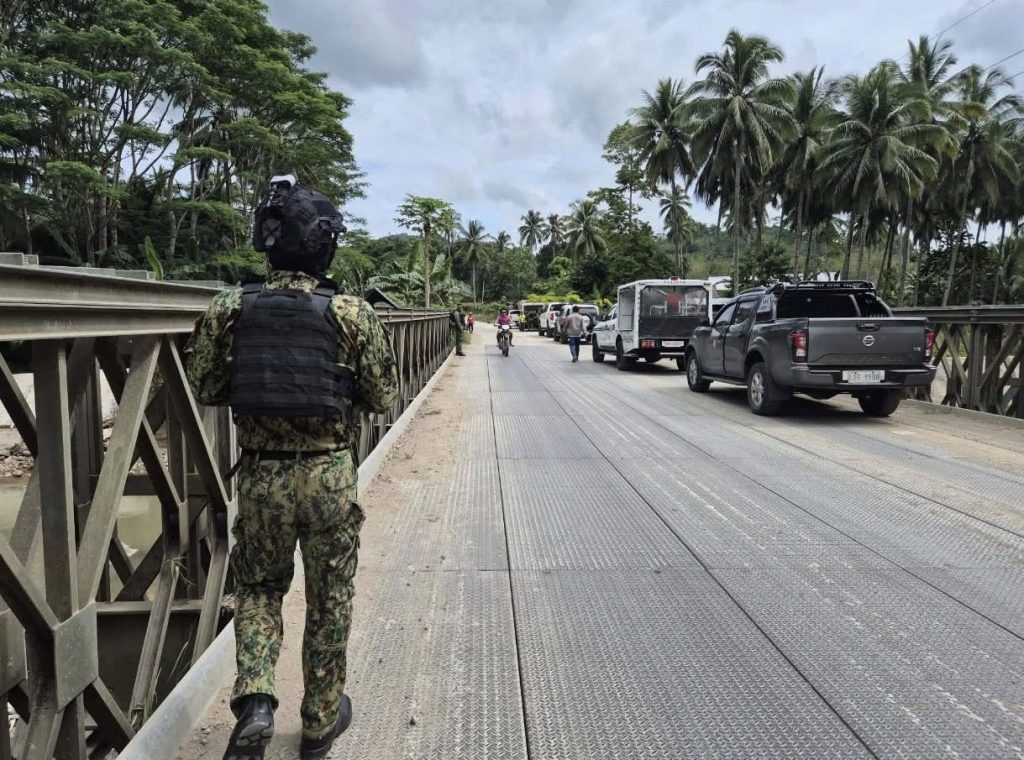
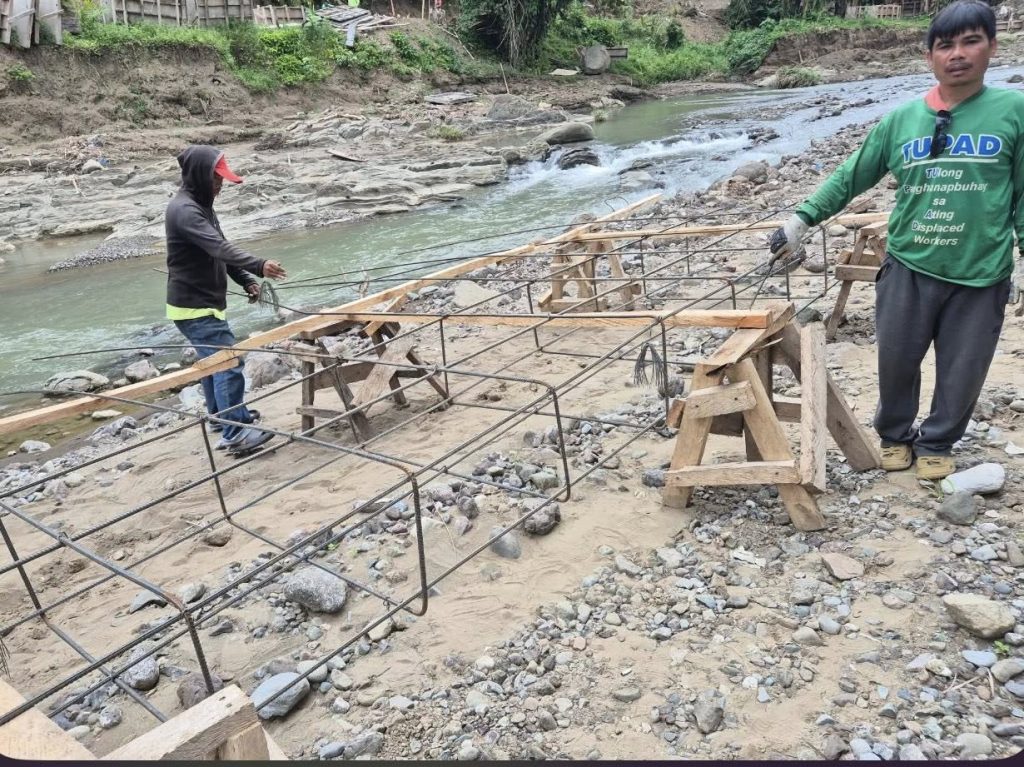
The project, identified as ID 24LE0017 — Construction of Concrete Revetment for Demoloc Flood Control, has a total contract cost of ₱116.5 million under the 2024 General Appropriations Act (GAA) Regular Infrastructure Program. DPWH records show the project was declared fully completed on October 22, 2024. However, an extensive on-site inspection conducted by the PACC revealed that the physical condition of the structure does not match the agency’s official reports.
The inspection team was led by PACC Chairman Dr. Louie F. Ceniza, PhD, alongside Board of Trustees Member Dr. Allan Japor, PhD, Pastor Richie Cubos, and technical experts Engr. Dominador Miolata and Solomon Rufila, with full security support from the PNP Regional Mobile Force Battalion and the Provincial Mobile Force Company.
“Completed on Paper, Incomplete on the Ground”
Despite DPWH Davao Occidental District Engineering Office (DEO) entries in the Project and Contract Management Application (PCMA) indicating full completion, PACC investigators found glaring discrepancies during their ocular inspection.
“The physical condition of the project is grossly inconsistent with DPWH’s completion report,” Chairman Ceniza said. “What we saw on the ground does not resemble a completed flood control structure in any form.”
Among the most critical findings was the absence of essential engineering components required for a standard flood control revetment. These include driven steel sheet piles, proper toe protection, rubble concrete foundations, hand-laid rock embankments, slope protection layers, and PVC-coated mattresses. According to the PACC, the omission of these elements severely compromises the structural integrity of the project and raises serious questions about how public funds were utilized.
Alleged “Cosmetic” Construction
Investigators also reported what they described as superficial or cosmetic construction designed to create the illusion of completion. In several sections, soil appeared to have been dumped along the riverbank and merely covered with a thin layer of cement, simulating a concrete revetment.
The PACC warned that such practices are structurally unsound, violate basic engineering standards, and pose a direct safety risk to nearby communities, particularly during heavy rains or flooding.
Further inspection revealed exposed and rusting steel rebars, partially cast concrete, improper curing, loose and uncompacted backfill, and abandoned formworks and debris scattered across the site — conditions that directly contradict the DPWH’s certification of project completion.
No Engineers on Site
One of the most troubling observations, according to the PACC, was the absence of engineers and technical supervisors from both the contractor and the DPWH during construction.
Workers interviewed on-site consistently stated that no contractor’s engineer was present, that they had never seen a DPWH supervising engineer conduct inspections, and that no technical briefings or instructions were given at the start of daily work.
The lack of professional supervision, the PACC said, resulted in poor workmanship, misaligned and uneven structures, non-uniform wall thickness, and visibly defective construction.
“Had skilled technical personnel been present, these anomalies and structural deviations could have been prevented,” Ceniza stressed. “Taxpayers deserve projects built by qualified professionals—not rushed or unsupervised workmanship.”
Signs of Misreporting and a Possible “Ghost Project”
Residents and local observers also told investigators that visible construction activities only began nearly a year after the project was officially declared completed in October 2024. This revelation, the PACC said, points to possible document falsification, false reporting, and characteristics commonly associated with ghost projects.
PACC Recommends Sweeping Actions
In response to the findings, the PACC has formally endorsed a series of actions to the Independent Commission on Infrastructure (ICI) and DPWH Secretary Vince Dizon. These include an immediate technical audit of all flood control projects in Davao Occidental, a cease-and-desist order on the acceptance of similarly questionable projects, and the suspension and investigation of DPWH personnel who signed off on the 100 percent completion reports.
The commission also recommended the blacklisting of SCP Construction, the project contractor, pending the outcome of investigations, as well as the filing of administrative and criminal charges should fraudulent reporting be confirmed. The PACC further called for the full rectification of all defective works at no cost to the government.
Public Safety at Risk
The PACC warned that the current state of the structure poses serious dangers, including riverbank erosion, potential structural collapse, damage to riverside communities, and possible loss of life during periods of intense rainfall.
The investigation, the commission said, is in line with President Ferdinand R. Marcos Jr.’s directive to eliminate ghost projects, substandard and abandoned infrastructure, and corruption within implementing agencies.
“We will not allow public funds to be wasted, nor will we allow communities to be endangered because of substandard or ghost projects,” Ceniza said. “PACC will continue to safeguard every peso intended for national development.”