
SOUTH COTABATO – A rare and spectacular bloom of the critically endangered Rafflesia schadenbergiana has been documented by the Protected Area Management Office of the Allah Valley Protected Landscape (PAMO-AVPL), marking another major milestone in the region’s ongoing biodiversity conservation efforts.
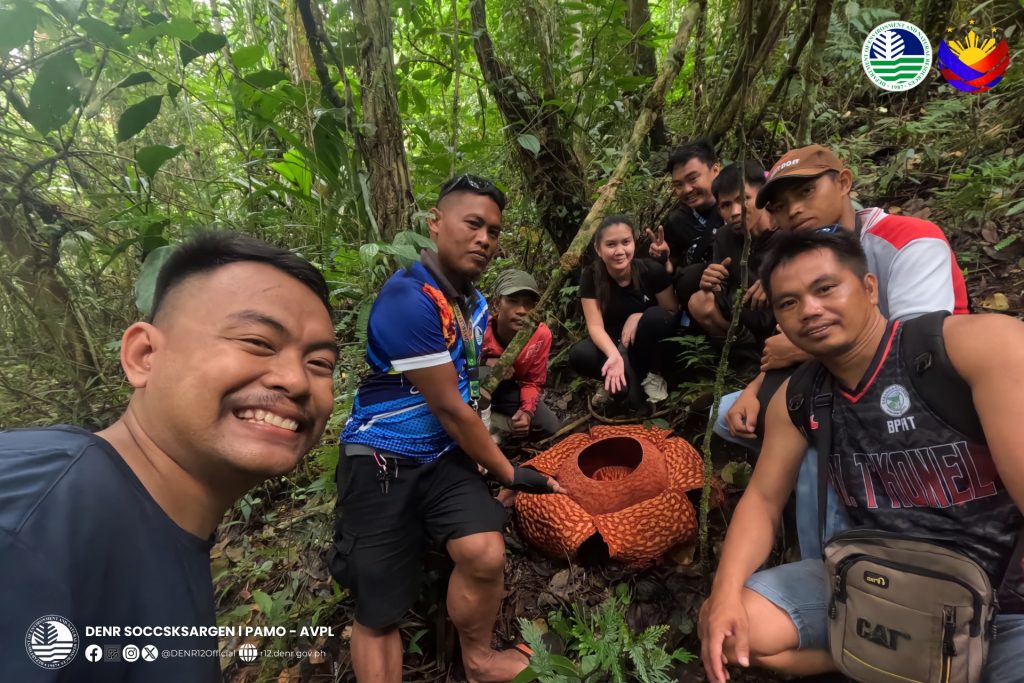
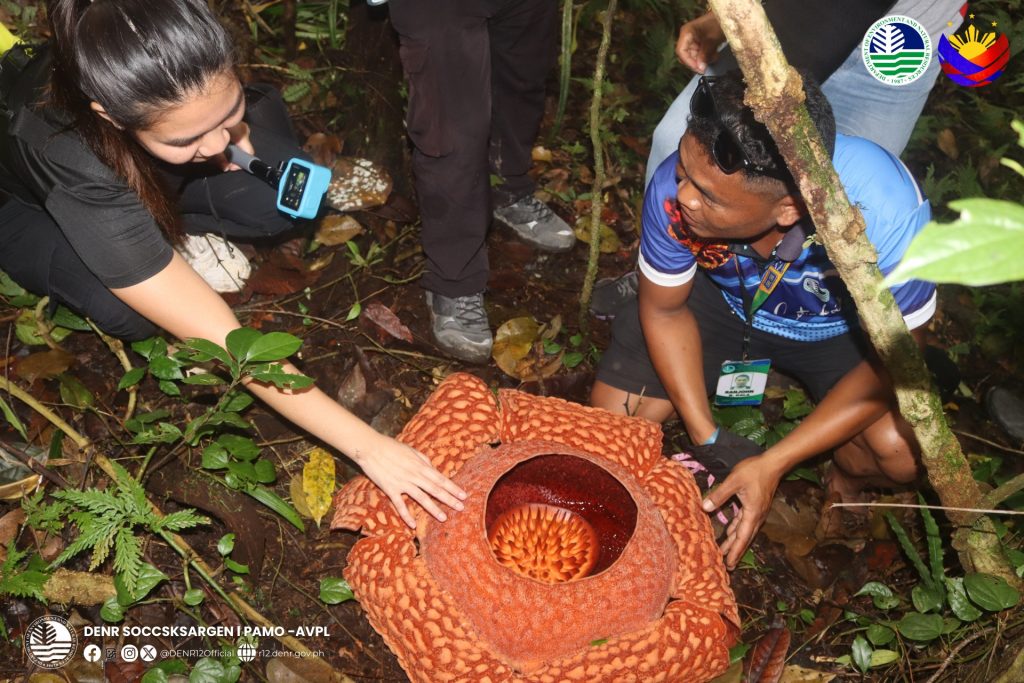
During a recent field monitoring mission deep within the dense forests of AVPL, the team recorded a newly blooming Rafflesia inside the Strict Protection Zone (SPZ), an area purposely kept undisturbed to safeguard sensitive ecosystems. The discovery not only reaffirms the ecological importance of protecting intact forest habitats but also highlights the continued survival of one of the Philippines’ rarest and most iconic plant species.
According to PAMO-AVPL, the bloom measured an astounding 93 centimeters in width—now the largest Rafflesia schadenbergiana ever recorded within the protected landscape. The monitoring team also documented key morphological details: a 30-centimeter perigone lobe, a central disk spanning 21 centimeters, and an opening diameter of 46 centimeters. These measurements provide valuable insight into the species’ growth conditions and the pristine environmental factors necessary for its life cycle.
Rafflesia schadenbergiana is known as the biggest Rafflesia species in the Philippines and the second largest in the world. Endemic to Mindanao, it historically occurs only in isolated pockets in Davao, Bukidnon, and South Cotabato. Its presence in AVPL underscores the protected area’s role as a vital refuge for rare and threatened flora.
PAMO-AVPL emphasized that the rediscovery of a healthy bloom is a positive sign for ongoing conservation initiatives. The office continues to intensify biodiversity programs such as habitat assessment, regular monitoring of key species, and sustained information and education campaigns to encourage community participation in environmental protection.
As threats like habitat disturbance and climate impacts continue to endanger Mindanao’s fragile ecosystems, the latest Rafflesia bloom stands as both a scientific breakthrough and a powerful reminder of what well-protected forests can still safeguard—if kept intact.