
COTABATO CITY – July 26, 2025 — In a historic show of unity and environmental commitment, the Bangsamoro Autonomous Region in Muslim Mindanao (BARMM) marked this year’s World Mangrove Day with a region-wide simultaneous mangrove planting and scientific mapping of coastal biodiversity.
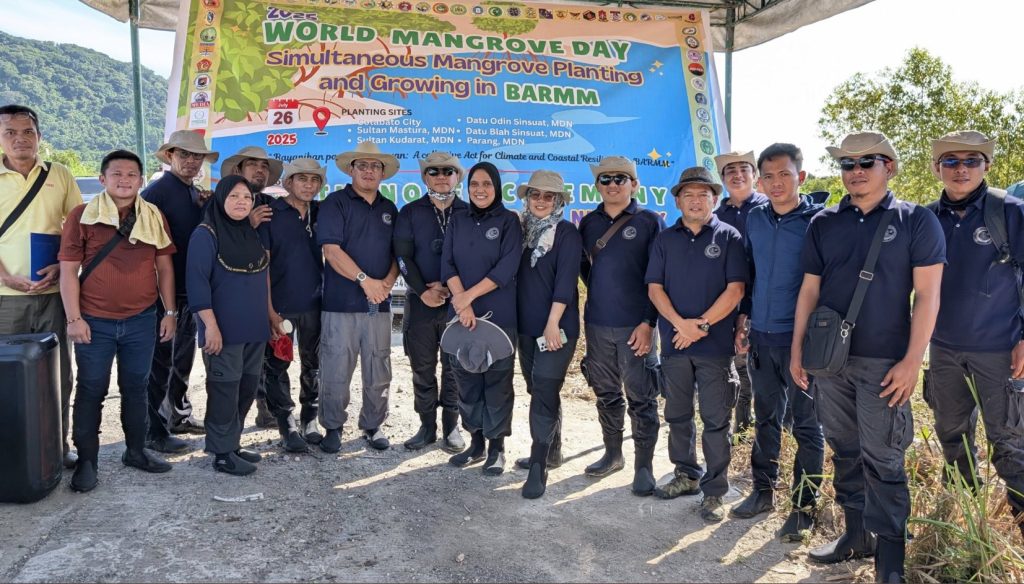
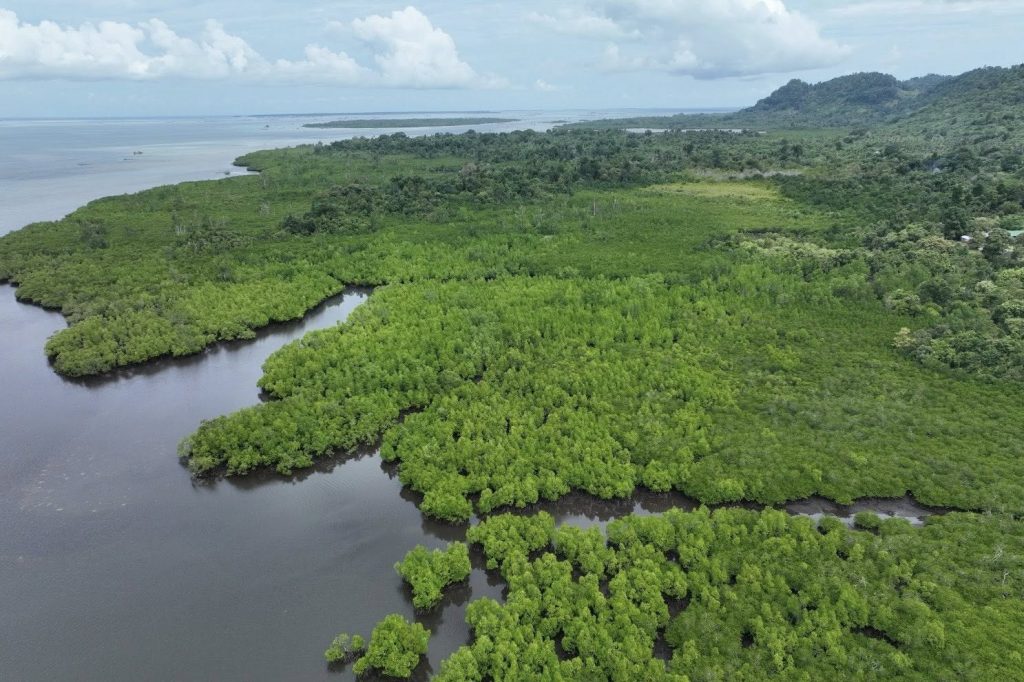
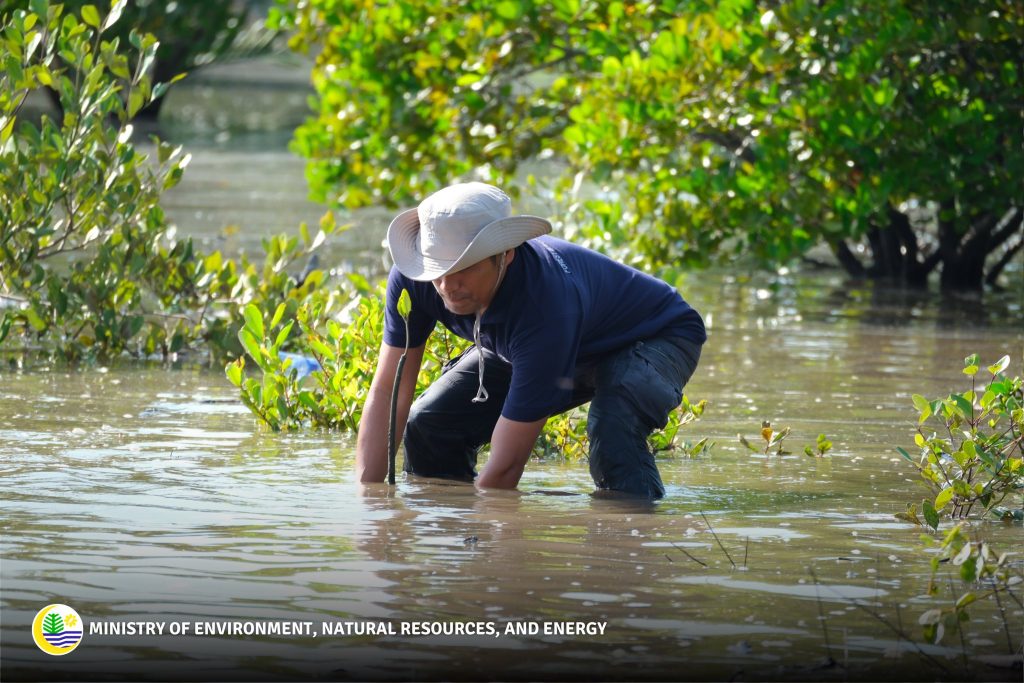
Over 10,000 Bakawan (Rhizophora) mangrove propagules were planted across nine coastal municipalities in the region in what is considered the first-ever BARMM-wide synchronized mangrove planting activity. Led by the Ministry of Environment, Natural Resources, and Energy’s (MENRE) Forest Management Services (FMS), the event was held in partnership with local government units, civil society organizations such as Kutawato Greenland Initiatives, Inc. (KGI), law enforcers, youth volunteers, and other stakeholders.
The main ceremonial planting was held at the Cotabato City Mangrove Nursery Site in Barangay Kalanganan II, with other sites spread across Maguindanao del Norte (Datu Odin Sinsuat, Datu Blah Sinsuat, Sultan Kudarat, Sultan Mastura, and Parang), Lanao del Sur (Balabagan), Basilan (Maluso), and Tawi-Tawi (Bongao).
“This is more than just planting trees—it’s about protecting the roots of life,” said FMS Director Dr. Abdul-Jalil S. Umngan. “Since the start of the Bangsamoro Government, we’ve prioritized the rehabilitation of open and denuded mangrove areas under our Integrated Bangsamoro Greening Program. We’ve already planted 6,000 mangroves—and we’re just getting started.”
A ceremonial turnover of the Cotabato City Mangrove Nursery also took place, reinforcing BARMM’s commitment to long-term mangrove restoration.
Meanwhile, in Tawi-Tawi, MENRE’s Biodiversity, Ecosystems, Research, and Development Services (BERDS) completed a quarterly identification and mapping of mangrove species from July 9 to 13. The scientific survey was conducted in collaboration with the Provincial and Community ENRE offices across five coastal barangays in the municipalities of Panglima Sugala (Buan, Parangan, and Batu-Batu) and Bongao (Mandulan and Tarawakan).
The mapping activity documented over 30 mangrove species and associates, including Avicennia marina (Api-Api), Rhizophora apiculata (Bakauan Lalaki), Sonneratia alba (Pagatpat Puti), Ceriops tagal (Tangal), and Bruguiera gymnorhizza (Busain). This provides a critical scientific baseline for future ecological monitoring, conservation planning, and coastal resource management in the region.
“This data helps identify species distribution, vulnerable habitats, and opportunities for enhancement,” said Gatocod M. Rascal, Senior Science Research Specialist, who was joined in the field by biodiversity experts from Western Mindanao State University and MENRE’s local offices.
With mangroves disappearing globally—especially in the Indo-Malay Philippine Archipelago—BARMM’s proactive stance offers hope. Mangroves are known for protecting coastlines, supporting marine biodiversity, and mitigating climate change impacts.
The event was organized under the Bangsamoro Multi-Stakeholders’ Initiatives for Peace and Environment Platform, aligning with national environmental laws including the E-NIPAS Act, Wildlife Resources Conservation and Protection Act, and the Climate Change Act.
As the call to action goes: “Rise for the roots. Mangroves can’t wait.”