
Two rescued wildlife species, a Brahminy Kite (Haliastur indus) and a yellow-headed water monitor (Varanus cumingi), were safely released back into their natural habitats after being assessed fit for survival by the Department of Environment and Natural Resources (DENR).
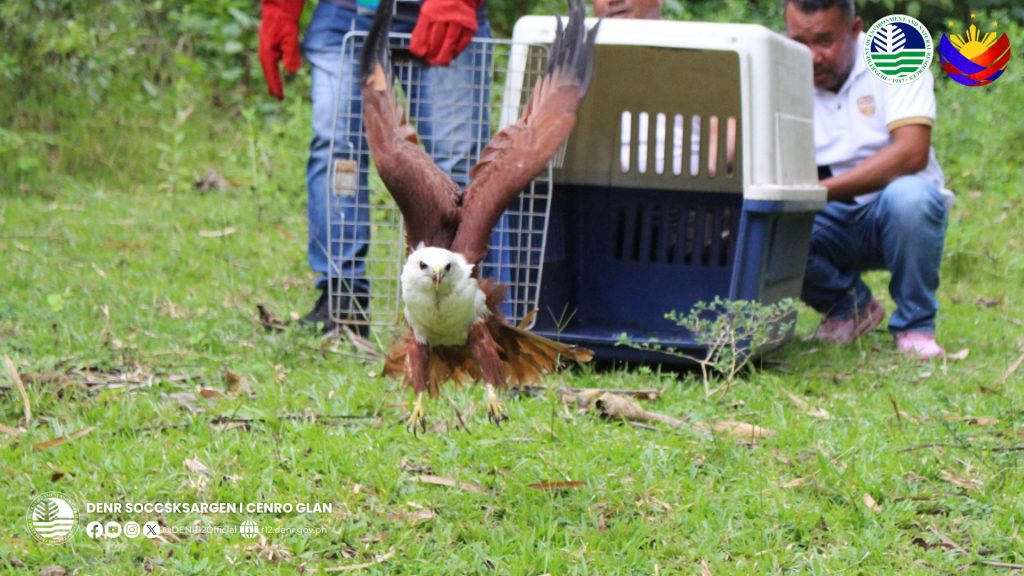
On February 24, 2025, the DENR Community Environment and Natural Resources Office (CENRO) Glan released a Brahminy Kite, locally known as “Banog,” in a forested area of Barangay Calabanit, Sarangani. The raptor was initially rescued by a concerned resident of Purok Paglaom, Barangay Glan Padidu, after it was found trapped in a chicken coop net. Understanding the importance of wildlife conservation, the resident promptly handed over the bird to the Sarangani Maritime Police Station, which later turned it over to CENRO Glan for proper care and assessment. After thorough evaluation, the bird was found to be in good health with no injuries, making it suitable for immediate release.
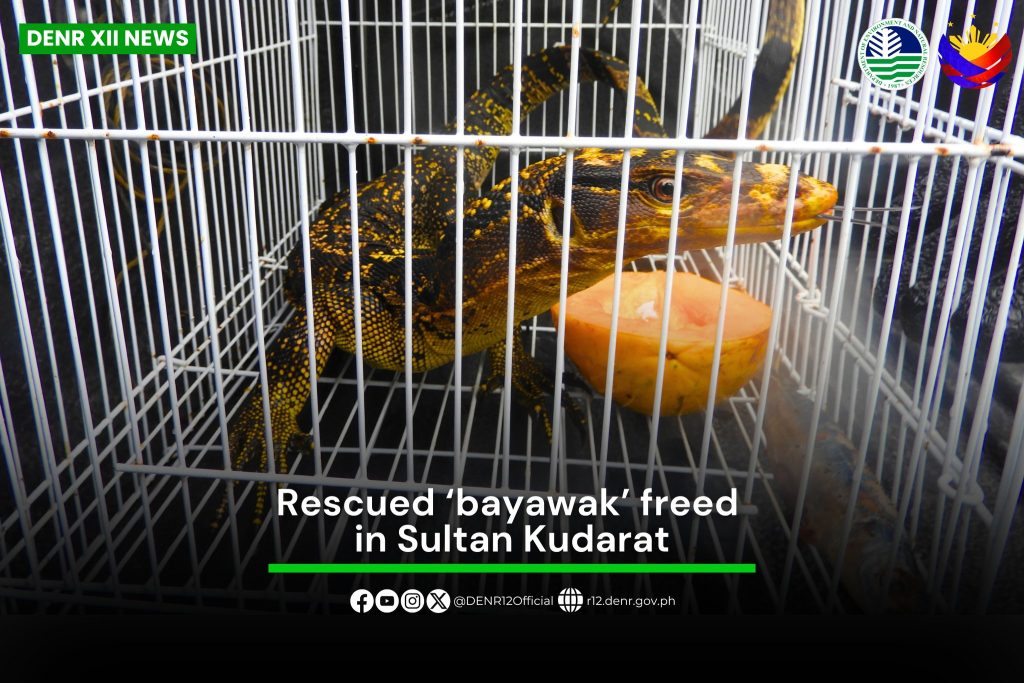
Meanwhile, on February 21, 2025, a yellow-headed water monitor, locally known as “bayawak,” was released into its natural habitat by CENRO Kalamansig. The reptile, which was rescued by the Philippine Maritime Police in the same town, measured 83.05 cm in snout-vent length (SVL) with a 29.95 cm tail and weighed 1.52 kilograms. Following a health assessment by the CENRO Kalamansig Conservation and Development Section, the monitor lizard was declared fit for release.
Both the Brahminy Kite and the yellow-headed water monitor are classified as “Least Concern” on the International Union for Conservation of Nature (IUCN) Red List. However, these species continue to face threats such as habitat destruction, poaching, hunting, and excessive pesticide use. The Brahminy Kite, a medium-sized bird of prey commonly found in coastal and wetland areas, primarily scavenges on carrion but occasionally hunts live prey. The yellow-headed water monitor, endemic to the Philippines, thrives in mangroves, forests, and water margins, preying on birds, fish, and mammals.
The DENR-CENRO offices of Glan and Kalamansig commend the efforts of local residents and law enforcement in ensuring the safe rescue and release of these wildlife species. They also remind the public about the importance of biodiversity conservation and urge communities to report any rescued or captured wildlife to the proper authorities. Under Republic Act No. 9147, or the Wildlife Resources Conservation and Protection Act, violators face penalties including up to one year of imprisonment and fines reaching P1 million for illegal hunting, collecting, or trading of wildlife.
The recent wildlife rescues highlight the crucial role of community awareness and cooperation in protecting the country’s rich biodiversity.