
MARAWI CITY, Philippines — Nine years after the liberation of Marawi City from terrorist occupation, the Philippine Army has paid tribute to the soldiers and other heroes who sacrificed their lives during the 2017 siege, while recognizing the continuing determination of the Maranao people to rebuild their communities and pursue lasting peace.
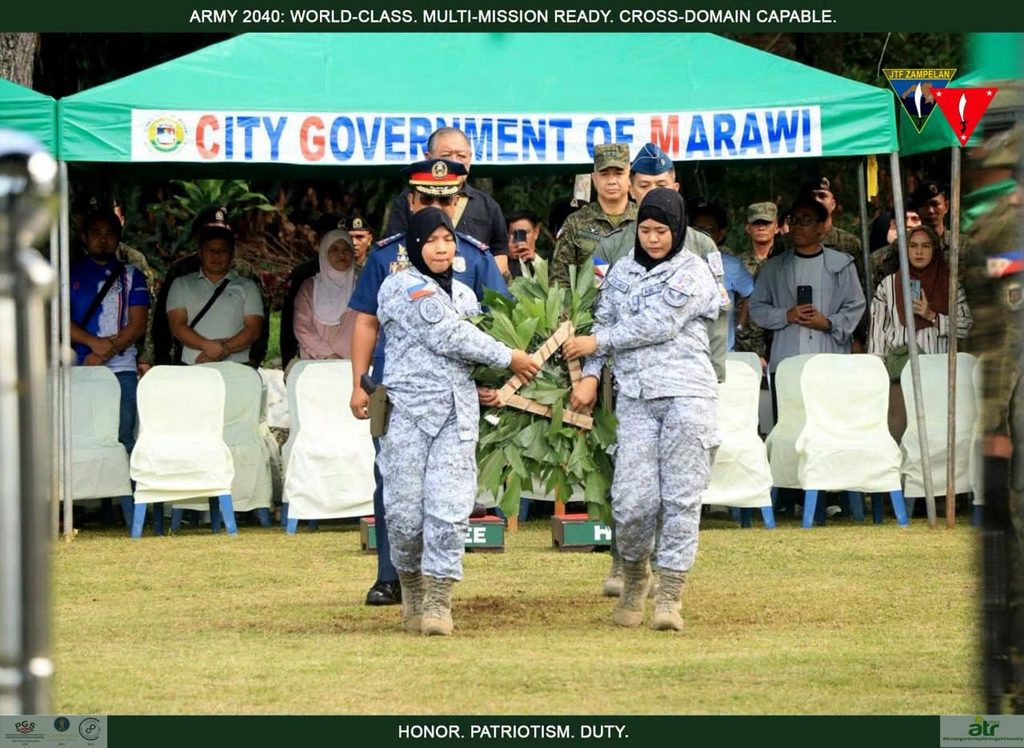
The 1st Infantry (TABAK) Division, Philippine Army, through the 103rd Infantry (HARIBON) Brigade, led the commemoration on October 17, 2026, at the Heroes Wall inside the brigade headquarters at Kampo Ranao in Marawi City.
Carrying the theme, “Siyam na Taong Pagbangon: Mas Matatag, Mas Mapayapa, at Mas Maunlad na Marawi,” the ceremony underscored the importance of remembering the sacrifices made to reclaim the city while recognizing the progress and continuing challenges in its recovery.
Under the leadership of Brigadier General Jessie R. Montoya, commander of the 103rd Infantry Brigade, the commemoration featured a wreath-laying ceremony in honor of those who gave their lives during the 2017 Marawi Siege. The tribute served as a solemn reminder of the human cost of the conflict and the enduring responsibility to protect the peace for which so many fought.
Secretary Nasser C. Pangandaman Sr., Presidential Adviser for Marawi Rehabilitation and Development, served as the guest of honor and speaker. He was joined by Brigadier General William George S. Cordova, assistant division commander of the 1st Infantry (TABAK) Division.
Military leaders, representatives of local government units and national government agencies, civil society organizations, and other stakeholders also attended the event, reflecting the importance of coordinated efforts in sustaining peace and supporting Marawi’s recovery.
From the devastation of war to the challenge of rebuilding
The liberation of Marawi in 2017 came at an enormous cost. The months-long siege left homes and infrastructure destroyed, displaced thousands of residents, and disrupted the social and economic life of communities across the city.
For many Maranao families, the aftermath extended beyond the end of the fighting. Rebuilding homes, restoring livelihoods, recovering community spaces, and regaining a sense of normalcy became part of a long and difficult process.
Nine years later, the commemoration placed the resilience of the Maranao people at the center of the city’s continuing recovery. Their determination to rebuild their communities despite the devastation of war has become an enduring symbol of hope and perseverance.
However, remembering the liberation also means acknowledging that lasting recovery requires more than the end of armed hostilities. Sustainable peace depends on continued rehabilitation, economic opportunities, effective public services, community participation, and the protection of civilians from renewed violence.
The anniversary therefore served not only as a tribute to the fallen but also as a reminder of the continuing responsibility of government institutions and other stakeholders to help communities recover and build a more secure future.
Army renews commitment to peace and security
The 1st Infantry (TABAK) Division, through the 103rd Infantry Brigade, reaffirmed its commitment to protecting communities, preventing the resurgence of violent extremism, and supporting peace and development initiatives in Marawi City and neighboring areas.
The military’s role in sustaining the gains of liberation remains closely linked to broader efforts to strengthen community security and prevent conditions that could allow violent extremist groups to regain a foothold.
The commemoration also highlighted the importance of unity among the military, government agencies, local authorities, civil society groups, and communities in maintaining stability and supporting long-term development.
Nine years after the siege, the sacrifices of the fallen heroes remain a powerful reminder that the price of liberation was measured not only in lives lost but also in the destruction and displacement experienced by ordinary residents.
As Marawi continues its journey toward recovery, the anniversary calls for a shared commitment to ensure that the suffering of 2017 is not repeated and that the pursuit of peace translates into tangible improvements in the lives of the Maranao people.
The legacy of liberation, the Army emphasized through the commemoration, must be carried forward through sustained vigilance, collective responsibility, and continued efforts to build a safer, more peaceful, and more prosperous Marawi.