
Malapatan, Sarangani Province — A total of 109 hawksbill sea turtle (Eretmochelys imbricata) hatchlings were released along the shoreline of Purok 5B, Poblacion, Malapatan, Sarangani Province, marking a meaningful step toward protecting one of the ocean’s most threatened marine species.
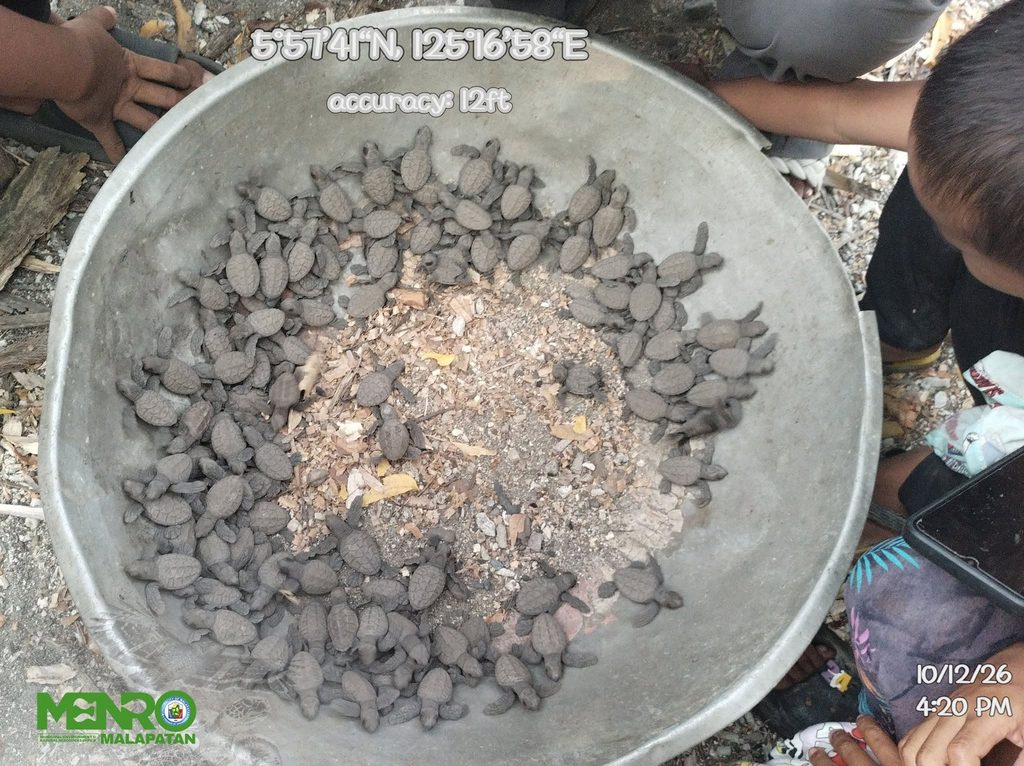
Each tiny turtle making its way toward the sea represents renewed hope for the survival of a species that plays an important role in maintaining the health and balance of marine ecosystems. Although small and vulnerable at birth, hawksbill sea turtles contribute to the long-term resilience of coral reefs, making their protection vital to marine biodiversity.
Small Hatchlings, Big Role in Coral Reef Health
Hawksbill sea turtles are known for their specialized diet, particularly their consumption of sponges that compete with corals for space on reefs. By helping regulate sponge populations, these turtles contribute to maintaining the ecological balance of coral reef ecosystems.
Healthy coral reefs, in turn, provide food and shelter for numerous marine species and support the livelihoods of coastal communities that depend on fishing and other marine resources.
However, the survival of hawksbill sea turtles remains under serious threat. Their populations have declined because of multiple pressures, including the destruction of nesting and feeding habitats, the collection of turtle eggs, illegal wildlife trade, accidental capture in fishing gear, and marine pollution.
The release of the 109 hatchlings therefore represents more than a conservation activity. It highlights the importance of safeguarding vulnerable marine wildlife and preserving the coastal habitats necessary for their survival.
Protecting a Critically Endangered Species
The hawksbill sea turtle is classified as Critically Endangered on the International Union for Conservation of Nature (IUCN) Red List, reflecting its extremely high risk of extinction in the wild.
In the Philippines, marine turtles are protected under Republic Act No. 9147, or the Wildlife Resources Conservation and Protection Act of 2001. The law provides a framework for conserving wildlife and regulating activities involving threatened species.
Protecting sea turtles requires more than releasing hatchlings into the ocean. Their survival also depends on the protection of nesting beaches, the availability of suitable marine habitats, and efforts to reduce threats throughout their life cycle.
While hatchling releases offer an important opportunity to support conservation, only a small proportion of young sea turtles naturally survive to adulthood. Sustained habitat protection and responsible human activities are therefore essential to ensuring that conservation efforts have a lasting impact.
Coastal Communities Have a Role to Play
Residents, fishers, visitors, and local communities can help protect hawksbill sea turtles through simple but meaningful actions.
Keeping beaches and coastal waters free of plastic and other waste helps reduce marine pollution. Protecting nesting sites, avoiding the collection or disturbance of turtle eggs, and practicing responsible fishing can also reduce threats to sea turtles and other marine wildlife.
Anyone who encounters an injured, stranded, or entangled sea turtle should report it to the appropriate wildlife or environmental authorities rather than attempting potentially harmful interventions.
The release of 109 hawksbill hatchlings in Malapatan serves as a reminder that marine conservation is a shared responsibility. Protecting these endangered turtles also means protecting the coral reefs, coastal habitats, and marine resources that sustain biodiversity and support communities across the country.
For every hatchling that reaches the sea, there is a chance for the species to endure. Ensuring that future generations of sea turtles can return to healthy nesting beaches, however, will depend on continued conservation efforts and the collective commitment of people to protect the ocean.