
CAGAYAN DE ORO CITY — Nearly 681 kilograms of assorted meat and meat products, including locally produced and imported chicken, goat meat (chevon), and processed meat products, were confiscated by the City Veterinary Office (CVO) after inspectors discovered improper handling and storage during a joint inspection of public markets.
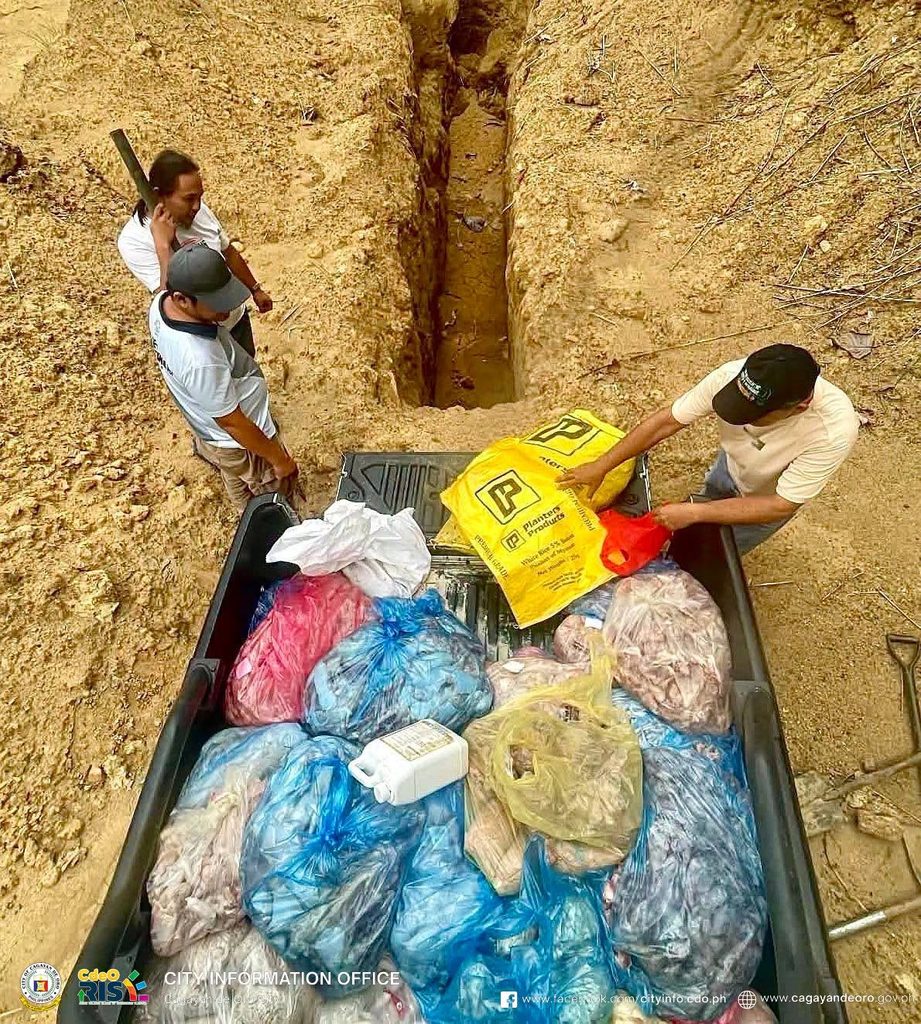
The confiscation was carried out during a coordinated inspection involving personnel from the CVO’s Meat Inspection Division, the National Meat Inspection Service (NMIS), and the City Economic Enterprises and Business Development Administration (CEEBDA) at the Cogon, Carmen, and Puerto public markets.
City Veterinarian Dr. Helen Ann Tacandong, department manager of the CVO, said the improper handling and storage of the confiscated meat products constituted violations of Republic Act No. 9296, or the Meat Inspection Code of the Philippines, as well as Department of Agriculture Administrative Orders Nos. 05 and 06.
The inspection forms part of the city government’s continuing efforts to enforce meat safety standards, strengthen compliance among vendors, and protect consumers from potential public health risks associated with improperly handled and stored meat.
Following the confiscation, the affected products were transported to the Pagatpat Disposal Site for proper disposal in accordance with established procedures, ensuring that the meat would not reach consumers.
The City Veterinary Office also expressed appreciation to meat vendors who have begun complying with updated guidelines on proper meat handling and selling practices.
Meanwhile, the CVO reminded all meat vendors to secure and properly display valid Meat Inspection Certificates (MIC) or Certificates of Meat Inspection (COMI), as required. Vendors were also urged to consistently observe proper procedures for handling, storing, transporting, and displaying meat and meat products.
The city’s inspection drive underscores the importance of compliance throughout the meat supply chain, particularly in public markets where proper sanitation, storage, and inspection are essential to consumer safety.