
SOUTH COTABATO, Philippines — A political instructor of the Communist Party of the Philippines–New People’s Army–National Democratic Front (CPP-NPA-NDF) operating under the Regional Operations Command–Far South Mindanao Region (ROC-FSMR) has turned to the government, seeking medical assistance, protection, and an opportunity to rebuild her life away from the armed movement.
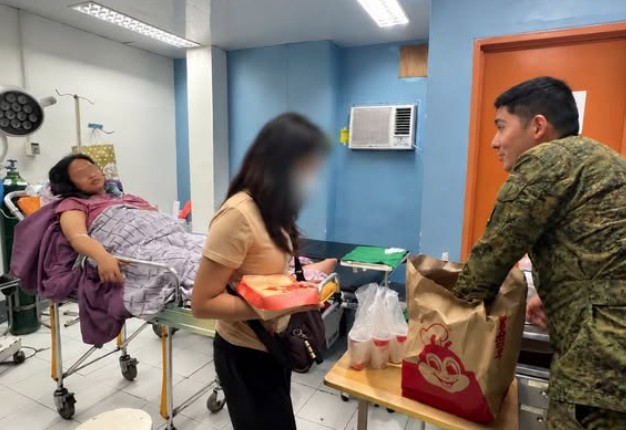
Authorities identified the returnee as Arnida Cuaton Manguinguilid, also known by the aliases Lovie, Tikong, and Yassie. She was identified as a political instructor of the ROC-FSMR Executive Committee and was also reportedly assigned as a medic within the organization.
Authorities also linked Manguinguilid to Barney Arnaez, aliases Macmac, Akkay, and Tipos, identified as the commanding officer of the ROC-FSMR. Manguinguilid was described as Arnaez’s “party wife,” a term used within the communist movement for partners of members of the organization.
Her decision to leave the armed movement came after she allegedly suffered a gunshot wound inflicted by former comrades in Tagum City on September 19, 2026.
Following the incident, Manguinguilid sought assistance from the South Cotabato Provincial Government, in coordination with the 603rd Infantry (Persuader) Brigade, 105th Infantry (Saifullah) Battalion, Philippine National Police, and other government agencies.
She was brought to a medical facility where she received treatment, security, and continuing assistance from government authorities.
Wanted to Leave the Movement
In her account, Manguinguilid said she had already decided in August to “lie low” from the armed movement because of her pregnancy and her desire to return to government control.
She reportedly told authorities that she wanted to leave the life of hiding and armed struggle behind and live peacefully with her unborn child.
Her decision, however, was allegedly not accepted by her former comrades.
Manguinguilid said the years of living in the mountains had taken a heavy physical and emotional toll. She described the continuing hardship of remaining in hiding, the fear associated with possible encounters with government forces, and the uncertainty of life within the armed movement.
She also said she had come to believe that continuing the armed struggle had no future.
Her decision to disengage allegedly resulted in an attempt by members of the group to kill her, prompting her to seek government assistance.
The circumstances surrounding the reported shooting remain subject to further verification and investigation by authorities.
Government Extends Assistance
Instead of being treated solely as a former combatant or member of an armed organization, Manguinguilid was provided access to medical treatment and security assistance after reaching out to government authorities.
The South Cotabato Provincial Government, under Governor Tamayo, worked with military, police, and other concerned agencies to facilitate her medical care and ensure her safety.
Manguinguilid expressed gratitude to the government and local authorities for the assistance she received, particularly the medical care, security, and support extended to her during a vulnerable period.
For her, the assistance represented an opportunity to step away from the dangers she had experienced while living underground and begin a different life with her child.
Army: Government Open to Those Who Want to Return
Col. Glenn Loreto T. Caballero, Acting Brigade Commander of the 603rd Infantry Brigade, said the government remains open to members of the armed movement who want to abandon the armed struggle and return to mainstream society.
Caballero described Manguinguilid’s return as a positive development resulting from the continuing cooperation among government agencies, security forces, local authorities, and communities.
“The government is open to those who want to return,” Caballero said, emphasizing the importance of continued coordination among government institutions and communities in encouraging individuals from armed groups to abandon violence.
He said Manguinguilid’s case demonstrates how cooperation among government agencies and local stakeholders can provide an avenue for individuals seeking to leave the armed movement.
6ID Commander Recognizes Local Support
Brig. Gen. Ricky P. Bunayog, Acting Commander of the 6th Infantry Division and Joint Task Force Central, likewise commended the South Cotabato provincial government, troops of the 603rd Infantry Brigade and 105th Infantry Battalion, the police, and local residents for their cooperation in supporting peace and security efforts.
Bunayog also recognized Manguinguilid’s decision to abandon the armed movement and encouraged other members of communist armed groups to consider returning to the government and pursuing peaceful lives outside the armed struggle.
The military has repeatedly urged members of communist armed groups to surrender their firearms and return to their communities through government reintegration and assistance mechanisms.
Motherhood Behind the Decision
Beyond the security implications of her return, Manguinguilid’s case also highlights the personal circumstances that influenced her decision to leave the armed movement.
Her pregnancy became a major factor in her decision to seek a different life.
For Manguinguilid, her recovery and the safe delivery of her baby are now the immediate priorities.
Her decision, according to her account, was not only about escaping the dangers she had experienced herself. It was also about giving her child the possibility of growing up in a safer and more peaceful environment—far removed from the armed conflict, constant movement, fear, and hardships she experienced while living with the organization.
Her case illustrates the deeply personal dimensions that can accompany the departure of individuals from armed groups.
Behind the formal designation of a political instructor or medic is a person facing decisions involving family, safety, survival, and the future of a child.
As Manguinguilid begins the process of recovery, government authorities said her welfare and the safe delivery of her child remain paramount.
Her return also serves as another example of how individuals who decide to abandon armed struggle may seek assistance from government institutions and local communities to begin again.
For Manguinguilid, the decision represents more than leaving an armed organization.
It is a choice to seek medical care, safety, and a chance to build a peaceful life for herself and the child she is carrying.
And in that decision is a reminder that behind every return to the fold of government is a human life, a family, and the possibility of starting anew.