
POLOMOLOK, South Cotabato — What was once associated with conflict and fear is gradually taking on a different identity in Barangay Lapu, Polomolok, South Cotabato, where the Malyango River is emerging as a symbol of peace, community resilience, and new opportunities.
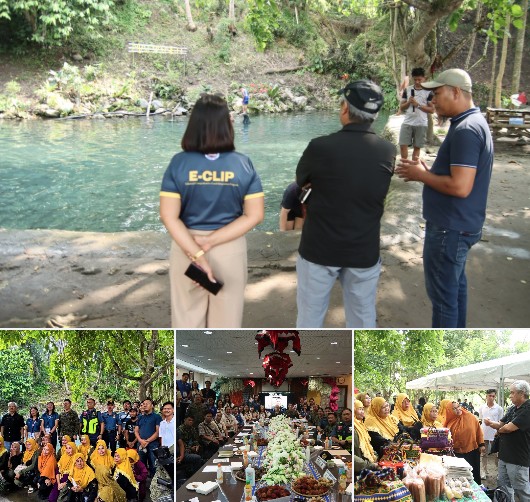
The transformation was highlighted during the National Validation of the Galing Pook Program, which assessed the Provincial Government of South Cotabato’s initiatives in Barangay Lapu and its efforts to turn a formerly conflict-affected community into a safer and more promising destination for tourism and community development.
The validation brought attention not only to the physical development of Malyango River but also to the broader programs designed to help communities recover from the effects of conflict and create conditions where residents can pursue livelihoods and other opportunities.
Under the leadership of South Cotabato Governor Reynaldo S. Tamayo Jr., the provincial government has pursued programs aimed at strengthening peace and development while supporting the reintegration of Friends Rescued and Former Violent Extremists (FRFVE) and continuing community-based development initiatives.
The initiative reflects a recognition that lasting peace involves more than the absence of armed conflict. It also requires creating opportunities for residents, restoring confidence in communities, strengthening local institutions, and giving people reasons to believe that their communities can have a future beyond violence.
From Fear to Opportunity
Barangay Lapu’s story illustrates how a community’s identity can gradually change when peace and development efforts are sustained.
For communities that have experienced conflict, the effects often extend beyond security concerns. Fear can discourage economic activity, limit mobility, weaken community participation, and prevent potentially valuable areas from being developed for productive purposes.
Malyango River now offers a contrasting picture.
The area is being positioned as an emerging destination where residents and visitors can experience the natural environment while the community explores opportunities linked to tourism and local development.
The transformation does not happen overnight. It is the product of continuing cooperation among the provincial government, municipal and barangay authorities, law enforcement agencies, residents, and other stakeholders.
The National Validation provided an opportunity to examine how these efforts are being implemented on the ground and how the experience of Barangay Lapu could demonstrate the potential of community-centered approaches to peace and development.
Security and Development Moving Together
The participation of the Regional Mobile Force Battalion 12 (RMFB 12) underscored the role of security institutions in supporting an environment where development initiatives can take root.
Led by Force Commander Police Colonel Samuel T. Cadungon, RMFB 12 joined the validation activity at Malyango River.
The police presence was not simply about maintaining security during the event. It also reflected the continuing partnership between law enforcement and local governments in creating conditions where communities affected by conflict can move toward stability and development.
Through coordination with local government units, national agencies, community organizations, and other stakeholders, the PNP contributes to maintaining a secure environment where livelihood programs, tourism initiatives, and other development activities can continue.
For communities emerging from conflict, such partnerships can be particularly important.
Development requires people to feel safe enough to travel, invest, establish businesses, participate in community activities, and promote local destinations. Tourism, in turn, can provide additional avenues for income generation when properly planned and managed.
Reintegration as Part of Peacebuilding
A significant component of South Cotabato’s initiative is its work involving Friends Rescued and Former Violent Extremists.
Reintegration programs are intended to help individuals move away from violent environments and reconnect with communities and productive civilian life. Their success depends not only on the individuals involved but also on the willingness and capacity of communities and institutions to provide support and opportunities.
The Barangay Lapu initiative therefore places reintegration within a broader framework of community development.
The objective is not merely to address the security dimensions of violent extremism but to help create conditions in which former conflict-affected communities can become places where people can build livelihoods, strengthen relationships, and participate in peaceful local development.
This approach recognizes that peace becomes more sustainable when communities can see tangible improvements in their daily lives.
Malyango River as a Symbol of Change
The significance of Malyango River extends beyond its potential as a tourism attraction.
Its transformation provides a physical setting for a much larger story about how communities can reclaim spaces once overshadowed by conflict.
A river that can now be promoted as a destination represents a different kind of opportunity: one where the natural assets of a community can become part of its economic and social recovery.
For residents, the importance of this transformation is ultimately measured not by awards or validation activities but by what they experience in their own community.
A safer environment, more livelihood opportunities, improved community participation, and the ability to welcome visitors are among the tangible indicators of change.
The provincial government emphasized that the most important recognition is the transformation that residents themselves can see and feel.
Beyond Recognition
The Galing Pook validation places Barangay Lapu’s experience under national attention, but the deeper significance of the initiative lies in what happens after the validation.
Recognition alone cannot sustain peace or development.
The challenge is to ensure that improvements continue, that tourism growth benefits local residents, that environmental resources such as the Malyango River are protected, and that former conflict-affected communities remain supported long after the immediate security concerns have diminished.
For South Cotabato, the experience of Barangay Lapu demonstrates how peacebuilding, reintegration, security, environmental assets, and local economic development can intersect.
It also reinforces an important lesson: communities emerging from conflict need more than protection from violence—they need opportunities to build something worth protecting.
At Malyango River, that future is gradually taking shape.
What was once a place associated with conflict is now being introduced to a wider audience as a place of natural beauty, community participation, and possibility.
The journey is far from finished, but Barangay Lapu’s transformation offers a powerful reminder that sustained cooperation between government and communities can help turn the aftermath of conflict into a foundation for peace, livelihood, and development.