
ARAKAN, Cotabato — Amid years of conflict, hardship, and loss, a story of hope and redemption unfolded in the municipality of Arakan as a former member of a communist rebel group safely gave birth to a healthy baby under the care and assistance of government forces.
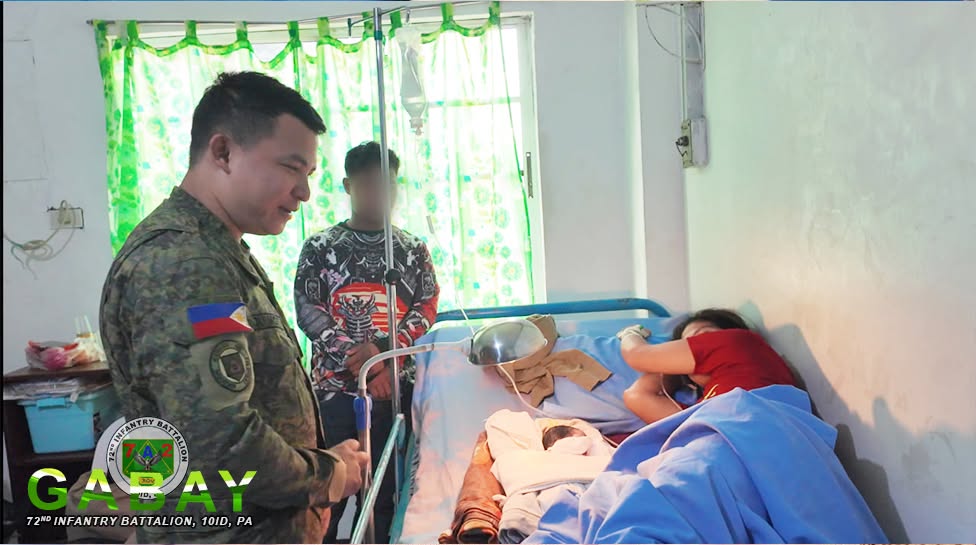
On June 24, 2026, what could have been another difficult chapter in the life of former Communist Terrorist Group (CTG) member “Alyas Jomilyn” instead became a powerful symbol of a new beginning. Under the watchful care of the 72nd Infantry “Gabay” Battalion (72IB), led by Lieutenant Colonel Pablo Masa-ad, she successfully delivered her child through a cesarean section at Midway Hospital in Kidapawan City.
For Alyas Jomilyn, the birth of her baby represented more than motherhood—it marked a second chance at life after years spent in the armed struggle and the painful memories that came with it.
Formerly a member of the dismantled “Jaguar” unit operating under the Southern Mindanao Regional Committee (SMRC), Jomilyn had experienced firsthand the harsh realities of life inside the underground movement. Years ago, she lost her first child while still with the rebel group, a tragedy she attributes to exhaustion, inadequate medical care, and the difficult conditions of living while constantly on the run in the mountains.
According to her account, she was six months pregnant at the time but was not allowed to leave the movement despite her condition. Leaders allegedly feared that her departure could expose the group’s location and operations. The decision ultimately resulted in the loss of her unborn child.
The painful experience left a deep wound that she carried for years.
Today, however, her story has taken a dramatically different turn.
When complications arose during her recent pregnancy, government soldiers and health workers worked together to ensure she received the medical attention she urgently needed. Suffering from goiter and facing a high-risk pregnancy, Jomilyn required specialized medical care that could not be fully provided at local facilities.
Recognizing the seriousness of her condition, personnel of the 72IB immediately coordinated with the Rural Health Unit (RHU) of Arakan for her transfer. She was first brought to Amas Provincial Hospital before being referred to Midway Hospital, where doctors determined that a cesarean section was necessary to safely deliver her baby.
Medical professionals estimated that the procedure and treatment could cost more than ₱60,000 due to the complexity of her condition. Despite the anticipated expenses, Lieutenant Colonel Masa-ad reportedly ordered that all necessary measures be taken to ensure the safety of both mother and child.
For the military commander, the priority was clear: preserving life.
The successful delivery became a testament to what local officials and military personnel describe as the government’s commitment to helping former rebels rebuild their lives after returning to the fold of the law.
Speaking after the birth of her child, Alyas Jomilyn expressed gratitude for the care she received—an experience she admitted was far different from what she had been taught while still inside the insurgency.
“Noong nasa loob pa kami, ang turo sa amin ay malulupit at walang awa ang mga sundalo. Ngunit kabaligtaran ang naranasan namin sa kamay ng 72IB. Hindi nila kami pinabayaan. Sa kabila ng aking sakit, inalagaan nila ako nang maayos hanggang sa muli akong mabuntis at makapanganak nang ligtas. Dito ko naramdaman ang tunay na kalinga,” she said.
Her statement highlights what security officials have long argued—that the government’s campaign against insurgency extends beyond military operations and includes programs focused on rehabilitation, social services, and community support.
The leadership of the 72nd Infantry Battalion described the incident as a clear manifestation of its advocacy to protect life, uphold human rights, and assist vulnerable individuals, regardless of their past affiliations.
Military officials emphasized that soldiers are not only tasked with maintaining security but also with serving as partners in helping communities achieve peace, stability, and development.
As of this writing, both mother and child remain under observation while recovering. Jomilyn and her husband, “Alyas Ton-Ton,” are currently receiving support from the 72IB and local government authorities as they begin rebuilding their lives.
The couple is also undergoing processing under the Enhanced Comprehensive Local Integration Program (E-CLIP), a government initiative designed to help former rebels reintegrate into society through financial assistance, livelihood opportunities, and social support services.
For local officials, the safe birth of the child stands as a powerful reminder that transformation is possible even after years of armed conflict.
In a region that has long witnessed the effects of insurgency, the image of a mother cradling her newborn serves as a poignant contrast to the violence and uncertainty that once defined her life.
More than a personal triumph, Jomilyn’s journey reflects a broader narrative of reconciliation and renewal—one that authorities hope will encourage other insurgents still in the armed movement to lay down their weapons and embrace peaceful reintegration.
As a new life begins, so too does a new chapter for a family once caught in the shadows of conflict, now looking toward a future shaped by hope, healing, and the promise of peace.