
NABALAWAG, SGA-BARMM — An armed confrontation between two groups in Nabalawag, Special Geographic Area (SGA) of the Bangsamoro Autonomous Region in Muslim Mindanao (BARMM), forced hundreds of residents to flee their communities as authorities and peace mechanisms moved to stop further violence and prevent the conflict from escalating.
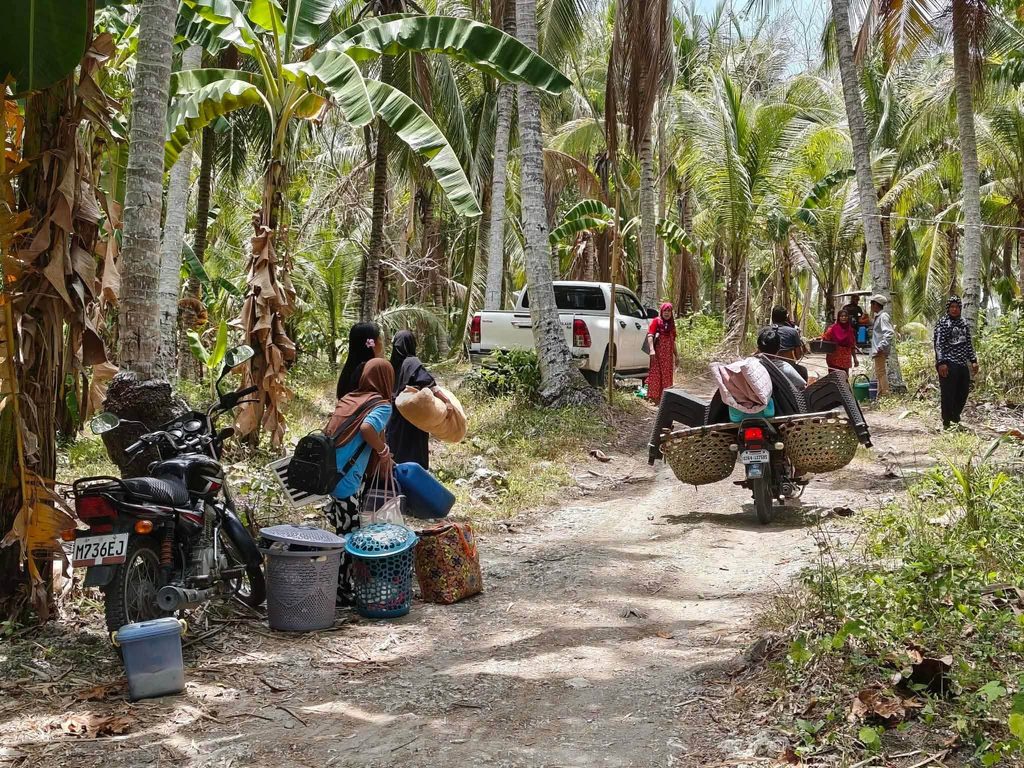
The firefight erupted in the early hours of September 16, 2026, affecting areas in Barangay Kadingilan and Sitio Bintad in Barangay Olandang. Reports identified the opposing sides as the group of Commander Jego Sadul, under the leadership of Haon Sindatok, and the group of Commander Badrudin, under the leadership of Commander Wahid Tundok. Authorities said the precise root cause of the confrontation remains under investigation and verification.
The fighting triggered an immediate security concern among residents, with some families seeking shelter at Dabpil-Sampulna Elementary School. The wider confrontation reportedly affected five sitios in Kadingilan and two sitios in Olandang, resulting in the displacement of hundreds of residents from their homes.
The situation also affected local security operations. According to the Maguindanao del Norte Police Provincial Office, a police personnel conducting checkpoint operations during the September 16 incident was hit in the right thigh.
In response, Maguindanao del Norte Police Provincial Director PCOL George D. Bagundol Jr. met with Haon Sindatok, identified as a commander of the BIAF-MILF Interim Base Command, in Simuay, Sultan Kudarat, on September 17. The meeting sought the latter’s cooperation in facilitating the peaceful withdrawal of his forces from the affected area as part of efforts to de-escalate the situation and prevent further incidents.
The intervention involved several security and peace actors, including the MILF Coordinating Committee on the Cessation of Hostilities (MILF-CCCH), the 33rd Infantry Battalion, the 27th Infantry Battalion, the Peace, Security and Reconciliation Office (PSRO) of the Office of the Chief Minister of BARMM, the Nabalawag local government, and the Barangay Local Government Unit of Olandang.
Their conflict disengagement and ceasefire intervention succeeded in stopping the exchange of gunfire. Authorities reported that no further shooting was recorded after the intervention, although security forces and peace mechanisms continued monitoring the area because of concerns over possible armed elements remaining in surrounding communities.
The violence, however, left physical damage and uncertainty among affected families.
Several houses in Barangay Kadingilan were reportedly damaged following the confrontation. Photographs taken by Arsad Lakiman showed damaged portions of a house and household belongings scattered inside. Residents also reported that armed individuals had allegedly entered the house, damaged parts of it, and that some belongings were reportedly missing.
The 33rd Infantry Battalion was also verifying a report that portions of the house of Nabalawag’s vice mayor may have been damaged during the incident. These reports remained subject to verification by authorities.
While the ceasefire brought a measure of calm, displacement continued to affect families in the area.
On September 17, the Nabalawag Municipal Disaster Risk Reduction and Management Office (MDRRMO), together with its staff, conducted monitoring and assessment visits at evacuation centers in Barangays Olandang, Kadingilan, and Nabalawag.
The monitoring team included representatives from ACCESS, Humanity & Inclusion (HI), ACTED, and the Ministry of Social Services and Development (MSSD). They assessed the safety and condition of displaced families and interviewed evacuees to identify immediate concerns, including their needs for food, water, hygiene and health services.
Authorities said some residents of Olandang had already begun returning home following the cessation of hostilities. Others, however, remained displaced because of continuing fears after armed individuals were reportedly still being seen in the vicinity.
Beyond immediate security measures, authorities and local partners also turned attention to the psychological and emotional impact of the displacement, particularly on children.
On September 17, the 33rd Infantry Battalion, Task Force 27 and local agencies conducted a joint psychosocial activity for internally displaced persons (IDPs) in Nabalawag. The activity was led by 33rd Infantry Battalion commander LTC Germen T. Legada, together with Task Force 27 commander LTC Eliezer M. Bejarin and local disaster management officials headed by MDRRMO-Nabalawag officer Fairoudzah Endaila Kiram.
The activity included consultations and conversations with evacuees to understand their fears, concerns and immediate needs. Children were also given opportunities to participate in parlor games and other recreational activities intended to provide positive distraction and social interaction while they remained in evacuation areas.
The humanitarian response underscores that the consequences of the Nabalawag confrontation extend beyond the exchange of gunfire itself. Families were forced from their homes, children were displaced from their normal routines, houses were reportedly damaged, and residents were left uncertain about when it would be safe to return.
For now, authorities and peace mechanisms are relying on continued monitoring, communication and disengagement between the involved groups to prevent another outbreak of violence.
The police have emphasized the importance of open communication, adherence to established peace mechanisms and cooperation among security forces, local government units and peace partners. Meanwhile, the MILF-CCCH and other concerned institutions continue efforts to maintain the ceasefire and keep the affected communities from being drawn back into hostilities.
Although the immediate firefight has stopped, the underlying dispute between the two groups remains unresolved. Authorities have yet to establish and publicly confirm the root cause of the conflict.
For the displaced families of Kadingilan and Olandang, the priority remains clear: safety, access to basic services, the protection of their homes and livelihoods, and the assurance that the guns will not erupt again in their communities.