
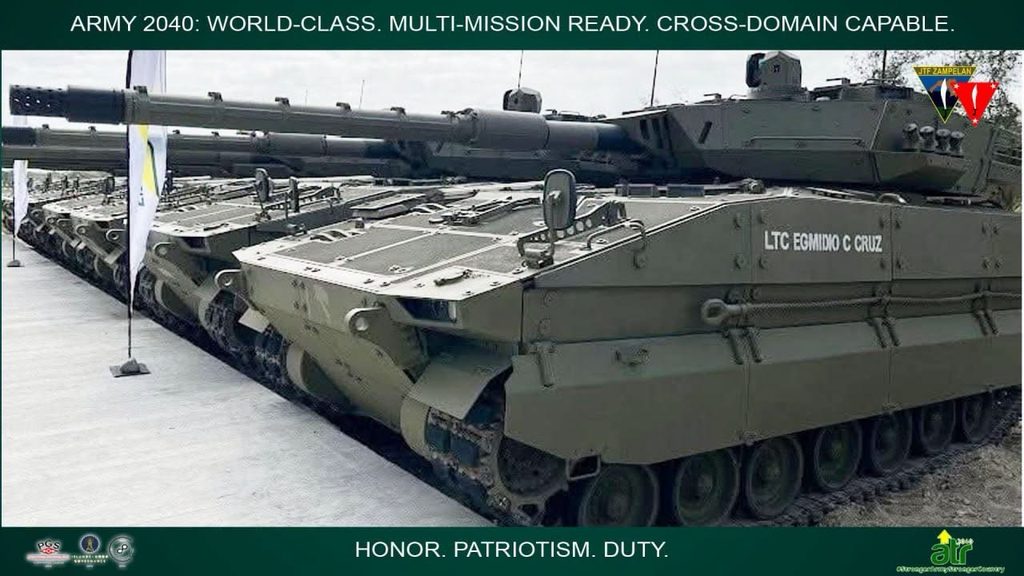
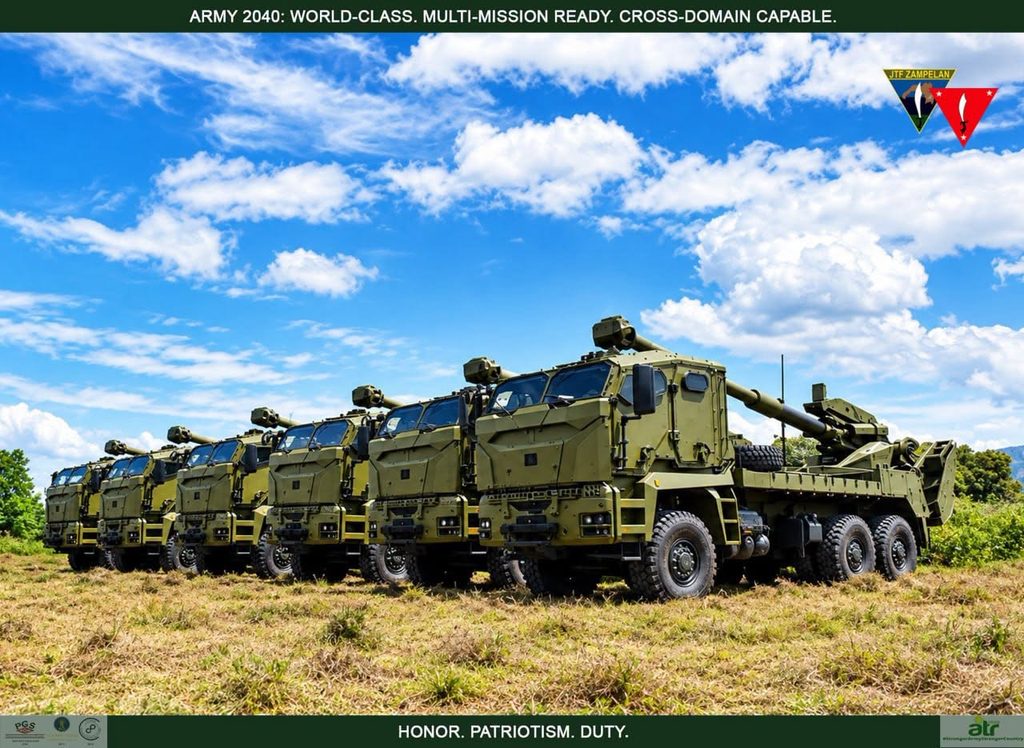
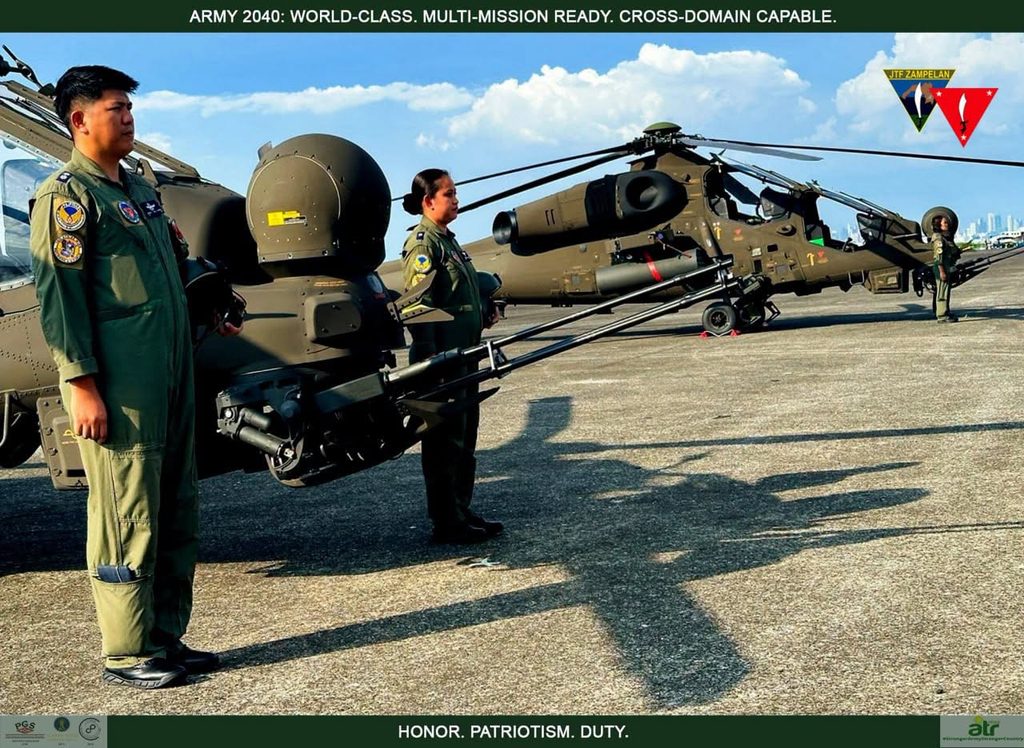
CAMP SANG-AN, LABANGAN, ZAMBOANGA DEL SUR — The Armed Forces of the Philippines (AFP) is preparing to deploy Sabrah light tanks, ATMOS 155mm wheeled self-propelled artillery systems, additional infantry forces and military helicopters to Lanao del Sur as part of strengthened security preparations for the September 14, 2026 Bangsamoro Parliamentary Elections (BPE).
Officially, the deployment is being presented as an election-security measure intended to deter armed violence, protect communities and ensure that voters can exercise their right to vote freely and without intimidation.
But the timing of the deployment raises another question that may be difficult to ignore: Beyond election preparedness, could the AFP’s strengthened posture in Lanao also be a subtle institutional response to the recent directive of MILF 131st Brigade Commander Abdurahman “Commander Bravo” Macapaar concerning the entry of government security forces into his group’s declared Area of Responsibility (AOR)?
There is no public statement from the AFP saying that the deployment was ordered because of Macapaar’s directive. The military has instead described the movement of troops and equipment as part of its regular and enhanced preparations for the upcoming Bangsamoro elections.
That distinction is important.
Yet the sequence of events places the deployment in a particularly sensitive context.
Days before the announcement of the additional forces and assets, Macapaar declared that Philippine Army and Philippine National Police (PNP) personnel should not enter or conduct activities within his brigade’s declared AOR without prior coordination with MILF authorities.
The declaration followed a September 2 checkpoint incident in Barangay Libertad, Kolambugan, Lanao del Norte, where AFP and PNP personnel stopped a large convoy of MILF members reportedly traveling toward Camp Kura-Kura in Munai.
Government security forces said the convoy involved uniformed and armed MILF members and that the group could not proceed because of firearms restrictions and the absence of documented prior coordination. The incident ended peacefully after negotiations, with the convoy eventually returning toward Picong, Lanao del Sur.
Macapaar subsequently objected to the manner in which the convoy was handled and issued his directive concerning the movement of government forces inside his group’s AOR.
The issue could have remained a disagreement over checkpoint procedures and coordination.
Instead, it introduced a larger question about how government security forces and MILF structures are expected to operate alongside one another in areas where the Bangsamoro peace process remains an important part of the security architecture.
It was against this backdrop that the AFP’s Western Mindanao Command (WestMinCom) issued its official response.
WestMinCom struck a careful balance. It reaffirmed the importance of the peace process and existing coordination mechanisms while also making clear that the lawful responsibilities of government security forces remain in place.
The command said it continues to coordinate closely with the MILF and other stakeholders on issues involving the movement and activities of government security forces, particularly in the context of election security.
It also emphasized that concerns arising from such activities should be addressed through established mechanisms rather than through actions that could create misunderstandings or affect the gains of the peace process.
But WestMinCom also addressed the central issue raised by Macapaar’s directive.
The command said that any unilateral declaration placing MILF communities “off-limits” to government security forces does not supersede the lawful mandate of the AFP and PNP or the mutually agreed arrangements governing election security.
WestMinCom specifically cited the Guidelines for Mutual Understanding between the Government of the Philippines and the MILF, including the provision concerning the unhindered movement and deployment of COMELEC personnel, election equipment and documents, voters, and AFP and PNP election-security personnel deputized by COMELEC to and from polling centers located within MILF communities.
That statement provides an important backdrop to the latest deployment.
The AFP now plans to reinforce its presence in Lanao with assets that go considerably beyond ordinary manpower augmentation.
Sabrah light tanks and ATMOS 155mm wheeled self-propelled artillery systems will augment armored and fire-support assets already positioned in Lanao. Ten battalions are currently deployed in the area, while the 29th and 30th Infantry Battalions are set to be deployed as follow-on infantry forces.
Black Hawk and T129 ATAK helicopters will also be committed to the election-security effort, providing additional aviation support for mobility, surveillance and responsiveness.
The scale of the deployment naturally attracts attention.
Heavy armored vehicles, artillery systems, additional infantry battalions and attack-capable aviation assets constitute a significant military capability. The AFP, however, has emphasized that their deployment is preventive and protective in nature and should not cause alarm among local communities.
The stated objective is deterrence.
The military says the additional forces and equipment are intended to discourage lawless armed elements from resorting to violence, intimidation or other acts that could threaten communities and voters during the election period.
The AFP also stresses that the ultimate purpose is to create a secure environment where duly registered voters can participate in the elections without fear.
On its face, therefore, the deployment is consistent with the military’s stated responsibility for election security.
But the surrounding circumstances invite a broader reading.
If the deployment had been announced in isolation, it would be relatively straightforward to regard it as another election-security measure.
Coming after a public disagreement over the movement of government security forces, followed by an official WestMinCom statement reaffirming the continuing mandate of the AFP and PNP, the deployment inevitably becomes part of a larger narrative.
That does not establish that the AFP is deliberately sending tanks, artillery and helicopters to answer Commander Bravo.
It does, however, make it reasonable to ask whether the strengthened posture also serves another purpose: to demonstrate that coordination with the MILF remains necessary, but that government security responsibilities will continue to be exercised throughout areas affected by the peace process.
Such a message, if that is indeed part of the intent, would not necessarily constitute an escalation.
It could instead be understood as a clarification of institutional boundaries.
The AFP’s official position appears to rest on two principles that must coexist.
First, government forces must coordinate with the MILF and observe mechanisms established under the peace process to prevent unnecessary apprehension, misunderstanding and confrontation.
Second, coordination does not remove the government’s responsibility to protect civilians, enforce applicable laws and secure an electoral process that must operate throughout the Bangsamoro.
WestMinCom itself has emphasized both principles.
The command said it would continue observing proper coordination in security operations in areas where MILF forces and communities are present. At the same time, it said the military must remain mindful of avoiding actions that could create unnecessary tension.
This is a delicate line.
Too little coordination could produce misunderstandings and potentially damage the peace process.
Too much uncertainty over the government’s ability to deploy its security forces could create questions about who ultimately bears responsibility for protecting voters, election personnel and polling centers.
The Guidelines for Mutual Understanding are intended, in part, to prevent precisely this kind of uncertainty.
For the AFP, the issue becomes even more consequential because the election is only days away.
Government security personnel deputized by COMELEC need to be able to reach polling centers. Election officials and election materials must be able to move. Voters must be able to travel to polling places without intimidation. And security forces must retain the ability to respond when genuine threats arise.
At the same time, the presence of government troops in communities associated with the MILF carries its own sensitivities.
The peace process has created mechanisms precisely because interactions between government forces and former combatant structures can produce misunderstandings if not properly coordinated.
The September 2 checkpoint incident demonstrated how quickly those sensitivities can surface.
The convoy was stopped peacefully, but the disagreement that followed eventually produced a public directive concerning the movement of AFP and PNP personnel.
WestMinCom responded without inflammatory language.
Rather than framing the matter as a confrontation, it reaffirmed the peace process, the need for coordination and the existing mechanisms for addressing disputes.
But its statement also established that no unilateral declaration can supersede the lawful mandate of the AFP and PNP.
The latest deployment therefore sits between those two positions.
It can legitimately be understood as an election-security measure.
It can also reasonably be viewed, at least from the sequence of events, as an institutional reminder that the government’s security responsibilities remain in force.
Whether it was deliberately intended as such, however, remains unconfirmed.
The AFP has not said that the deployment is directed at the MILF, nor has it characterized the movement of the additional assets as retaliation or escalation following Macapaar’s directive.
That absence of an explicit connection should be respected.
There is also no indication from the available statements that the military intends to abandon the coordination arrangements governing its interaction with MILF forces and communities.
On the contrary, WestMinCom has reaffirmed that coordination will continue.
The more significant question may therefore not be whether the AFP is “answering” Commander Bravo, but how both sides interpret the boundaries of coordination as the election approaches.
For the MILF, prior coordination may be viewed as essential to preventing incidents and respecting the peace-process framework.
For the AFP and PNP, coordination must coexist with their continuing responsibility for public safety and election security.
Those positions are not necessarily incompatible.
The danger lies in allowing either side to interpret coordination as either unrestricted authority or an effective veto over the lawful responsibilities of the other.
The Lanao deployment could therefore become an important test of whether those principles can coexist in practice.
The arrival of Sabrah tanks, ATMOS artillery systems, additional infantry forces and aviation assets does not, by itself, indicate that the peace process is under threat.
The AFP has explicitly characterized the deployment as preventive and protective.
But its timing makes it impossible to discuss the military buildup without acknowledging the recent dispute over the movement of government forces.
The most neutral reading may be that the AFP is preparing for the elections while simultaneously reaffirming, through its actions and WestMinCom’s official statement, that the government will continue to perform its security responsibilities in the Bangsamoro within the framework of established coordination mechanisms.
Whether that amounts to a subtle response to Commander Bravo’s directive is ultimately a question of interpretation unless the AFP itself provides a different explanation.
For now, the military’s message appears measured: coordination remains, the peace process remains, but the government’s security mandate also remains.
That distinction could prove critical in the days ahead.
With the September 14 elections approaching, the challenge for both the government and the MILF is not simply to avoid confrontation. It is to demonstrate that the mechanisms developed through years of peace negotiations are strong enough to accommodate disagreement, protect communities and allow government institutions to perform their lawful responsibilities without unnecessarily provoking the former combatant structures with which they now share a fragile peace.
The question surrounding the latest deployment, therefore, may be less about whether the AFP is choosing sides and more about whether the military posture represents a carefully calibrated reminder of the boundaries within which both sides must operate.
For now, there is no official indication that the AFP intends escalation.
But there is an unmistakable reaffirmation of its mandate.
And in the sensitive political and security environment of Lanao, that reaffirmation—coming so soon after Commander Bravo’s directive—deserves careful attention without prematurely interpreting it as confrontation.