
BAYANG, Lanao del Sur — The 64th Infantry “Knights” Battalion of the Philippine Army has strengthened its support for community-based peacebuilding in Lanao del Sur after participating in two separate rido settlements involving warring families in Picong and Lumbatan, where dialogue, traditional leadership, local government intervention, and inter-agency cooperation paved the way for reconciliation.
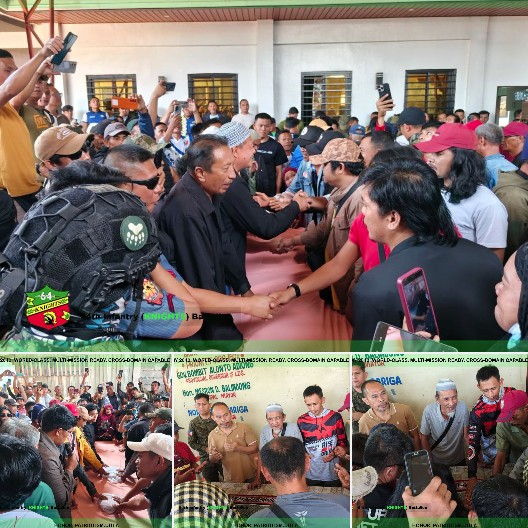
The first settlement took place on August 19, 2026, at the Barangay Hall of Barangay Tual, Picong, Lanao del Sur, involving the Macadatar, Idot, and Macadar families. The activity was spearheaded by Abu Rafe M. Jamil, Board of Director of the Lanao del Sur Electric Cooperative (LASURECO), with the participation of Lt. Col. Jerry B. Gaviola, Commanding Officer of the 64IB; 1st Lt. Rewine G. Degorio, Company Commander of Alpha Company; and 1st Lt. Dwayne Sotelo, Executive Officer of Alpha Company.
The settlement was conducted in coordination with PCapt. Christian Dea Ortiz, Chief of the Picong Municipal Police Station; Barangay Chairman Norodin A. Cariga; and Hji. Fais N. Caya, Sultan sa Caya, together with other community stakeholders.
The gathering provided the concerned families and community leaders with a venue to openly discuss the circumstances surrounding their dispute, air their concerns, and explore peaceful and mutually acceptable ways of settling their differences. Rather than allowing the conflict to deepen or potentially escalate, the process placed dialogue and community mediation at the center of efforts to restore relations and prevent further hostilities.
A similar peacebuilding effort was carried out on August 30, 2026, at Barangay Poblacion, Lumbatan, involving the Datu Manung family of Buad, Lumbatan, and the Mamailaw family of Lumbayanague.
The settlement was conducted under the leadership of Lt. Col. Gaviola. Representing Charlie Company under the supervision of Capt. Ralfph Andrew R. Villa, Company Commander, was 2nd Lt. Rafael N. Palac, Executive Officer, who witnessed the successful settlement between the two families.
A significant part of the August 30 settlement was the solemn oath-taking of the concerned parties on the Holy Qur’an, signifying their commitment to reconciliation, peace, and harmony and their resolve to uphold the settlement reached through the mediation process.
The settlement brought together a broad coalition of local leaders, traditional authorities, government officials, law enforcement personnel, and relatives and representatives of the families involved. Among those who took part were Rose Velt Radiaganding, retired General of the PNP; Sultan Dumalundong Mayor Ben Jamil Kurangking; Lumbayanague Mayor Jamal Asum; former Sultan Dumalundong Mayor Jamel Kurangking; former Lumbayanague Vice Mayor Arimao Asum; Lumbatan ABC President Fawje Derico; Sultan of Lumbayanague Abdul Azis Asum; Sultan of Tatayawan, Taparan James Radiaganding; and other relatives and representatives of the concerned families.
Also present was PCapt. Virgilio Tuala Jr., Chief of the Lumbatan Municipal Police Station, underscoring the role of law enforcement in supporting peaceful mechanisms for resolving disputes and maintaining stability after a settlement has been reached.
The two settlements demonstrate how rido, or clan-based conflict, can be addressed through sustained dialogue and the coordinated involvement of families, traditional leaders, local government officials, police, and security forces. In communities where family disputes can have wider social and security implications, locally led mediation provides an avenue to address grievances before they escalate into renewed violence.
For the 64IB, participation in such settlements goes beyond maintaining security. The Army’s involvement reflects its continuing role in supporting community-based peace initiatives and helping create conditions where local leaders and affected families can address disputes through peaceful means.
The presence of traditional leaders and family representatives was particularly important in both processes, as reconciliation in clan-related disputes often depends on the willingness of the parties to recognize community authority, engage in dialogue, and accept commitments intended to prevent further confrontation.
The two successful settlements also highlight the importance of whole-of-community and inter-agency cooperation in sustaining peace in Lanao del Sur. The participation of the Philippine Army, Philippine National Police, local government units, barangay officials, traditional leaders, and family representatives demonstrated a shared effort to resolve disputes without resorting to violence.
The 64th Infantry “Knights” Battalion said it remains committed to supporting peacebuilding initiatives and strengthening partnerships with local stakeholders in Lanao del Sur. Through continued engagement, dialogue, and collaboration, the unit seeks to help prevent the escalation of clan conflicts and contribute to a safe, secure, and peaceful environment for communities across the province.
The settlements in Picong and Lumbatan underscore a broader reality in conflict-affected communities: lasting peace is not achieved through security measures alone, but also through the willingness of families and community leaders to sit down, confront longstanding differences, rebuild trust, and collectively choose reconciliation over renewed conflict.