
LAKE SEBU, South Cotabato — A fish kill locally known as “kamahong” or “kemuhong” has continued to spread across portions of Lake Sebu, affecting at least three barangays and forcing fish cage operators to conduct emergency harvesting in a race against time to save their remaining stocks.
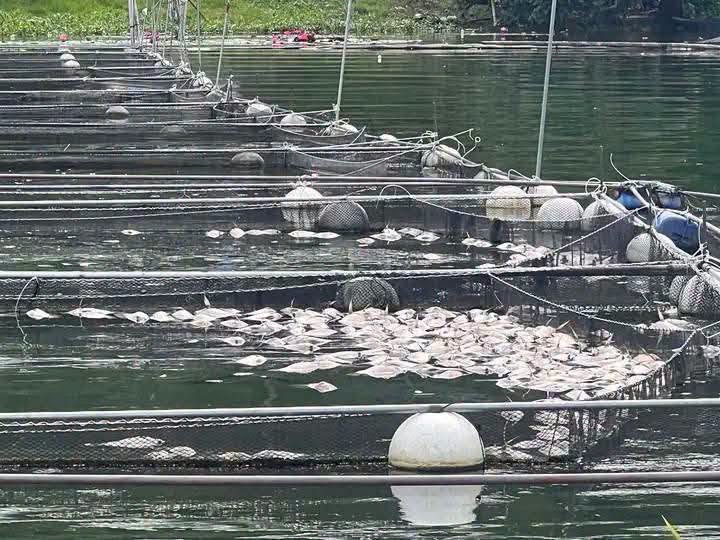
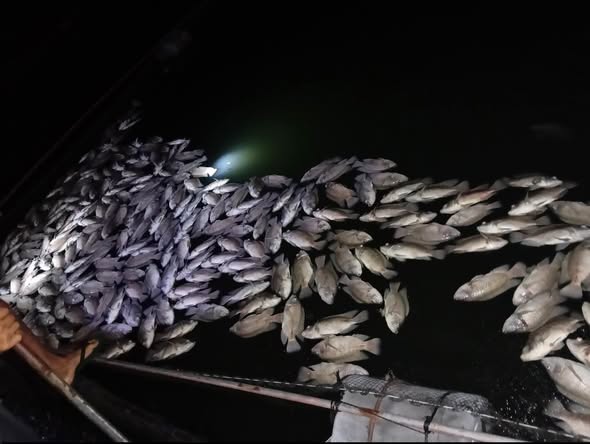
The fish kill initially struck portions of Lot 70, Isla Tebenwu, and Isla Tbowow, prompting fish farmers to begin emergency harvesting on Friday, July 10, with operations continuing through the weekend as conditions in the lake remained critical.
According to local authorities, the fish kill was triggered by prolonged bad weather, which significantly reduced the dissolved oxygen (DO) levels in the lake. The oxygen depletion has left thousands of cultured tilapia struggling to survive, a common occurrence during periods of continuous rainfall and limited water circulation.
Lake Warden Rudy confirmed that while the damage remains relatively limited compared to previous fish kill incidents, the phenomenon has already expanded from Barangay Poblacion to Barangay Bacdulong and Barangay T’Konel.
Officials fear the situation could worsen if heavy rains continue in the coming days, as more fish are expected to suffocate and float to the surface.
Emergency Harvest to Minimize Losses
Facing the threat of losing their entire investment, fish cage operators have been forced to harvest their tilapia weeks or even months ahead of schedule.
Although the fish are being sold before reaching their ideal market size, growers say the emergency harvest is their only option to recover at least a portion of their production costs.
The Municipal Agriculture Office of Lake Sebu has continued conducting assessments to determine the full extent of the damage and the economic impact on the municipality’s aquaculture sector.
Authorities are also closely monitoring water quality and oxygen levels while coordinating with affected fish farmers.
Tilapia Prices Drop Amid Oversupply
The emergency harvest has resulted in an oversupply of fresh tilapia in local markets.
Along the provincial road in Barangay Poblacion, roadside stalls have become crowded with buyers eager to take advantage of significantly lower fish prices.
Fresh tilapia is now selling for only ₱100 to ₱150 per kilogram, with larger fish reaching around ₱160 per kilogram, substantially lower than regular market prices.
The sudden influx of affordable fish has attracted consumers from nearby communities, but for fish growers, the lower prices represent another financial blow on top of the losses caused by the fish kill.
Many operators acknowledged that selling at discounted prices is preferable to watching their fish die inside the cages.
Livelihoods at Risk
Lake Sebu is widely recognized as one of South Cotabato’s premier freshwater aquaculture areas, where thousands of families rely on tilapia farming as their primary source of income.
The continuing fish kill has raised serious concerns over the livelihood of local fisherfolk, many of whom invested heavily in their fish stocks.
Residents and local officials are now hoping for improved weather conditions that would allow oxygen levels in the lake to recover and prevent the fish kill from spreading further.
As monitoring continues, authorities are urging fish cage operators to remain vigilant and coordinate closely with the Municipal Agriculture Office to minimize losses while emergency harvesting operations remain underway.