
A Paradise Under Strain
In Siargao, the image of a tropical haven is increasingly colliding with a harsher reality. What was once a symbol of community-driven tourism is now facing rising tensions, with a series of troubling incidents involving foreign visitors—most notably groups of Israeli nationals—sparking concern among locals. The recent altercation that circulated online, involving offensive remarks and violence, did not emerge in a vacuum. For many residents, it reflects a growing pattern that has been quietly building over time.
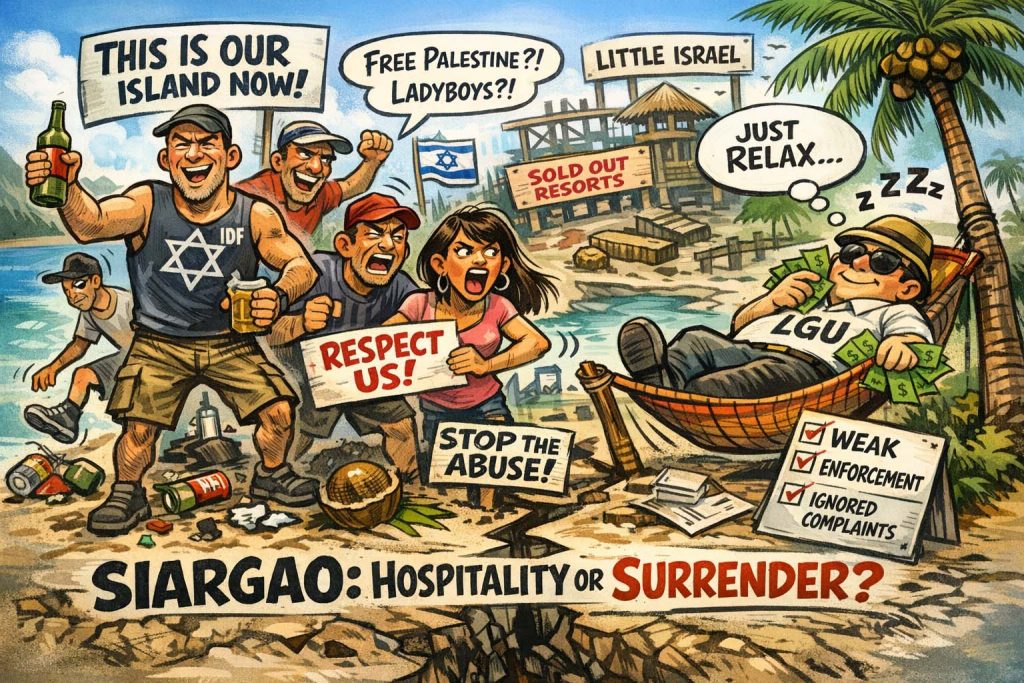
Recurring Incidents Involving Israeli Tourists
Across Siargao, a number of recent complaints and reports have pointed specifically to misconduct by some Israeli tourists. These include allegations of verbal abuse, cultural disrespect, harassment, reckless behavior, and even trespassing—such as the reported incident on Mamon Island where a group allegedly occupied private property without permission and refused to take accountability. In the now-viral confrontation, remarks attributed to an Israeli tourist—ranging from inflammatory geopolitical statements to offensive comments toward Filipinos and the LGBTQ community—further inflamed tensions. While not all Israeli visitors behave this way, the frequency of these incidents has led many locals to raise alarm.
A Pattern, Not Just Isolated Cases
What troubles residents is not merely the severity of individual incidents, but their apparent repetition. Business owners have reported difficult encounters with some Israeli clientele, including refusal to follow rules and retaliatory negative reviews when confronted. Others describe groups arriving in numbers, displaying a sense of entitlement, and reacting aggressively when challenged. The perception that some of these visitors—many of whom are former military personnel traveling after mandatory service—carry themselves with a certain assertiveness or insensitivity has only deepened unease within the community.
Silence, Inaction, and Unequal Consequences
Authorities, including the Bureau of Immigration, have reiterated that foreign nationals who violate Philippine laws may face deportation and blacklisting. Local officials in General Luna have also issued reminders on proper conduct. Yet on the ground, many residents feel that enforcement remains inconsistent. Allegations persist—fair or not—that some Israeli nationals are able to operate businesses through local proxies or “dummy” arrangements, and that violations are often met with warnings rather than firm penalties. This perceived leniency has fueled frustration and raised difficult questions about whether accountability is being applied equally.
When Tourism Becomes Intrusion
Siargao’s openness has long been its strength, but locals now fear it is being taken advantage of. Reports of foreign-linked establishments, informal hubs like the so-called “Israeli House,” and proposals for larger community structures have sparked concern about the gradual formation of foreign enclaves. Critics argue that these developments, especially when pursued without broad local consultation, risk reshaping the island’s identity and concentrating economic benefits away from residents. What begins as tourism, they warn, may slowly evolve into long-term influence and control.
Speaking Out Is Not Discrimination
It must be made clear: raising concerns about repeated misconduct involving Israeli tourists is not an act of racism or anti-Semitism. It is a call for accountability. Many locals emphasize that respectful visitors—regardless of nationality—are always welcome. But when a pattern of behavior emerges from any group, ignoring it in the name of political sensitivity only deepens the problem. Defending one’s community, culture, and dignity is not prejudice—it is a right.
A Defining Test for Local Leadership
The local government of General Luna now faces a critical moment. It must move beyond general statements and demonstrate that laws apply equally to all—Filipino or foreigner. This includes investigating alleged illegal business practices, addressing repeated complaints against specific groups, ensuring community consultation in development plans, and taking decisive action against misconduct. Failure to act risks reinforcing the perception that certain groups are being tolerated despite repeated violations.
The Future of Siargao at Stake
With hundreds of thousands of tourists visiting annually and billions in revenue at stake, Siargao stands at a crossroads. But economic gains cannot come at the expense of local dignity, safety, and control over land and culture. If current trends continue unchecked, the island risks becoming a place where locals feel like strangers in their own home—outnumbered, unheard, and unprotected.
Drawing the Line
The incidents involving Israeli tourists have become a flashpoint, but the issue runs deeper than any single nationality. It is about boundaries, accountability, and the kind of tourism the Philippines is willing to tolerate. Siargao’s people have shown patience, openness, and resilience. But patience has limits. If authorities continue to hesitate, the growing frustration on the ground may force communities to draw the line themselves.
Because Siargao is not just a destination. It is home.
And no one—visitor or otherwise—has the right to treat it as anything less.