
Guinsiliban, Camiguin — In a stunning fall from public office, Vice Mayor Tata Abecia of Guinsiliban was arrested after authorities uncovered suspected illegal drugs and a firearm during a court-sanctioned raid on his residence, intensifying concerns over the involvement of public officials in the narcotics trade.
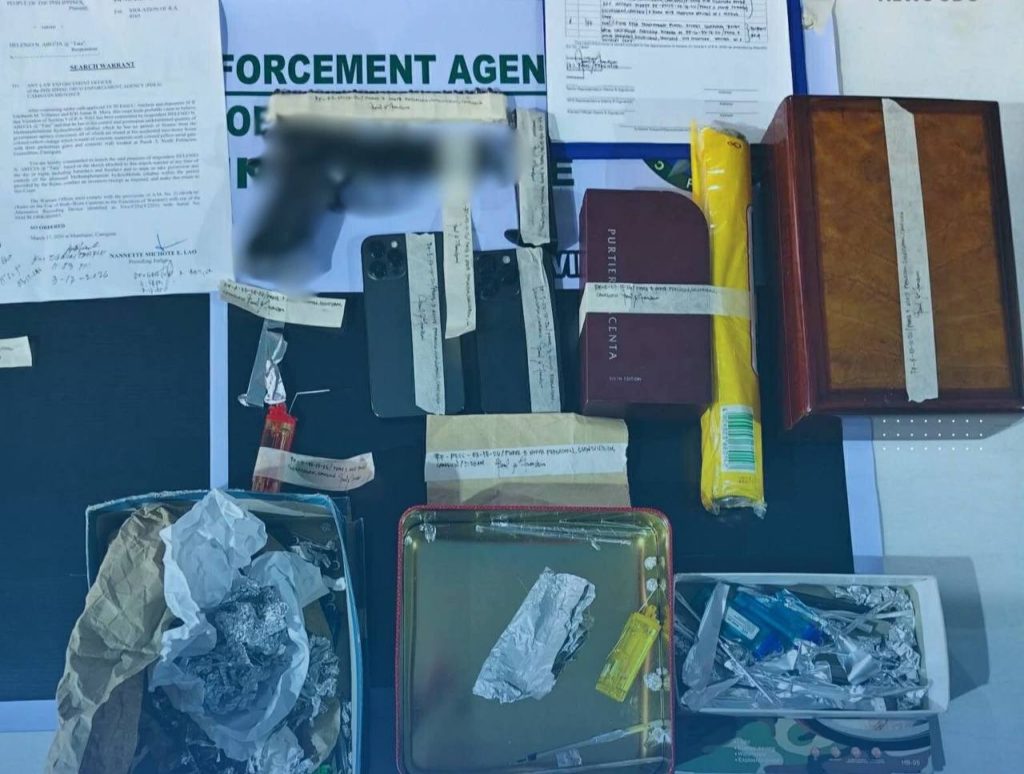


Agents of the Philippine Drug Enforcement Agency in Northern Mindanao (PDEA-10), backed by personnel from the Guinsiliban Municipal Police Station, served a search warrant against the 66-year-old official under the provisions of Republic Act 9165, or the Comprehensive Dangerous Drugs Act of 2002.
Authorities reported the seizure of several large sachets containing suspected shabu with an estimated street value of P120,000. A firearm along with live ammunition was also recovered inside the residence, further compounding the legal troubles facing the embattled official.
Abecia, who previously served as mayor of the municipality, was immediately taken into custody following the operation. Law enforcement officials confirmed that charges for violation of RA 9165 are now being prepared, with possible additional cases related to illegal possession of firearms under review.
“This operation underscores that no one is above the law,” a police official said, emphasizing that the anti-drug campaign remains relentless regardless of a suspect’s position or influence.
The arrest of a high-ranking local government official has sent shockwaves across the small island province, where public servants are expected to uphold the highest standards of integrity and accountability. Instead, this incident has laid bare the troubling reality that even those entrusted with governance can be entangled in criminal activities.
Authorities have yet to disclose whether the vice mayor is part of a larger drug network, but investigations are ongoing to determine the extent of his alleged involvement.
The incident adds to a growing list of cases where elected officials have been implicated in illegal drug activities, raising urgent questions about vetting, oversight, and the erosion of public trust in local leadership.
As the case moves forward, residents of Guinsiliban are left grappling with a harsh contradiction: a leader sworn to serve and protect now stands accused of violating the very laws he was duty-bound to uphold.