
MANILA — The Bureau of Customs (BOC) has intercepted six container vans loaded with smuggled cigarettes and dried tobacco products valued at nearly ₱39 million, once again placing Zamboanga City under the spotlight as one of the country’s major hotspots for cigarette smuggling.
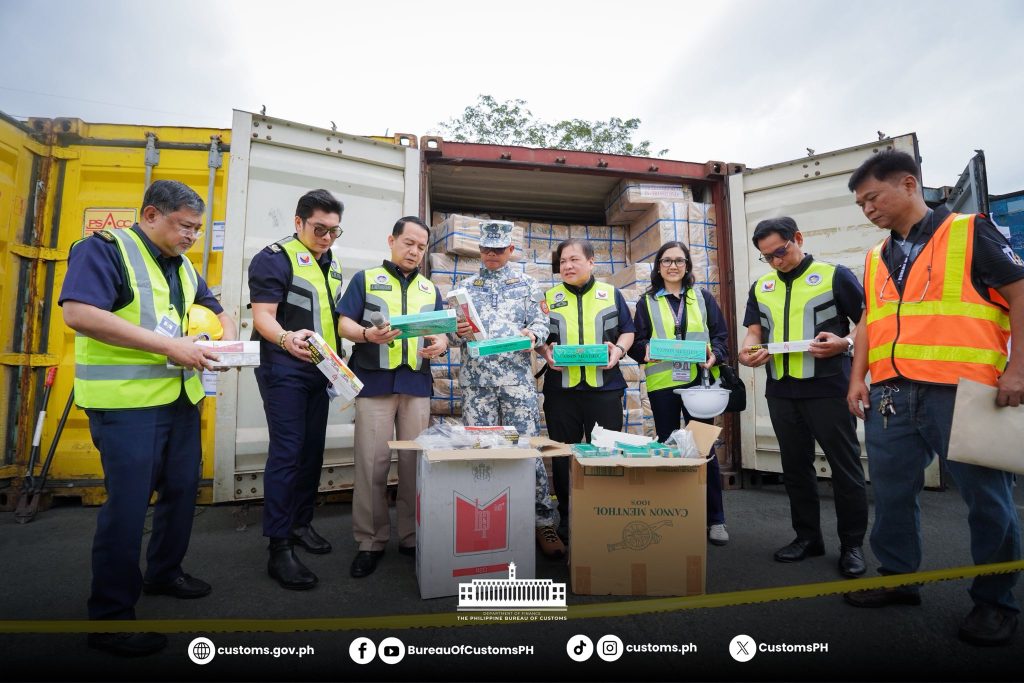
In a statement, the BOC said the operation was carried out by personnel from the Customs Intelligence and Investigation Service (CIIS) and the Enforcement and Security Service (ESS) following credible intelligence reports about large volumes of contraband hidden inside container shipments bound for Metro Manila.
Smuggled Cigarettes Hidden in Declared Cargo
Upon inspection at the Sub-Port of North Harbor in Manila, authorities discovered thousands of cartons of various brands of smuggled cigarettes and dried tobacco products concealed inside the six container vans.
Initial documents showed that the shipments were declared as “dried fish” and “general merchandise”—a common tactic used by smugglers to evade customs inspection and taxes.
Investigators traced the origin of the shipments to Zamboanga City and Bacolod City, with officials confirming that a significant portion of the seized cargo originated from Zamboanga, a long-identified entry point and transit hub for illicit tobacco products.
Zamboanga City Flagged as Smuggling Hotspot
Customs officials noted that the latest seizure underscores Zamboanga City’s continuing role as a major source and transit area for smuggled cigarettes entering the domestic market.
Due to its proximity to international maritime routes and southern borders, Zamboanga has long been vulnerable to smuggling activities, particularly involving untaxed cigarettes and tobacco products allegedly entering from neighboring countries before being transported to Luzon.
“This operation highlights how Zamboanga remains a critical point in the illegal cigarette supply chain,” a BOC official said. “These products are transported north and distributed in major markets, depriving the government of billions in revenues.”
Revenue Loss and Public Risk
Authorities warned that cigarette smuggling not only results in massive revenue losses but also poses serious public health and safety risks.
Smuggled cigarettes often bypass quality control and health regulations, making them potentially hazardous to consumers. In addition, illegal tobacco trade undermines legitimate businesses and weakens government programs funded through sin taxes.
The Department of Finance estimates that cigarette smuggling costs the government billions of pesos annually in lost excise taxes and customs duties.
Ongoing Investigation
The BOC has placed the seized shipments under formal custody while conducting a deeper investigation to identify the individuals and syndicates behind the operation.
Customs officials are now coordinating with other law enforcement agencies to trace the shipment’s handlers, consignees, and possible financiers.
Charges for violations of the Customs Modernization and Tariff Act (CMTA), including misdeclaration and smuggling, are being prepared against those responsible.
Strengthened Anti-Smuggling Drive
The Bureau of Customs reiterated its commitment to intensifying surveillance in known smuggling corridors, particularly in southern ports such as Zamboanga.
“We will continue strengthening intelligence gathering, port monitoring, and inter-agency coordination to dismantle smuggling networks,” the agency said.
The latest seizure, officials added, sends a strong warning to smugglers that authorities are tightening the noose around illicit trade routes, especially those linked to Zamboanga City and other high-risk areas.
As investigations continue, the BOC urged the public and stakeholders to report suspicious cargo movements and support government efforts to curb smuggling and protect national revenue.