
Public anger is intensifying against social media influencer Crist Briand, also known online as “Brader,” as officials, cultural advocates, and community leaders raise alarm over what they describe as a continuing pattern of disrespectful and provocative content.
The latest uproar erupted after Briand posted a controversial caption involving the daughter of boxing icon and former senator Manny Pacquiao, prompting a strong reaction from Randy Ecija, mayor of Senator Ninoy Aquino.
In a public Facebook post, Ecija openly condemned the vlogger, saying the limits of comedy had been crossed. The mayor even addressed Pacquiao directly, saying he was ready to take action against what he described as disrespectful behavior.
“Sobra na ang boundary ng komedya,” Ecija wrote, reflecting growing frustration among officials who say online influence should not be used to demean people or communities.
Sacred Site Incident Sparks National Criticism
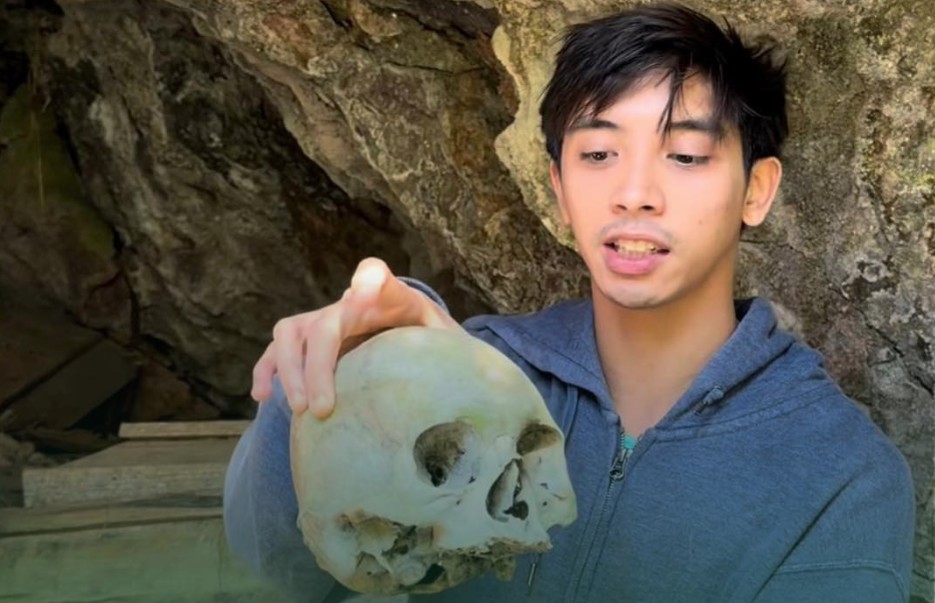
The controversy deepened after Briand drew criticism for a video posted on February 23, 2026, taken at a burial site in Sagada. In the now-deleted clip, the vlogger was seen holding a human skull while referring to it as belonging to “one of the pagans” at the well-known Sagada Hanging Coffins.
Although the video was later removed, screen recordings circulated widely online, triggering outrage among residents and cultural advocates who stressed that the site is a sacred ancestral resting place.
Local resident Alma Louise B. Bagano publicly called on the Sagada local government unit to declare the vlogger persona non grata, pointing out that posted warnings at the site clearly prohibit touching the remains.
Former National Commission on Indigenous Peoples officer Michael Gambican Umaming also criticized the incident, emphasizing that the issue goes beyond a single act.
According to Umaming, the ancestors of Sagada were deeply spiritual long before Christianization, and referring to them as “pagans” in a dismissive manner reflects a lack of understanding of the community’s cultural heritage. He also raised questions about whether an accredited guide was present and why the vlogger was not prevented from handling the remains.
For many residents, the incident struck at the heart of cultural respect and indigenous values tied to restraint, accountability, and reverence for ancestors.
Earlier Incidents Raise Concerns Over Pattern
The backlash in Sagada is not an isolated case. Earlier this year, officials in Bauang formally declared Briand persona non grata after he mocked the town in a social media post, referring to it as the home of “buang,” a remark widely condemned by residents.
Local officials said the move underscored a firm stand against online content that insults communities or spreads derogatory narratives.
Before that, leaders in Koronadal also raised concerns over Briand’s actions after he climbed the city’s roundball landmark as part of a “money hunt” vlog—an act that angered local officials who consider the structure a symbol of heritage and unity.
The same controversy also included remarks about “halal pork,” which sparked outrage among Muslim communities across Mindanao. Religious leaders and youth groups stressed that pork is strictly prohibited in Islam, making the comment both misleading and offensive.
Authorities later facilitated mediation that required the vlogger to issue a public apology, temporarily shut down his social media accounts, and undergo cultural immersion and sensitivity initiatives.
However, critics say the repeated controversies suggest that the lessons may not have taken hold.
Growing Pushback Against Irresponsible Influencing
Officials and observers say the incidents highlight a broader issue: the growing impact of influencers whose content reaches millions but can also provoke harm when cultural sensitivity and responsibility are ignored.
Law enforcement agencies have also warned that some stunts used for viral content could violate laws related to public safety, public nuisance, or the protection of cultural and historical sites.
Across several communities, from Mindanao to the Cordillera, the reaction has been consistent—calls for accountability and respect.
For many residents, the issue is no longer just about one controversial post or video. It is about a repeated pattern that they say undermines communities, sacred traditions, and cultural identity.
As of press time, the local government of Sagada has yet to release an official statement on whether it will impose sanctions or consider declaring the vlogger persona non grata, similar to the action taken in Bauang. Briand has also yet to issue a formal statement regarding the latest controversy.
But for many communities now speaking out, the message is clear: influence should not come at the expense of respect. Sacred places are not content, and cultures are not props for online views.