
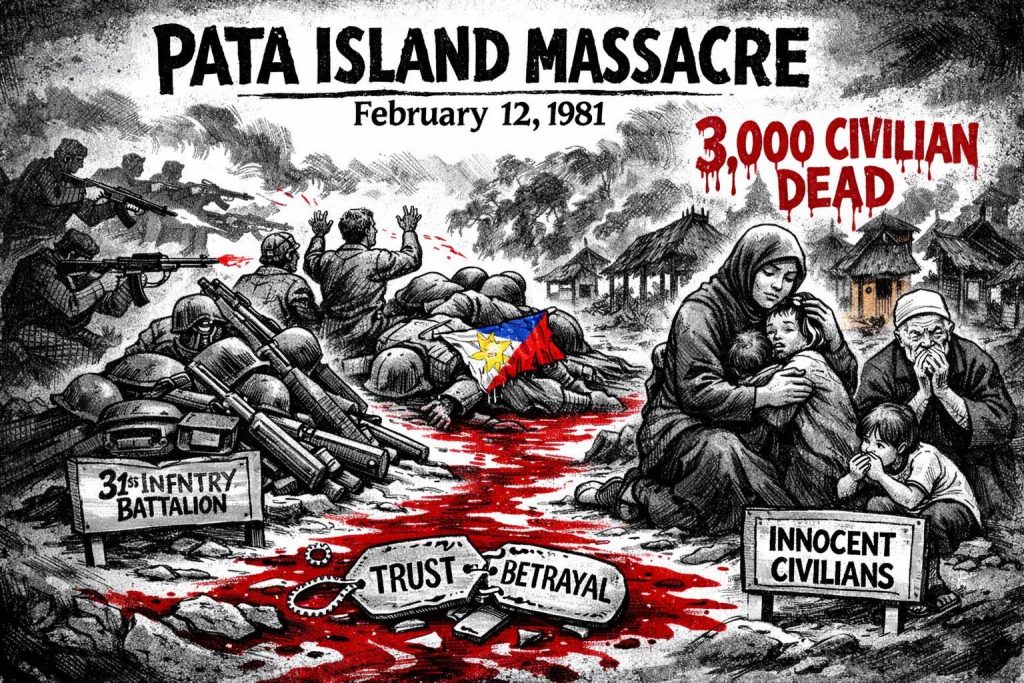
Every year on February 12, the nation is called to remember one of the darkest and most painful chapters in the history of Mindanao and the Armed Forces of the Philippines. It is the anniversary of the Pata Island Massacre—an event that claimed the lives of more than a hundred Filipino soldiers and later thousands of civilians. It was a day when hope was shattered, trust was betrayed, and blood stained the soil of Sulu. More than four decades later, the tragedy remains a haunting reminder of the cost of conflict and deception.
A Mission Rooted in Peace and Good Faith
In early February 1981, the men of the 31st Infantry Battalion were deployed to Pata Island with a mission unlike most military operations. They were not sent to fight an enemy, but to facilitate what was believed to be a peaceful “mass surrender” of Moro National Liberation Front members. Led by Lieutenant Colonel Jacinto Sardual, the soldiers arrived carrying the hope that dialogue and sincerity could end violence. They believed that trust and goodwill could open the door to lasting peace in a land long scarred by war.
The Order That Sealed Their Fate
On February 12, local armed leaders approached the battalion and proposed a farewell ceremony as a sign of mutual respect. They asked the soldiers to stack their weapons as a gesture of sincerity. Wanting to show good faith, Lt. Col. Sardual complied. Rifles were laid down. Ammunition was set aside. Guards were relaxed. In that moment, the soldiers were no longer in battle formation. They stood unarmed, vulnerable, and trusting—unaware that their kindness would soon become their greatest mistake.
Betrayal in a Storm of Bullets
Without warning, the armed men surrounded the defenseless troops and opened fire. Automatic rifles and machine guns tore through the ranks of unarmed soldiers. Some tried to shield their comrades. Some raised their arms in desperation. Others fell instantly. There was no chance to fight back, no chance to escape. In a matter of minutes, Pata Island turned into a killing field. At least 119 soldiers were slaughtered, nearly wiping out an entire company. Only three survived, all wounded and traumatized. Many bodies bore knife wounds and burn marks—silent evidence of cruelty beyond bullets.
Families Left with Grief and Questions
Behind every fallen soldier was a grieving family. Mothers lost sons. Wives lost husbands. Children lost fathers. Homes that once waited for joyful reunions were instead filled with mourning. Many families never had the chance to see their loved ones again. They buried memories instead of bodies. For decades, they have lived with unanswered questions—why trust was betrayed, why their sons were left defenseless, and why peace cost so much blood.
Retaliation and the Hidden Tragedy of Civilians
The massacre did not end with the deaths of the soldiers. In 1982, the military launched massive retaliation operations on Pata Island. Air and naval bombardments lasted for months in pursuit of the perpetrators. However, it was the civilians who suffered most. Tausug families were trapped between armed forces and rebels. Villages were destroyed. Food supplies were cut off. Thousands died from shelling, hunger, and disease. An estimated 3,000 civilians—many of them women and children—lost their lives, turning retaliation into another massacre.
A Painful Lesson Written in Blood
The Pata Island Massacre became a turning point for the Armed Forces of the Philippines. It exposed the deadly consequences of complacency and misplaced trust in conflict zones. It reminded the nation that peace efforts must never come at the expense of security. More importantly, it revealed how decades of poverty, neglect, and misunderstanding had fueled cycles of violence that destroyed both soldiers and civilians alike.
Honoring the Fallen, Remembering the Innocent
Today, we honor not only the 119 brave soldiers of the 31st Infantry Battalion, but also the thousands of innocent civilians who perished in the aftermath. They were victims of hatred, deception, and unresolved conflict. Their sacrifices must never be forgotten. They deserve more than footnotes in history books. They deserve remembrance, respect, and justice.
A Call for Peace Rooted in Truth and Justice
The story of Pata Island is not just a military tragedy—it is a Filipino tragedy. It teaches us that real peace cannot be built on lies and betrayal. Lasting peace must be founded on justice, dialogue, respect, and genuine understanding. Without these, violence will continue to claim lives and destroy communities.
Never Forget: A Wound That Still Bleeds
More than forty years later, the echoes of gunfire still linger in memories and in history. February 12 is not just a date—it is a reminder of what happens when humanity is forgotten. As we commemorate the Pata Island Massacre, let us honor the fallen by working for a future where no soldier is betrayed, no civilian is sacrificed, and no community is torn apart by war.
To the heroes of the 31st Infantry Battalion and to all victims of Pata Island—your sacrifice will never be forgotten. Salute.