
THE HAGUE, Netherlands — A new affidavit filed by a Davao-based journalist has intensified the dispute over a video presented by prosecutors during the confirmation of charges proceedings against former Philippine president Rodrigo Duterte before the International Criminal Court, with the affiant alleging misrepresentation, unauthorized use, and tampering of the footage.
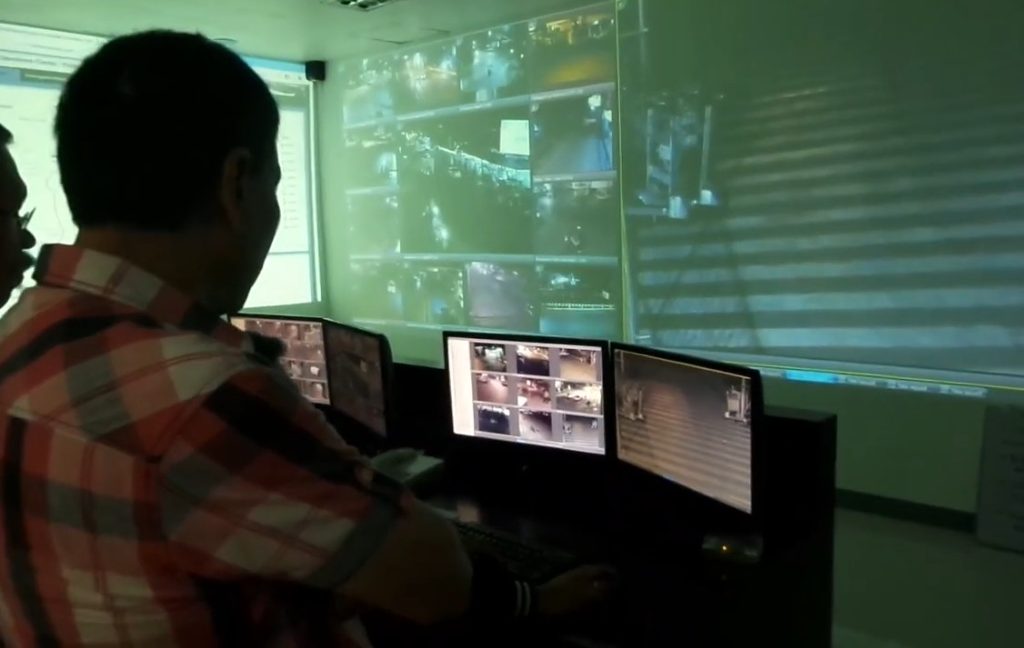
The affidavit of denial, executed on February 26, 2026 in Davao City, was submitted by veteran journalist Ben Jason Tesiorna, who said he personally recorded the video shown by ICC prosecutors during the February 23 hearing. Tesiorna stated that he filmed the footage on December 19, 2013 during a media showcase of the newly installed CCTV system at the Central 911 Operations Center in Davao City while he was working as a journalist-writer for SunStar Davao.
In the sworn document, Tesiorna asserted that the video had nothing to do with alleged extrajudicial killings or crimes against humanity, contrary to how it was reportedly presented during the hearing.
Affidavit details claims of misrepresentation and unauthorized use
According to the affidavit, Tesiorna said he was monitoring the ICC proceedings when he saw the video being presented by ICC prosecutor Julian Nicholls with English subtitles.
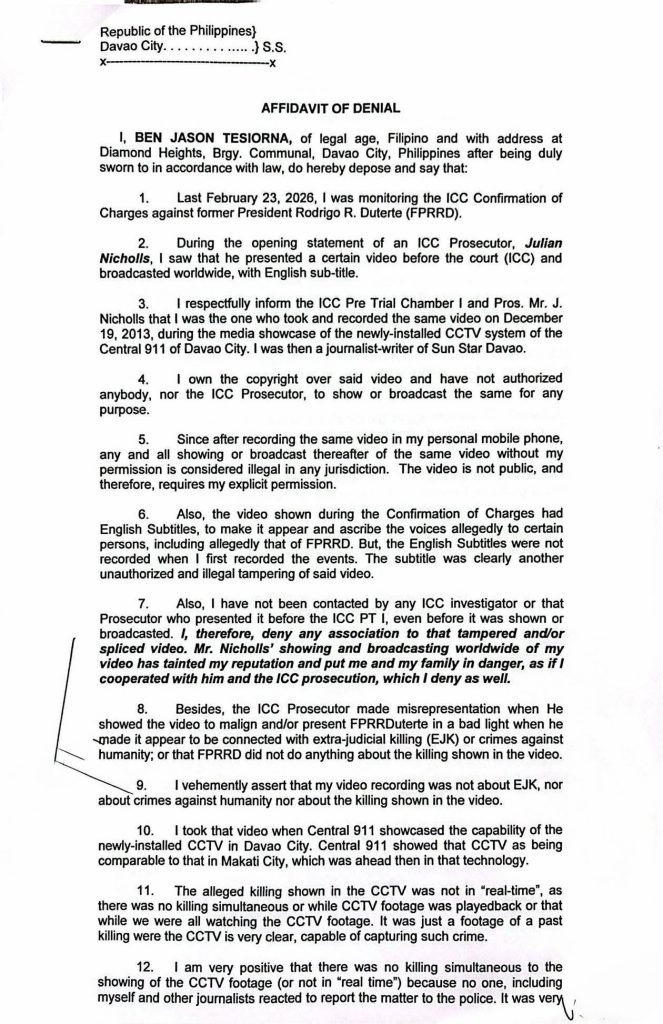
He told the ICC’s Pre-Trial Chamber that he owns the copyright to the footage and had not authorized anyone, including ICC prosecutors, to show or broadcast it for any purpose.
Tesiorna further alleged that the version of the video shown during the hearing included English subtitles that were not part of the original recording and described this as unauthorized alteration of the material.
He also stated that no ICC investigator or prosecutor contacted him prior to the video’s presentation in court. Because of this, he said he was distancing himself from what he described as a “tampered and/or spliced video,” adding that its use has allegedly placed him and his family at risk by creating the impression that he cooperated with ICC prosecutors.
Video context explained in sworn statement
In the affidavit, Tesiorna reiterated that the video documented a demonstration of Davao City’s surveillance capabilities at the time, highlighting the features of newly installed high-tech CCTV cameras comparable to those used in other Philippine cities then considered advanced in security technology.
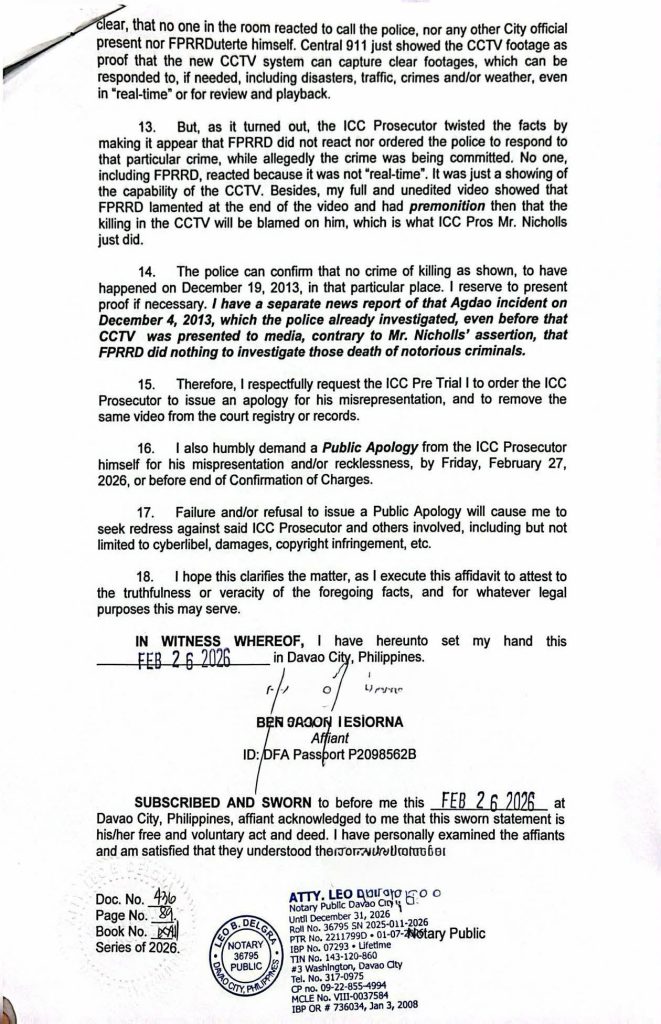
He clarified that the footage shown during the demonstration involved a previously recorded crime incident in Agdao and was not a real-time killing taking place while officials and journalists were watching the CCTV playback.
Tesiorna emphasized that the clip merely illustrated how the CCTV system could capture clear footage of crimes for review and response by authorities. He said that if the incident had been happening live, journalists and officials present would have reacted immediately.
The affiant also stated that police records could confirm that the killing referenced in the CCTV footage had already occurred earlier and had been investigated prior to the media demonstration in December 2013.
Demand for apology and removal of video from ICC records
In his sworn statement, Tesiorna formally requested that the ICC Pre-Trial Chamber order the prosecution to remove the video from the court registry or records and called on the prosecutor who presented it to issue a public apology for what he described as misrepresentation.
He also warned that failure to issue a public apology within the stated timeframe could lead him to pursue legal remedies, including possible claims related to copyright infringement, damages, and cyberlibel.
Defense moves to incorporate affidavit
The development comes as defense lawyer Martin Delgra, who is currently in The Hague assisting lead counsel Nicholas Kaufman, works to challenge the prosecution’s interpretation of the footage during the ongoing pre-trial proceedings.
Delgra had earlier confirmed reaching out to Tesiorna to secure an affidavit clarifying the origins and context of the video after it was presented during the ICC hearing.
Legal analysts note that affidavits from individuals directly involved in producing or handling disputed evidence can play a significant role during the confirmation of charges stage, where ICC judges assess whether there is sufficient basis to proceed to trial.
With the affidavit now formally executed, the issue of how the video was obtained, interpreted, and presented could become a critical point of contention as the ICC continues its examination of the case against Duterte.