
Davao City — The Department of Public Works and Highways (DPWH) has announced that the 1,340-meter Bucana Bridge Project, which spans the Davao River, is now 94% complete and is on track to open to motorists by the last quarter of this year.
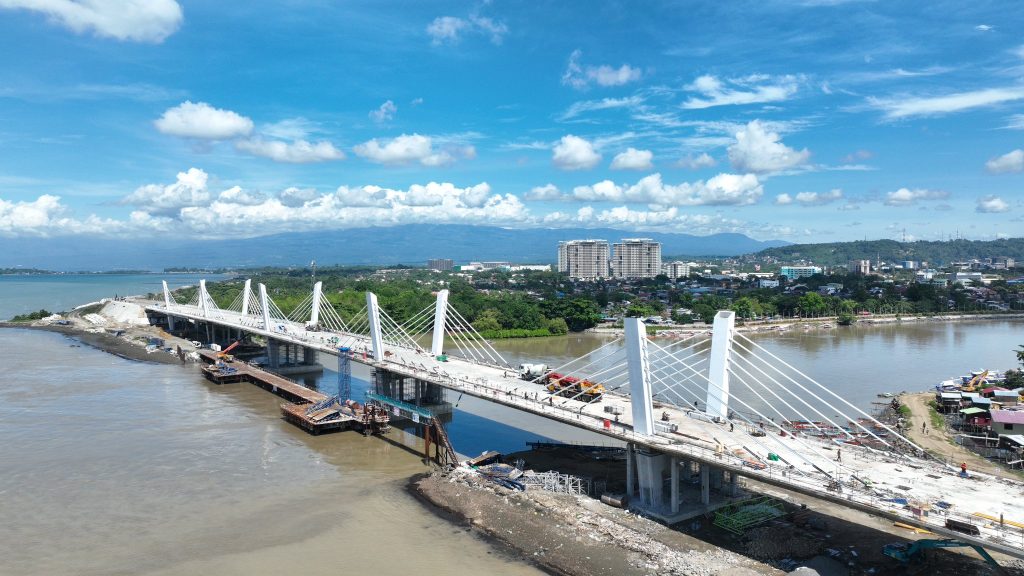
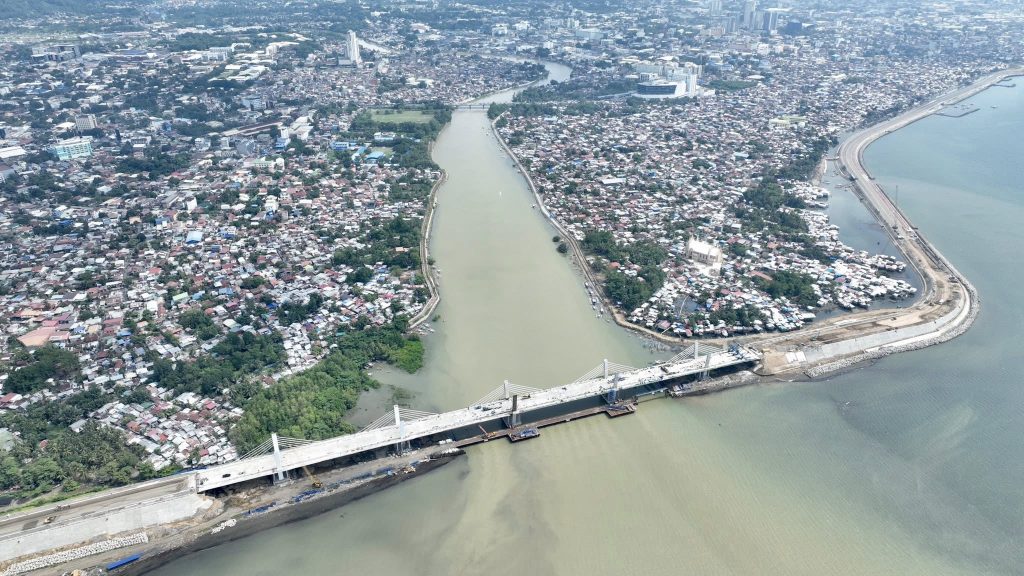
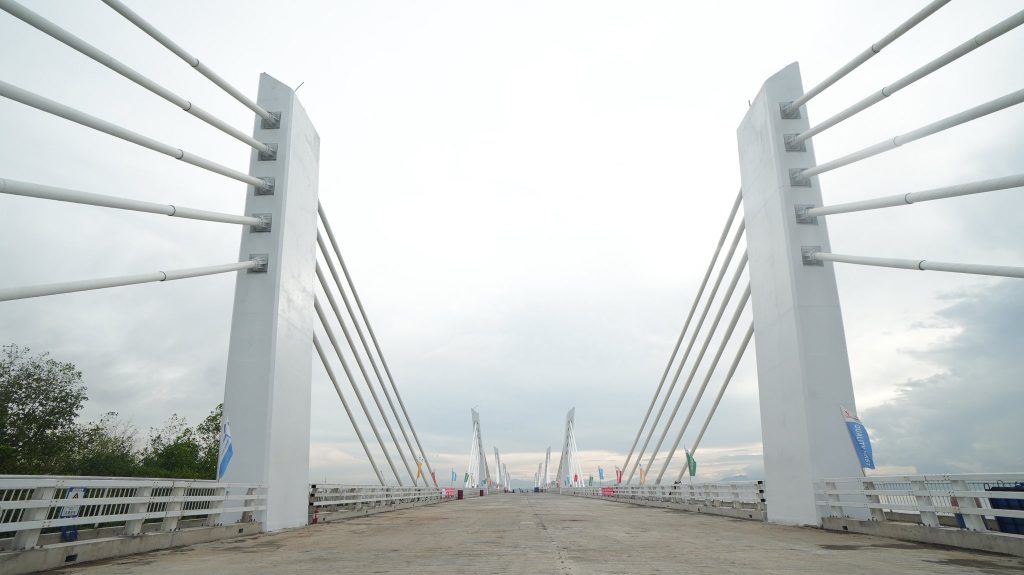
According to the DPWH, the bridge’s entire superstructure has already been completed. The remaining tasks include installing traffic barriers and pedestrian railings, applying the final coatings on its 19.5-meter-high pylons, and preparing the bridge deck for waterproofing and asphalt overlay.
Simultaneously, construction of the approach roads is underway, covering soil compaction, subbase preparation, drainage system installation, concrete fencing, and guardrail setup.
The Bucana Bridge is an integral part of the Davao City Coastal Bypass Road and is being built by the DPWH Unified Project Management Office – Bridges Management Cluster (UPMO-BMC), with China Road and Bridge Corporation serving as the civil works contractor. The bridge is designed to connect the city’s eastern and western coastal areas, which are currently separated by the Davao River.
The department emphasized that the Bucana Bridge is not only a vital infrastructure project for Davao City but also a testament to bilateral cooperation and the country’s commitment to resilient, future-ready infrastructure through global partnerships.
Funded by a ₱3.126-billion China Aid Grant from the Government of the People’s Republic of China, the project is also referred to as the China Aid Localized Project for the Davao River Bridge. It plays a critical role in the Davao City Coastal Road Network, directly supporting the “Bagong Pilipinas” vision of regional development, improved traffic flow, and better quality of life through modern infrastructure.
Construction began in November 2023, and once operational, the bridge is expected to significantly reduce traffic congestion in downtown Davao by offering a faster, safer, and more efficient route between Barangays 76-A Bucana and Matina Aplaya.
The Bucana Bridge features a four-lane, six-span extradosed design spanning 480 meters, with 860 meters of approach roads. Built to international standards, it showcases both engineering excellence and modern urban planning.
DPWH officials recently inspected the site to ensure timely progress, reaffirming that the Bucana Bridge will soon stand as a landmark of sustainable infrastructure and a key driver of mobility and economic growth in Davao City.