
PICONG, Lanao del Sur — After nearly three decades of hostility, several families from two barangays in Picong, Lanao del Sur, have formally agreed to end their long-standing clan conflict, marking a significant step toward restoring peace and strengthening community relations in the municipality.
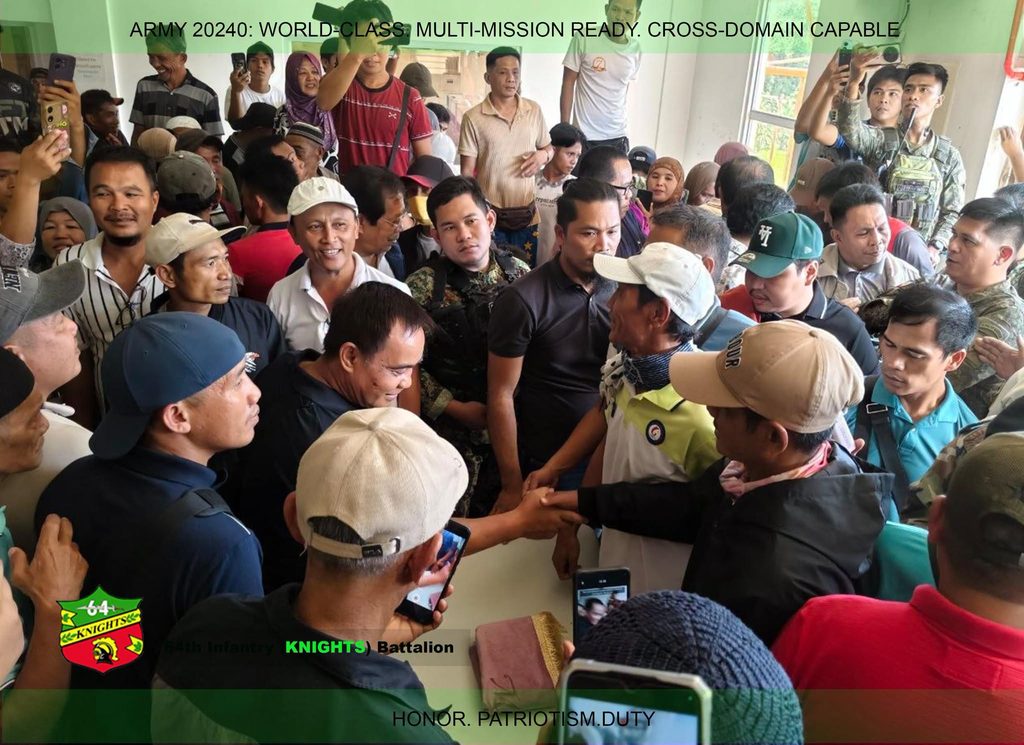
The peaceful settlement was reached on October 31, 2026, during a reconciliation gathering at the Picong Municipal Hall in Barangay Maladig, with the participation of the Philippine Army’s 64th Infantry (Knights) Battalion, local government representatives, police personnel, community leaders, and members of the families involved.
The dispute, locally known as rido, involved five families — Guido, Mongka, M’to, Macalangcom, and Lala — from Barangay Tual, and three families — Caya, Cauna, and Darumpat — from Barangay Maladig. Both groups are residents of Picong, and their conflict had reportedly persisted for almost 30 years.
Following discussions and reconciliation efforts facilitated by community and local government stakeholders, representatives of both sides reached a mutual agreement to formally end their dispute and commit to preventing further violence.
As a solemn expression of their commitment, the parties took an oath on the Holy Quran, pledging to honor the agreement, uphold reconciliation, and avoid actions that could reignite hostility between their families and communities.
Community leaders, police and military support reconciliation
The settlement was spearheaded by former Malabang Municipal Mayor Alinader “Dagar” Balindong, together with Abu Rafe M. Jamil, a member of the Lanao del Sur Electric Cooperative (LASURECO) Board of Directors, and Police Major Jefferson M. Gellermo, force commander of the Picong Municipal Police Station.
The 64th Infantry Battalion, under the leadership of Lieutenant Colonel Jerry B. Gaviola, also actively supported the peace initiative.
Other military personnel involved included First Lieutenant Rewine G. Degorio, Alpha Company commander; Second Lieutenant Jeffrey S. Novida, platoon leader; and Second Lieutenant Claudine R. Colantro, acting Civil-Military Operations officer.
Their participation formed part of broader efforts to address community-level disputes through dialogue, coordination, and peaceful conflict resolution rather than allowing longstanding grievances to continue fueling tensions.
Sustaining peace beyond the agreement
The end of a nearly three-decade clan conflict represents an important opportunity for the affected families to rebuild relationships and restore trust. However, the durability of the settlement will depend on the parties’ continued commitment to honoring their agreement and resolving future disagreements through peaceful means.
In communities where clan disputes can have consequences beyond the families directly involved, reconciliation also requires sustained cooperation among traditional leaders, local authorities, security institutions, and residents.
The 64th Infantry Battalion reiterated its commitment to supporting peacebuilding initiatives throughout its area of responsibility, particularly through collaboration with local government units, law enforcement agencies, traditional leaders, and other community stakeholders.
The battalion emphasized the importance of continued dialogue, cooperation, and genuine reconciliation in building peaceful, resilient, and progressive communities.
For the families involved in Picong, the agreement marks the formal conclusion of a conflict that spanned generations. Its lasting significance, however, will ultimately be measured not only by the signing and oath-taking but by whether succeeding generations can live together without inheriting the hostility of the past.