
DAVAO CITY — Davao City’s tourism industry has crossed a major milestone in its post-pandemic recovery, recording more than 1 million tourist arrivals in the first six months of 2026, according to the city government.
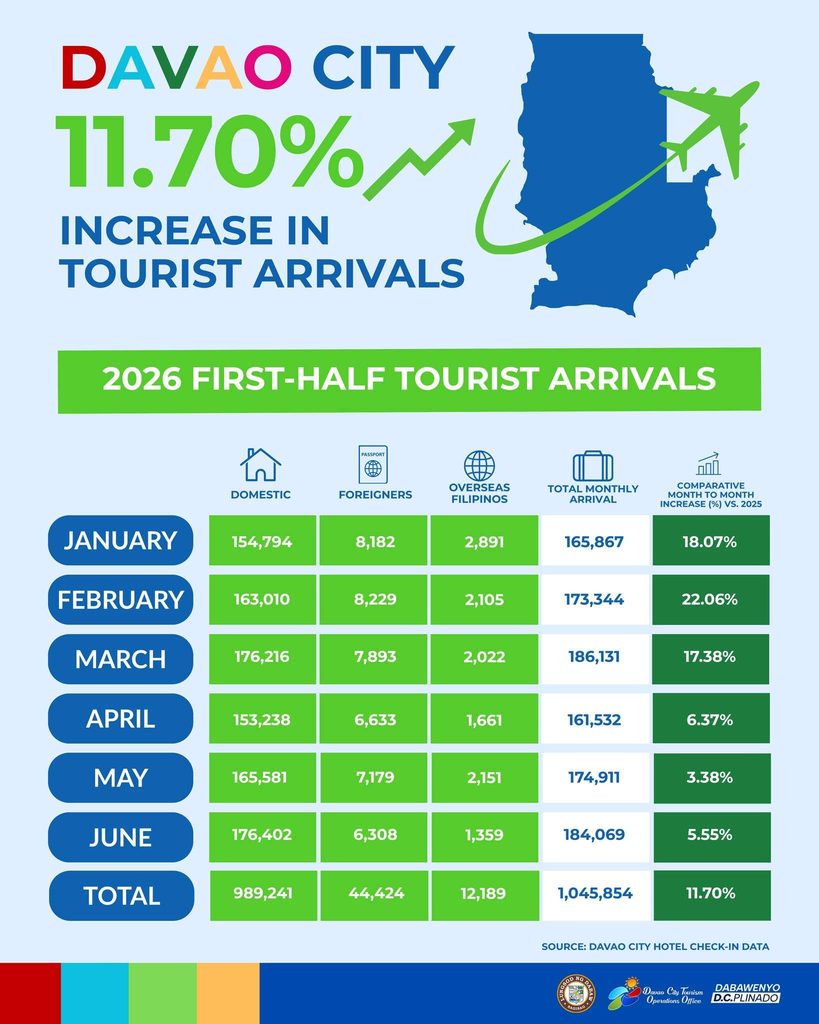
The city registered 1,045,854 tourist arrivals from January to June 2026, an 11 percent increase compared with the same period last year. The figure also represents Davao City’s strongest tourism performance since the pandemic, signaling renewed visitor confidence in one of Mindanao’s major tourism and economic centers.
The milestone provides a significant boost to the city’s continuing efforts to rebuild tourism activity to pre-pandemic levels while expanding opportunities for businesses and communities that depend on visitor spending.
For Davao, however, the numbers represent more than simply the number of people passing through the city.
Each visitor potentially contributes to a wider tourism economy—from hotels and restaurants to transportation providers, tour operators, souvenir shops, food establishments and other businesses that form part of the city’s tourism ecosystem.
The impact is particularly important for small and medium enterprises (SMEs), many of which depend on consumer spending generated by both domestic and international visitors.
As tourist activity increases, businesses serving visitors can see greater demand for accommodation, food, transportation, tours, local products and other services. That increased economic activity can, in turn, create opportunities for workers and entrepreneurs across different sectors.
A City Rebuilding Its Tourism Momentum
The latest figures point to a continuing recovery after the severe disruption suffered by the tourism industry during the COVID-19 pandemic.
For several years, travel restrictions, reduced mobility and uncertainty sharply affected tourism-dependent businesses. Hotels operated below capacity, restaurants and tour operators faced weaker demand, and many workers and entrepreneurs connected to the tourism sector were forced to cope with unprecedented disruption.
The return of more than a million visitors during the first half of 2026 suggests that Davao has continued to regain its position as a destination for travelers exploring Mindanao.
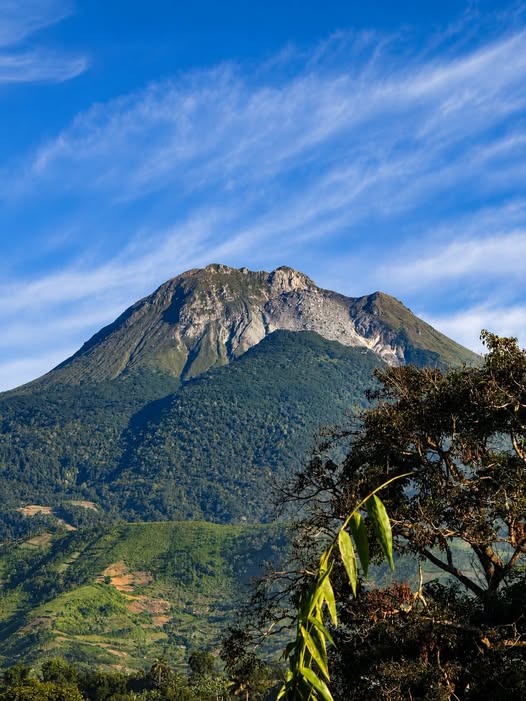
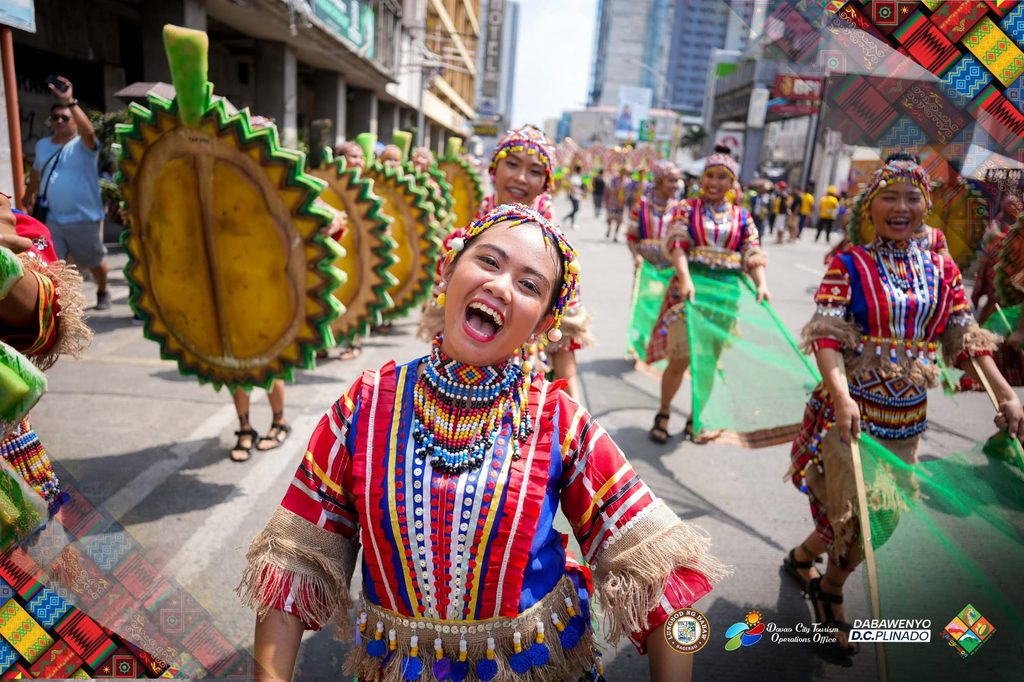
The city’s appeal is built around a combination of urban amenities and access to the wider region’s natural and cultural attractions. Visitors are drawn not only to places to see but also to the food, culture and hospitality associated with Davao.
The city government has framed the latest tourism performance as evidence that Davao is moving in the right direction.
But reaching the one-million mark before the end of the year is only part of the bigger objective.
The Bigger Target: Returning to Pre-Pandemic Levels
Despite the strong performance, the city’s tourism goal remains focused on recovering and eventually surpassing its pre-pandemic tourist arrival figures.
The first-half total provides a strong foundation for that ambition.
With 1,045,854 arrivals already recorded by June, Davao City has demonstrated that visitor activity can reach substantial levels even before the second half of the year, traditionally providing additional opportunities for tourism-related businesses and destinations.

The challenge now is to sustain that momentum.
A strong tourism sector requires more than attracting visitors. It also depends on ensuring that tourists have reasons to stay longer, spend locally and return.
That means maintaining the quality of accommodations and tourism services, supporting local enterprises, promoting destinations, improving visitor experiences and ensuring that tourism growth benefits communities beyond the most visible commercial centers.
For local businesses, sustained visitor growth could mean a larger customer base and increased demand. For workers, it could translate into more employment opportunities. For entrepreneurs, it could create space for new tourism-related products and services.
Beyond the Statistics
The 11-percent year-on-year increase is an important indicator of growth, but its broader significance lies in what sustained tourism activity can mean for Davao’s local economy.
Tourism connects a wide range of industries.
A visitor who books a hotel room contributes not only to the accommodation establishment but potentially to its employees, suppliers, transport providers and local service contractors. A meal at a local restaurant supports workers and food suppliers. A tour can generate income for guides, drivers, operators and communities involved in tourism activities.
This interconnected nature of tourism makes visitor arrivals an important economic indicator for cities such as Davao.
The city’s latest performance therefore places renewed attention on how tourism growth can be translated into wider and more inclusive economic opportunities.
Davao’s Next Chapter
The first half of 2026 has given Davao City a reason to be optimistic.
More than one million tourist arrivals in six months mark a substantial recovery milestone and provide a stronger platform for the city’s tourism industry to build on.
But the next test will be sustaining the growth.
Davao’s stated ambition is not simply to recover what was lost during the pandemic, but to return to pre-pandemic tourism levels and reach even greater heights.
Achieving that goal will depend on the continued participation of tourism stakeholders, businesses, workers, communities and Dabawenyos themselves.
For a city whose tourism identity is closely tied to its food, culture, destinations and hospitality, every visitor represents an opportunity to strengthen the local tourism economy.
The first-half figures suggest that those opportunities are returning in significant numbers.
With 1,045,854 tourist arrivals already recorded in the first six months of 2026, Davao City is no longer merely waiting for tourism to return.
It is rebuilding its momentum—and attempting to turn that recovery into sustained, long-term growth.
For Davao’s tourism industry, the million-arrival milestone is therefore not the finish line.
It is a marker of how far the city has come—and a measure of how much further it intends to go.