
ZAMBOANGA CITY — From the moment an aircraft detected a vessel refusing to comply to the final stages of boarding, inspection, and law enforcement processing, the message of a major maritime security exercise in Western Mindanao was clear: protecting the region’s waters requires more than one agency, one mandate, or one capability.
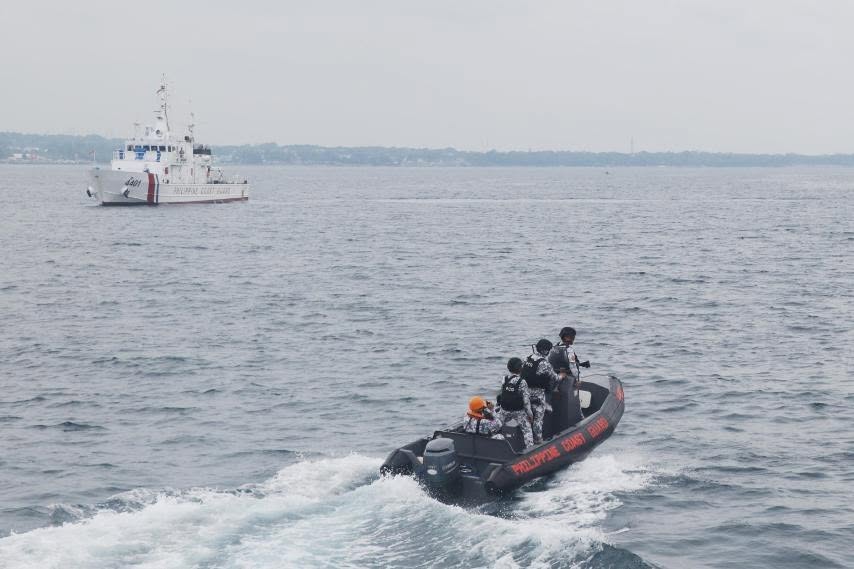
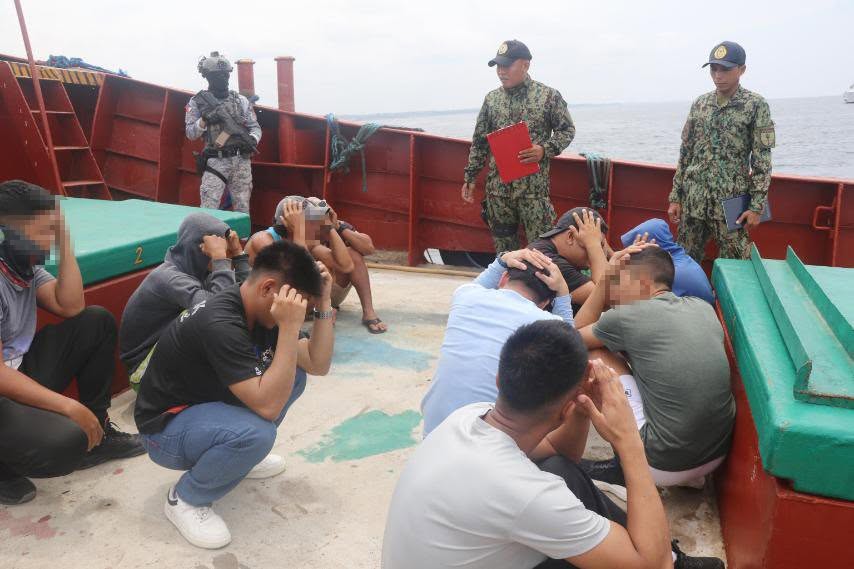
Joint Task Force (JTF) Poseidon and key maritime security and law enforcement agencies demonstrated their ability to operate as a single, coordinated force during a Joint Maritime Patrol (MARPAT) and Visit, Board, Search, and Seizure (VBSS) capability demonstration at Naval Station Romulo Espaldon in Zamboanga City.
Held as part of the Western Mindanao Command’s (WESTMINCOM) 20th Founding Anniversary activities, the exercise highlighted the growing importance of interoperability among the military, maritime law enforcement, and regulatory agencies tasked with securing the waters of Western Mindanao.
Rather than presenting maritime security as the responsibility of a single institution, the activity showed how separate agencies can connect their capabilities into one operational response—from surveillance and interception to boarding, inspection, documentation, and enforcement.
From the sky to the sea
The simulated operation began with surveillance.
A Philippine Air Force ScanEagle Unmanned Aerial System monitored a non-compliant Vessel of Interest, providing real-time information that allowed responding maritime units to establish situational awareness before moving to intercept.
The surveillance phase was followed by the deployment of two maritime assets: Philippine Navy vessel BRP Herminigildo Yurong (PG204) and Philippine Coast Guard vessel BRP Tubbataha (MRRV-4401).
The vessels established a maritime perimeter and intercepted the vessel, demonstrating how aerial surveillance can be integrated with surface assets during a maritime security operation.
The scenario then moved to one of the most critical stages of maritime interdiction—the boarding.
The Philippine Coast Guard Special Operations Group conducted the simulated Visit, Board, Search, and Seizure operation, demonstrating the specialized capability required to safely board and inspect a vessel following interception.
But the operation did not end once the vessel was boarded.
Instead, the exercise demonstrated the next layer of maritime security: bringing together agencies with different legal mandates and areas of expertise to determine what happens after an interdiction.
One vessel, multiple mandates
An Inter-Agency Maritime Law Enforcement Team composed of representatives from the PNP Regional Maritime Unit-9, Bureau of Customs, Bureau of Fisheries and Aquatic Resources, Philippine Drug Enforcement Agency, PNP Maritime Group, Bureau of Immigration, and Bureau of Quarantine subsequently carried out their respective functions.
Each agency brought a distinct responsibility to the operation.
The arrangement reflected the reality of maritime law enforcement, where a single vessel may potentially involve several regulatory and enforcement concerns.
Customs authorities may have to address cargo and importation issues. Fisheries authorities may examine violations involving fishing activities and aquatic resources. Drug enforcement personnel may respond to suspected narcotics trafficking. Immigration authorities may deal with the movement and documentation of persons, while quarantine personnel may address public-health and biosecurity requirements.
Police and maritime law enforcement units, meanwhile, provide enforcement and security capabilities within their respective mandates.
The exercise therefore underscored a central principle of maritime security: interdiction is only one part of the mission.
The effectiveness of a maritime operation also depends on what follows—the proper inspection, documentation, identification of violations, preservation of evidence, and disposition of the case or vessel under applicable laws and regulations.
By placing these functions within a single simulated operational sequence, the exercise demonstrated how agencies can avoid operating in isolation when responding to maritime threats.
Beyond a demonstration
The activity was conducted as a capability demonstration, but its implications extend beyond the exercise itself.
Western Mindanao’s maritime domain is vast and strategically important, encompassing busy sea routes, coastal communities, fishing grounds, ports, islands, and waters connecting the region to neighboring areas.
These waters can also be exploited by criminal networks engaged in activities such as smuggling, trafficking, illegal fishing, and other forms of transnational crime.
Responding to these threats requires more than the presence of patrol vessels.
It requires detection capabilities capable of identifying suspicious activity, maritime units that can rapidly respond, trained personnel who can conduct boarding operations, and law enforcement and regulatory agencies capable of acting on violations once a vessel is intercepted.
The MARPAT and VBSS demonstration placed those components into one operational chain.
Detect. Intercept. Board. Search. Inspect. Enforce.
The seamless transition among these stages demonstrated the value of having agencies understand not only their own responsibilities but also how those responsibilities connect with those of their partners.
JTF Poseidon as the coordinating mechanism
At the center of this effort is JTF Poseidon, which serves as a mechanism for synchronizing maritime security activities in Western Mindanao.
The exercise demonstrated the task force’s role in bringing together military and civilian capabilities that might otherwise operate under separate organizational structures and mandates.
Its importance lies not necessarily in replacing the individual agencies, but in helping ensure that their capabilities can complement one another during a maritime security response.
For maritime threats that cross jurisdictional and institutional boundaries, such coordination can be critical.
A suspected smuggling operation, for example, may begin as a surveillance concern, develop into a maritime interdiction, and eventually require customs enforcement. A suspected drug trafficking incident may similarly require military or police interception followed by PDEA action. Illegal fishing cases can require the involvement of fisheries authorities after a vessel is boarded.
The exercise showed how these separate responsibilities can be brought together within one coordinated operational picture.
Rear Adm. Constancio Arturo M. Reyes Jr., Commander of Naval Command Western Mindanao, stressed that maritime security cannot be effectively addressed by agencies working independently.
“Maritime security is a shared responsibility. What we demonstrated today is our ability to bring together different capabilities and mandates into one coherent effort to protect our waters and our people,” Reyes said.
His statement captured the principal lesson of the demonstration: maritime security is ultimately a collective undertaking.
Strengthening the region’s maritime shield
The activity also reflected a broader shift in maritime security operations—from individual agency patrols toward coordinated, multi-agency responses.
For Western Mindanao, where maritime routes connect communities and commercial centers while also presenting opportunities for criminal exploitation, the ability to rapidly assemble the right capabilities can be as important as the capabilities themselves.
An unmanned aerial system may provide the first eyes on a suspicious vessel. A Navy or Coast Guard vessel may provide the means to intercept it. Specialized boarding personnel may secure the vessel and conduct the initial search. Police, customs, fisheries, drug enforcement, immigration, and quarantine authorities can then apply their respective mandates.
When these elements work in sequence, a maritime security response becomes more than the sum of its individual parts.
That was the capability JTF Poseidon and its partner agencies sought to demonstrate during the WESTMINCOM anniversary activity.
The exercise reinforced JTF Poseidon as a key mechanism for synchronizing maritime security efforts across Western Mindanao and strengthening the collective ability of military, maritime law enforcement, and regulatory agencies to respond to threats at sea.
Ultimately, the demonstration was not simply about ships, aircraft, boarding teams, or enforcement personnel.
It was about unity of effort.
In a maritime domain where threats can move across boundaries as easily as vessels move across the water, the exercise showed that an effective response depends on agencies being able to see the same threat, understand their respective roles, and act together.
For Western Mindanao, that ability to operate as one maritime security force may prove crucial in keeping its waters safer from smuggling, trafficking, illegal fishing, and other threats that exploit the region’s extensive maritime routes.