
MALAYBALAY CITY, Bukidnon — Just when hope had begun to soar once again for one of the Philippines’ most iconic and critically endangered wildlife species, tragedy struck.
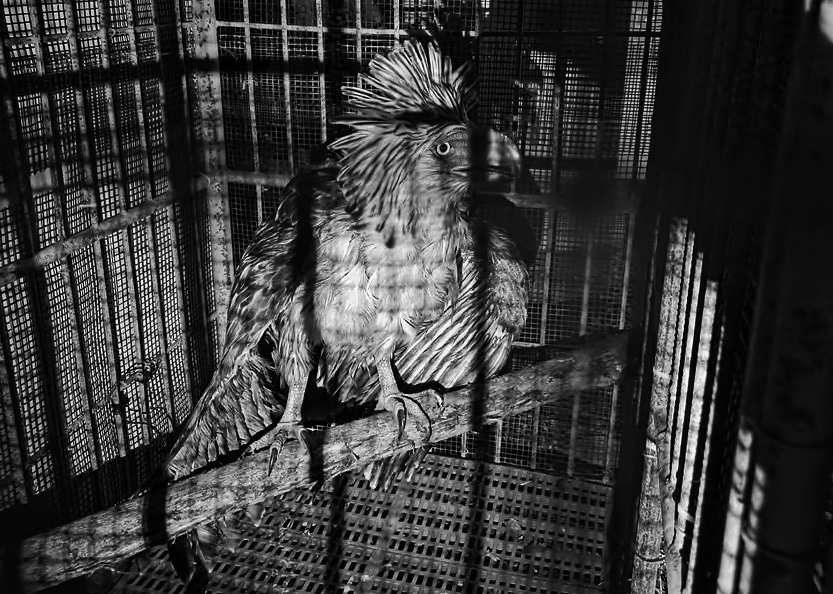
The Philippine Eagle Foundation (PEF) announced with profound sorrow that Philippine Eagle Sawaga-Dalwangan—the majestic female raptor rescued in early July after being found gravely wounded in the forests of Bukidnon—has died while undergoing rehabilitation at the Philippine Eagle Center.
Her passing has left conservationists, Indigenous communities, wildlife rescuers, veterinarians, and thousands of Filipinos mourning the loss of a bird whose remarkable struggle for survival had become a symbol of hope amid the country’s escalating biodiversity crisis.
A Fighter Until Her Final Breath
Following her dramatic rescue on July 3, Sawaga-Dalwangan initially defied expectations.
Veterinarians caring for the critically endangered eagle reported encouraging signs of recovery. She gradually regained strength, became increasingly alert, began feeding on her own, and responded positively to intensive medical treatment. Each update offered renewed optimism that one of the country’s rarest birds might one day return to the skies over Mount Kitanglad.
But recovery is often fragile.
Despite showing steady improvement, Sawaga-Dalwangan suddenly suffered an unexpected medical emergency during rehabilitation.
Despite the relentless efforts of veterinary specialists to revive her, she could not be saved.
The Philippine Eagle Foundation confirmed that an initial necropsy has already been completed, while histopathological examinations are still ongoing to determine the precise cause of death. A comprehensive medical report will be released once laboratory analyses have been finalized.
For many who closely followed her journey, the announcement came as a heartbreaking reminder that even the most determined rescue efforts cannot always overcome the devastating consequences of severe trauma.
A Rescue That Captured the Nation
Sawaga-Dalwangan’s story began deep inside the forests surrounding the Mount Kitanglad Range Natural Park, one of the country’s most important remaining habitats for the Philippine Eagle (Pithecophaga jefferyi).
Her life was saved because one man chose to investigate an unusual sound.
Lumad resident Marven Linoy was harvesting passion fruit when he heard loud, frantic calls coming from nearby trees. Curious, he approached and found more than 30 monkeys surrounding what he initially believed to be a wild chicken.
To drive them away, he barked loudly like a dog, scattering the troop.
What lay beneath the mud shocked him.
There, barely able to move, was a fully grown Philippine Eagle—its feathers caked with mud, wings badly injured, body weakened by dehydration, and already infested with maggots.
Recognizing the urgency, Linoy gently covered the exhausted eagle with his jacket and placed fern leaves over her eyes to reduce stress while waiting for rescuers.
His quick thinking would trigger one of the most significant wildlife rescue operations in recent years.
She Was Already Fighting for Her Life
Veterinary examinations revealed injuries far more severe than anyone initially imagined.
Sawaga-Dalwangan had suffered extensive wounds across both wings, around her tail, vent, and cloaca. Maggots had already burrowed deep into infected tissue, indicating she had remained helpless on the forest floor for several days.
She was severely dehydrated, exhausted, malnourished, and suffering from widespread infection.
Veterinarians painstakingly removed hundreds of larvae, disinfected her wounds, administered fluids, antibiotics, pain medication, and began intensive supportive treatment before transferring her to Davao City for specialized care.
According to attending veterinarians, another day or two without rescue would almost certainly have claimed her life.
Evidence of Human Cruelty
As if her condition were not devastating enough, radiographic examinations uncovered a disturbing truth.
Two airgun pellets were embedded inside Sawaga-Dalwangan’s body.
One projectile was successfully removed from her damaged wing, while another remains lodged deep inside her left thigh because surgical removal posed greater risks than leaving it in place.
The findings strongly suggested she had been intentionally shot before becoming stranded in the forest.
Although investigations continue, conservationists say her injuries once again expose the persistent threats facing the Philippine Eagle—illegal hunting, habitat destruction, human encroachment, and irresponsible use of airguns against wildlife.
Under Republic Act No. 9147, harming or killing a Philippine Eagle is punishable by imprisonment and substantial fines.
Yet despite existing laws, these magnificent birds continue to face dangers even within the forests they have inhabited for centuries.
Every Philippine Eagle Is Irreplaceable
Sawaga-Dalwangan was never “just another eagle.”
She belonged to one of fewer than 400 remaining breeding pairs believed to survive in the wild.
The forests surrounding Barangay Dalwangan are among the oldest documented Philippine Eagle nesting territories in the country, with breeding records dating back to 1986.
Every mature breeding adult lost represents not only an individual tragedy but also a significant setback for the long-term survival of the species.
For wildlife biologists, each eagle carries irreplaceable genetic value essential to sustaining future generations.
A Community That Refused to Give Up
Although her life could not ultimately be saved, the Philippine Eagle Foundation emphasized that Sawaga-Dalwangan’s rescue was far from futile.
Her story became a powerful demonstration of what is possible when communities unite to protect nature.
The Foundation expressed heartfelt gratitude to the Daraghuyan community, rescuer Marven Linoy and his companions, the Department of Environment and Natural Resources (DENR), the Malaybalay City Government, the Provincial Zoo, veterinary teams, Indigenous Peoples, volunteers, and numerous conservation partners who worked tirelessly to save her.
Their coordinated efforts transformed what could have been an unnoticed death in the forest into a national call for wildlife conservation.
The medical knowledge gained throughout her treatment is expected to improve rescue and rehabilitation protocols for future Philippine Eagles facing similar injuries.
A Legacy That Will Continue to Soar
For weeks, Filipinos watched Sawaga-Dalwangan’s journey with cautious optimism.
She embodied resilience.
She represented hope.
She reminded the nation that compassion still exists—that ordinary citizens, Indigenous communities, scientists, veterinarians, and government agencies can work together to protect one of the world’s rarest birds.
Although her wings will never again carry her above the ancient forests of Bukidnon, her story has already inspired countless Filipinos to care more deeply about wildlife conservation.
Her rescue proved that every life matters.
Her death reminds us that rescue alone is not enough.
Unless illegal hunting is eradicated, forests are protected, and stronger conservation measures are enforced, more Philippine Eagles may suffer the same fate.
More Than the Death of a Bird
Sawaga-Dalwangan’s passing is not simply the loss of a single eagle.
It is the loss of a breeding adult from one of the world’s most endangered raptor populations.
It is a painful reminder of the mounting pressures facing Philippine biodiversity.
And it is a solemn challenge to every Filipino.
If the nation’s own national bird cannot remain safe within the forests it has ruled for generations, then the future of countless other species hangs in equally precarious balance.
Sawaga-Dalwangan did not survive long enough to return home to the skies above Mount Kitanglad.
But her courage, the compassion of those who fought to save her, and the lessons learned from her struggle may yet help protect the next Philippine Eagle whose life depends on the kindness—and vigilance—of people willing to answer nature’s call.
In death, as in life, Sawaga-Dalwangan leaves behind a legacy far greater than herself: a reminder that saving the Philippine Eagle ultimately means saving the forests, the communities, and the future of the Philippines itself.