
DAVAO CITY — A new chapter in the evolution of public transportation has begun in Mindanao’s premier city as the Regional Taxi Operators Association (RTOA), representing about 70 percent of taxi operators in Davao City, officially launched its pilot rollout of electric taxis on February 18. The ceremonial ribbon-cutting marked what industry leaders and regulators describe as a significant stride toward modern, environmentally responsible mobility in the region.
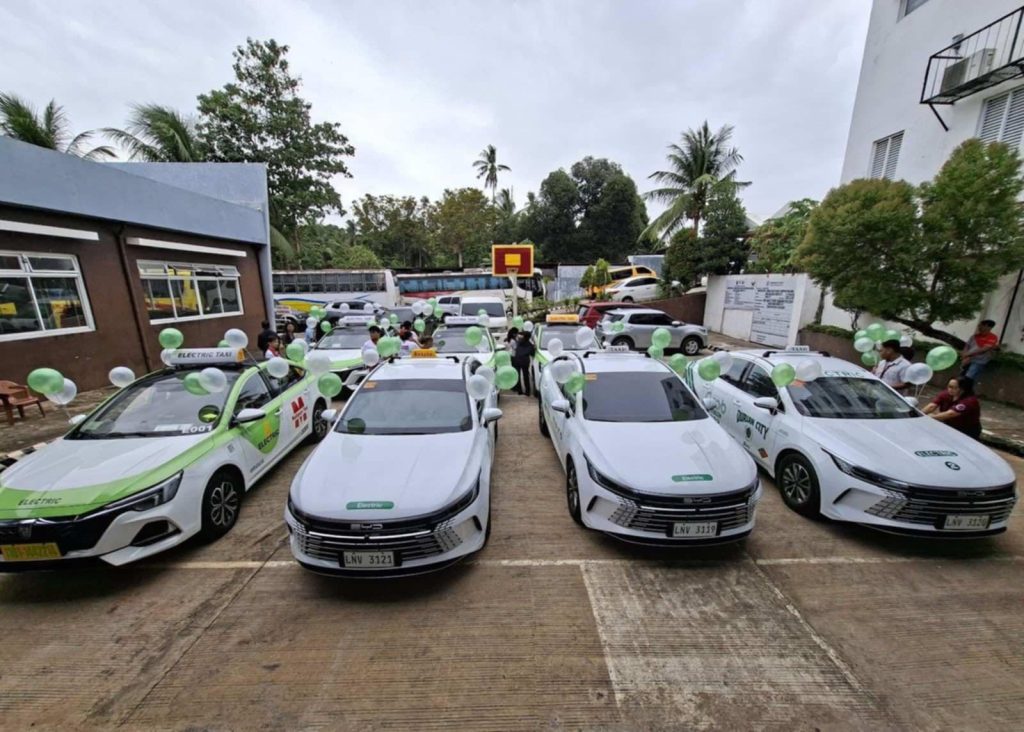
The pilot program, unveiled at the Land Transportation Franchising and Regulatory Board – Davao Region office in Puan, Talomo District, forms part of a broader effort to modernize taxi fleets and collect crucial operational data. The initiative aims to assess vehicle performance, charging behavior, operating costs, and passenger feedback to guide the long-term adoption of electric vehicles (EVs) in the city’s public transport system.
Spearheading the launch were RTOA President Ryan Sia and LTFRB–Davao Regional Director Nonito Llanos III, who both underscored the importance of collaboration between industry stakeholders and government regulators in driving transport modernization.
Llanos commended the association’s move toward electric mobility, describing it as a forward-looking initiative that balances reliable commuter service with environmental responsibility. According to transport officials, the transition aligns with national and local goals to reduce greenhouse gas emissions, lessen dependence on imported fossil fuels, and improve air quality in fast-growing urban centers.
A Pilot Step Toward a Greener Fleet
The initial rollout includes EV units operated by leading taxi companies such as Maligaya Taxi, Krizia Taxi, Durian City Taxi, and Ma-ro Taxi—longtime players in the city’s transport sector. These operators are among the first in the region to integrate electric-powered vehicles into daily operations, setting a benchmark for the industry.
While the pilot rollout initially highlighted a smaller batch of EV taxis for testing and evaluation, a total of 19 electric units have now been introduced into the city’s public transport fleet. The vehicles, including models from global EV manufacturers Roewe and BYD, are expected to begin serving major routes across Davao City, giving commuters their first regular experience riding electric taxis.
Industry leaders say the shift is not merely about replacing vehicles but about transforming the way the taxi sector operates. By introducing EVs, operators aim to demonstrate that sustainable transport solutions can be both practical and economically viable in a rapidly developing city.
Industry and Government in Sync
The rollout reflects a coordinated effort between regulators and private operators to ensure that modernization is implemented smoothly. Authorities noted that as more EV units are deployed in the coming months and years, infrastructure such as charging stations, maintenance systems, and driver training programs will need to expand alongside the growing fleet.
For the LTFRB, the program also serves as a testing ground to understand how electric mobility can be integrated into the existing transport framework without disrupting services. Officials emphasized that data gathered from the pilot phase will be critical in shaping future transport policies and expansion plans.
Benefits Beyond the Ride
Stakeholders highlight several advantages tied to the shift toward electric taxis. EVs produce zero tailpipe emissions, significantly reducing pollution and contributing to improved urban air quality. They also promise lower operating costs over time due to reduced fuel consumption and maintenance requirements, which could ultimately benefit both drivers and operators.
Passengers, meanwhile, can expect quieter and smoother rides, adding a new level of comfort to daily commutes. More importantly, the transition signals that Davao’s transport sector is adapting to global trends in sustainable mobility.
The Road Ahead for Davao’s Transport Sector
With the first batch of EV taxis now operational, transport groups say the focus will shift toward expanding the number of units on the road while ensuring adequate support systems are in place. This includes developing accessible charging infrastructure, equipping drivers with the necessary skills to operate EVs, and educating commuters about the benefits of electric mobility.
For many in the city, the launch is more than just the introduction of new vehicles—it represents a shift in how public transport can contribute to environmental protection while maintaining efficient service.
As these electric taxis begin to ply the streets of Davao, commuters may soon find that every ride not only brings them to their destination but also moves the city closer to a cleaner and more sustainable future.