
The viral videos from Lamitan City, Basilan are more than disturbing images of police officers inflicting pain on their fellow officers. They are a mirror reflecting the darkest corners of our security institutions, where violence is still mistaken for discipline, cruelty is still glorified as “training,” and power is abused under the guise of tradition. More than 70 personnel from Regional Mobile Force Battalion-14B now face allegations of brutal “reception rites” that left several victims injured, two of them in critical condition. These are not isolated acts of misconduct. They are symptoms of a deeply rooted culture that has been allowed to survive for far too long.
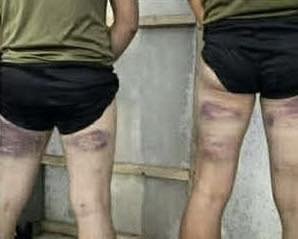


Despite decades of reforms, investigations, and laws against hazing, the same question confronts the public today: Why does this still happen in 2026? Why, in an institution sworn to protect human rights and uphold the rule of law, do abusive rituals continue to flourish? The answer lies not only in individual wrongdoing but in an institutional failure to dismantle traditions that thrive on fear and obedience.
Violence Disguised as Brotherhood
Within many uniformed services, hazing is still presented as a “rite of passage.” New recruits are told that pain builds character, that humiliation strengthens loyalty, and that silence proves courage. Those who endure are praised as “strong,” while those who speak up are branded as weak, disloyal, or unfit for service. This mindset transforms abuse into a twisted form of bonding and makes victims believe that suffering is the price of belonging.
Over time, this conditioning becomes self-perpetuating. Those who were once abused often become abusers themselves, convinced that repeating the cycle is justified because “they went through it too.” Instead of building genuine camaraderie, hazing creates fear-based loyalty and emotional scars that last far beyond training. It produces compliance, not professionalism.
The False Promise of “Warrior Ethos”
Defenders of hazing often invoke “warrior culture” and “combat readiness” to justify brutality. They argue that harsh treatment prepares officers for dangerous situations and builds mental toughness. This argument has long been disproven. Modern security forces around the world recognize that real strength comes from proper training, psychological resilience, ethical grounding, and teamwork—not from beatings and humiliation.
Abuse does not sharpen skills. It erodes trust. It damages morale. It creates officers who follow orders blindly rather than professionals who can think clearly under pressure. The Armed Forces of the Philippines has already begun replacing abusive traditions with structured, humane, and effective integration programs. The persistence of hazing in parts of the police force reflects a refusal to evolve.
Leadership’s Silent Complicity
Hazing does not survive without protection from above. It continues because too many leaders have chosen silence over accountability. Commanders who dismiss complaints as “part of training,” supervisors who turn a blind eye, and administrators who prioritize “unit harmony” over justice all contribute to the problem.
Every abusive ritual requires permission—explicit or implied. When leaders fail to intervene, they legitimize cruelty. When investigations are delayed or softened, they embolden perpetrators. The Basilan incident is not simply the failure of a few officers. It is the failure of a command structure that allowed toxic practices to become normalized.
The MILF Integration Question
This case carries deeper implications because many of the victims belong to the MILF and MNLF integration program under the Bangsamoro Organic Law. These former combatants chose peace over conflict and entered the police service in good faith, trusting the state to treat them with dignity and fairness.
Their reported maltreatment raises troubling questions. Was this merely routine hazing, or were they targeted because they were outsiders? Were they treated as second-class officers who had to “prove themselves” through pain? Even if intent cannot yet be proven, the perception alone is damaging. It threatens to undermine confidence in the integration program and weakens the foundations of peace in the Bangsamoro region.
Abusing integrees is not only illegal and immoral—it is politically reckless. It sends the message that reconciliation is conditional and that former rebels remain suspect even after choosing lawful service.
Social Media and the Culture of Exhibitionism
One of the most alarming aspects of the Basilan incident is that some perpetrators reportedly recorded and shared their actions. This reflects a growing culture of exhibitionism, where abusive behavior is performed for online validation. Violence becomes content. Humiliation becomes entertainment.
In this digital age, cruelty spreads faster than character-building. Toxic traditions go viral, while ethical training remains invisible. The message being transmitted is dangerous: that authority gives one the right to degrade others and that public attention is more valuable than integrity.
The Psychology of False Competence
This culture is reinforced by what psychologists call the Dunning-Kruger Effect—where individuals with limited competence overestimate their abilities. Some officers believe that being harsh makes them effective leaders. They mistake intimidation for authority and abuse for discipline.
Because they “feel” powerful, they refuse correction. They reject guidance. They dismiss criticism. In their minds, cruelty becomes proof of competence. This illusion is destructive, both to individuals and to institutions.
Laws Without Enforcement Are Empty Promises
The Philippines already has a strong Anti-Hazing Law. The PNP has clear regulations against abuse. NAPOLCOM and PRO-BARMM have issued condemnations and promised investigations. Yet incidents continue.
This reveals a painful truth: laws mean nothing without consistent enforcement. Zero tolerance becomes an empty slogan when perpetrators expect light penalties, delayed justice, or quiet reintegration. Accountability must be swift, transparent, and uncompromising—especially when lives are at stake.
Administrative sanctions alone are not enough when criminal acts are committed. If victims die or suffer permanent damage, justice must follow through the courts, not just internal disciplinary bodies.
Toward a Culture of Dignity and Professionalism
Real reform requires more than reacting to scandals. It demands dismantling the structures that protect abuse. Training programs must emphasize leadership, ethics, and mental health. Reporting mechanisms must be safe and independent. Whistleblowers must be protected, not stigmatized.
Commanders must be evaluated not only on operational results but on how they protect their personnel. Promotions must reflect integrity, not complicity. Most importantly, recruits must be taught from day one that courage includes the courage to say no to abuse.
A Test of the Institution’s Soul
The Basilan hazing case is a test—not only of the PNP’s disciplinary system, but of its moral compass. Will this be another scandal that fades after public outrage dies down? Or will it mark a turning point in confronting institutional cruelty?
Uniforms do not grant moral immunity. Authority does not justify violence. Tradition does not excuse crime.
If the Philippine National Police truly wants public trust, it must prove that brutality has no place in its ranks. Not tomorrow. Not after another victim. But now.
Ending hazing is not a sign of weakness.
It is the beginning of true strength.