
In a landmark move for the Filipino Muslim community, the Philippine government has signed into law Republic Act No. 12160, known as the “Philippine Islamic Burial Act.” The law ensures that deceased Muslims can be buried in accordance with their religious customs — a significant stride in respecting Islamic beliefs, which mandate that burial take place as soon as possible, ideally within 24 hours after death.

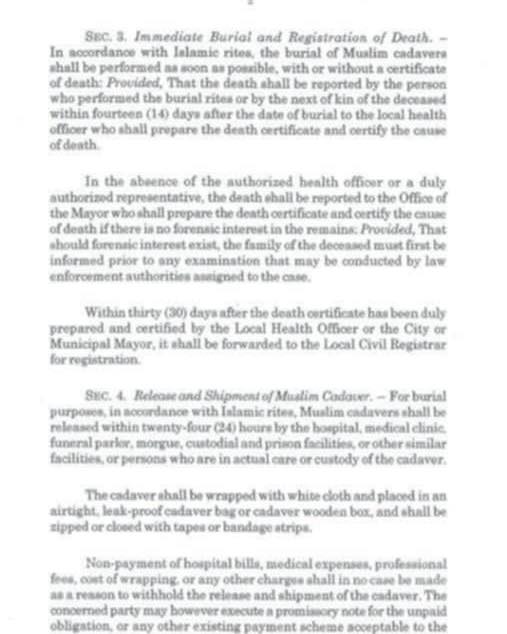
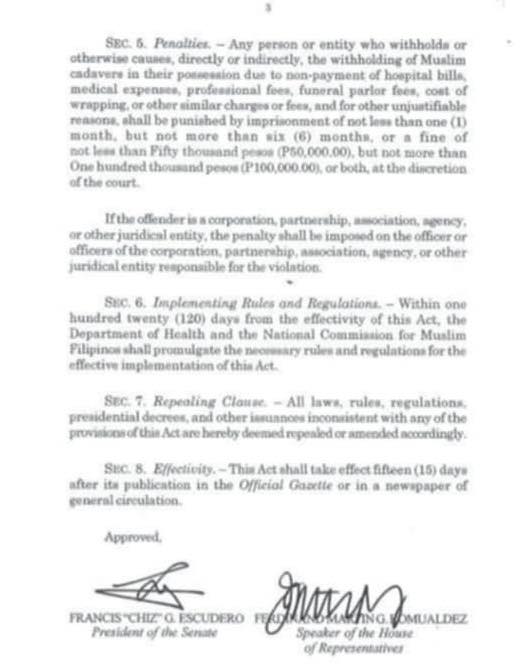
The new law explicitly mandates that hospitals, clinics, funeral parlors, morgues, and even custodial or prison facilities must release the remains of a Muslim cadaver within 24 hours, even in cases where hospital bills or other fees remain unpaid. If there’s no death certificate at the time of burial, the person who performed the burial or the deceased’s next of kin is required to report the death to the local health officer within 14 days. The health officer will then issue the necessary death certificate.
This legislation is undeniably a long-overdue recognition of the cultural and religious rights of Filipino Muslims. It is, without question, a victory for human dignity, for equality, and for religious freedom.
But while this law is certainly a step forward, it also highlights a glaring gap — the lack of designated burial grounds for Muslims, especially in urban areas.
Islamic burial practices don’t end at the timely release of the cadaver. Equally vital is the actual burial, which must be performed in a manner that respects Islamic customs — from the orientation of the grave to the simplicity and solemnity of the burial process. However, the reality on the ground is stark: many public cemeteries in the Philippines lack designated spaces for Muslim burials. In cities where land is scarce, the absence of culturally sensitive burial grounds poses a serious obstacle to fulfilling this religious obligation, leaving grieving families scrambling for proper and appropriate burial sites.
The spirit of the law aims to uphold the dignity and faith of our Muslim brothers and sisters, but this oversight weakens its impact. If we are to truly honor the diversity of faiths in our nation, the conversation must not end with the release of the body. Local governments and national agencies must take the next necessary step: ensure that every city and municipality provides a dedicated burial area for Muslims, aligned with their beliefs and practices.
The Philippine Islamic Burial Act is a proud moment for legislative progress, but the law’s full promise can only be realized when the government addresses this critical need for designated burial grounds. Only then can we say we have fully respected not just the right to timely burial, but the right to be laid to rest in accordance with one’s faith — a final dignity that every person, regardless of religion, deserves.