
DAVAO CITY — Even in the face of death, an act of generosity can open the door to a new beginning for someone else. At the Southern Philippines Medical Center (SPMC) in Davao City, a donor’s final wish to give away his eyes has become a moving reminder that compassion does not end with life.
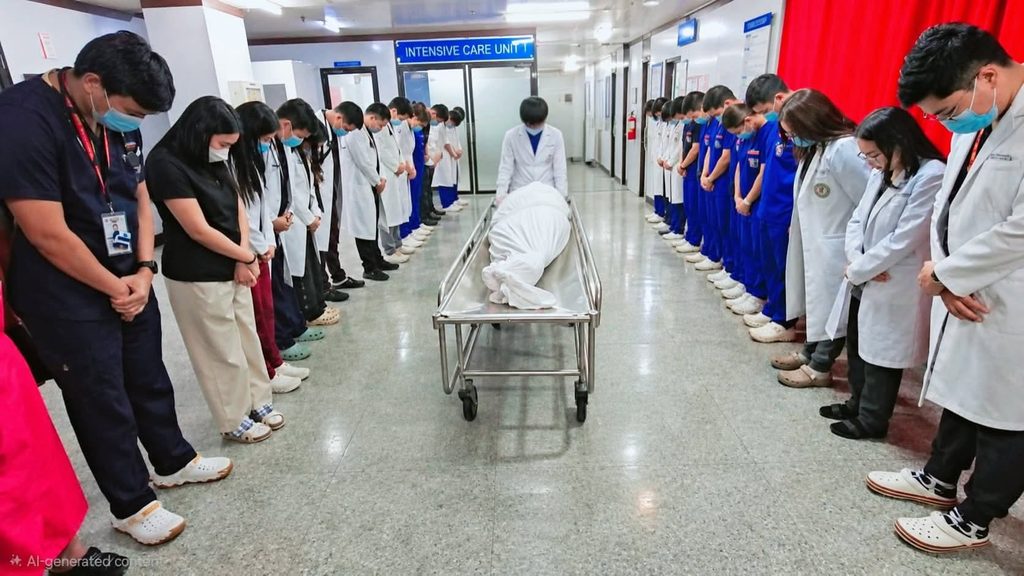
The SPMC Organ Transplant Services Unit recently paid tribute to a donor who chose to donate his eyes, hoping to give another person the precious opportunity to see. The gesture, carried out in accordance with his final wish, was honored by the medical team as an extraordinary act of kindness and selflessness.
In a tribute shared publicly, the unit expressed its deepest appreciation to the donor and his family for honoring his final request, particularly at a time when they were dealing with the pain of losing a loved one.
The medical team described the donation as a gift that would allow the donor’s generosity to live beyond his lifetime.
“Your life may have ended, but your gift will continue to bring light to others,” the unit said.
Behind those words is a profound reality: while the donor’s family must confront the permanence of their loss, another person may have an opportunity to experience something many take for granted — the ability to see.
For people living with certain forms of corneal blindness, donated corneal tissue can provide a chance to regain sight through transplantation, depending on their medical condition and suitability for the procedure. Such donations can also offer hope to patients whose vision has been severely affected by corneal disease or injury.
The donor’s decision therefore carries significance beyond the immediate act of giving. It represents an opportunity for another individual to experience a different future, one that might otherwise remain beyond reach.
But the story is also about the family left behind.
Honoring a loved one’s final wish to donate organs or tissues is not an easy decision to carry out amid grief. It requires strength, understanding and a willingness to turn personal loss into an act that may benefit someone they will probably never meet.
By honoring the donor’s request, his family helped ensure that his final expression of generosity would not be forgotten.
Another family, another act of courage
The tribute also brings attention to another deeply moving story at SPMC involving an eye donor who was honored on September 26, 2026.
On that occasion, the donor’s sister shared an emotional account of her brother’s Honor Walk, a solemn tribute recognizing his decision to become an organ and tissue donor.
She described the experience as one of the most painful yet proud moments of her life. Although her brother’s life had been cut short, his decision to donate his eyes offered another person the possibility of receiving the gift of sight.
“Even though your life was cut short, your heroic act of donating your eyes means you are giving someone else the gift of sight,” she wrote in her tribute.
Her message reflected the complicated emotions of families who lose someone they love but find comfort in knowing that their loved one’s final decision may help another person.
She also described her brother as her biggest hero, saying that his legacy would live on through the lives he could touch.
The two tributes, separated by weeks, highlight the human stories behind organ and tissue donation: individuals who made a decision to give, families who chose to honor that decision, and patients who may receive a new opportunity because of their generosity.
The importance of eye donation
Eye donation is an important component of tissue donation and transplantation. In particular, corneal donation can help patients with damaged or diseased corneas regain functional vision through a transplant when medically appropriate.
The cornea is the transparent outer layer at the front of the eye that helps focus incoming light. When it becomes cloudy or damaged because of disease, infection or injury, a person’s vision can be seriously impaired.
For eligible patients, corneal transplantation may restore some or significant levels of vision, depending on the extent of the damage and other medical factors.
It is important, however, to distinguish between donating eyes and restoring sight in its entirety. Not every eye donation results in the transplantation of a whole eye, and current eye transplantation procedures do not restore vision in the way corneal transplantation can. In many cases, donated corneal tissue is what makes sight-restoring procedures possible.
This distinction underscores why organ and tissue donation requires proper medical assessment, coordination and specialized procedures.
A legacy that outlives loss
The two stories from SPMC carry a message that extends beyond hospital corridors and medical procedures.
They remind the public that organ and tissue donation is not simply a medical decision. It is also a deeply personal choice involving the donor’s wishes, the family’s grief, and the possibility of giving another human being a chance at a better quality of life.
For the families of the donors, the loss remains real and irreplaceable. No act of donation can erase the pain of saying goodbye. But knowing that a loved one’s final wish has been respected — and that their generosity may help another person see the world again — can give their grief a different meaning.
The SPMC Organ Transplant Services Unit’s tribute captures that enduring message: a person’s life may come to an end, but the kindness they leave behind can continue to make a difference.
In the end, the most powerful part of these stories may not be the medical procedure itself, but the decision behind it: to think of another person’s future even when one’s own future has come to an end.
A legacy of love does not have to end with life. Sometimes, it begins anew in someone else’s eyes.