
KULAMAN, Sultan Kudarat — For some children, going to school means carrying a lunchbox filled with food prepared at home, a bottle of clean water and perhaps a few snacks to share with classmates. For pupils at a mission school in the countryside of Sultan Kudarat, however, even having a safe container for their rice—and something to eat with it—is not always possible.
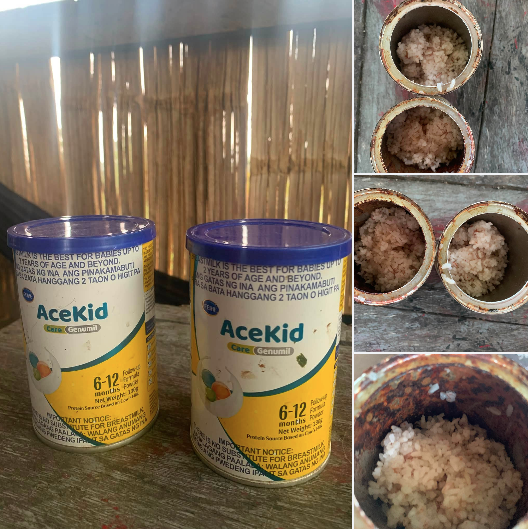
A troubling discovery at Megpanga Sulads Mission School in Kulaman has brought attention to the hardships faced by children growing up in poverty, after pupils were found using heavily rusted milk cans to carry their rice to school.
The situation came to light during lunchtime when two pupils approached their volunteer teacher, Shyrdene Kate Mantalaba Santander, to ask whether she had extra soy sauce they could use as a viand. The children had rice but apparently had nothing to accompany it.
It was a simple request, but it led to a discovery that revealed just how much some of the school’s pupils have to endure to attend classes.
During lunch, Santander noticed that some of her students were carrying old milk containers previously given to them. Curious about what they had inside, she checked and was surprised to find that the containers held their rice.
The cans were already severely rusted.
What made the discovery even more heartbreaking was that the children did not know the containers could pose a health risk. They were not deliberately ignoring safety precautions or using the cans carelessly. They simply had little understanding of the danger and apparently had few alternatives for carrying their food.
For these pupils, a discarded milk can was more than just an old container. It was something they could use to bring their only meal to school.
Santander immediately advised the children not to use the rusty cans again and suggested wrapping their rice in banana leaves instead.
But the incident also raised a much bigger concern: the everyday conditions that children in remote communities must navigate just to receive an education.
In an age when many children have access to proper lunchboxes, clean drinking water, packed meals and other school essentials, these pupils are confronting basic needs that should never be taken for granted. Their experience illustrates how poverty can reach into even the simplest parts of childhood, including the ability to eat safely during a school break.
The children’s request for soy sauce also underscored another difficult reality: having rice does not necessarily mean having a complete meal. For pupils whose families struggle to provide even basic necessities, a school lunch may consist of whatever food is available, with little or nothing to accompany it.
Santander’s account was not simply about discovering rusty food containers. It was also about recognizing the circumstances that made children rely on them in the first place.
Following the discovery, the volunteer teacher decided to bring the children to the municipal center to receive anti-tetanus toxoid vaccination, as a precaution amid concerns about possible exposure and infection.
Her response reflected the immediate need to protect the pupils, while the incident itself highlighted the importance of access to safe food storage, basic health services and practical support for children in underserved communities.
In her social media post, Santander reflected on how the experience changed her perspective on everyday comforts that many people barely notice: a proper meal, a safe food container, clean water, comfortable clothing and the opportunity to study.
She emphasized that children in rural communities continue to attend school, learn and do their best despite having very little.
Their determination deserves recognition, but their hardship should not be romanticized. Children should not have to overcome unsafe food containers, inadequate meals and the absence of basic school necessities simply to exercise their right to education.
The incident at Megpanga Sulads Mission School is a reminder that access to education is about more than opening classroom doors. Children also need the basic conditions that allow them to learn, remain healthy and participate in school with dignity.
For the pupils carrying rice in rusted cans, the immediate concern may have been finding something to eat with their lunch. For the adults around them, however, the discovery presents a more urgent question: how many other children are quietly enduring similar conditions, and what can communities do to ensure that poverty does not deprive them of even the most basic protections?